About this artwork
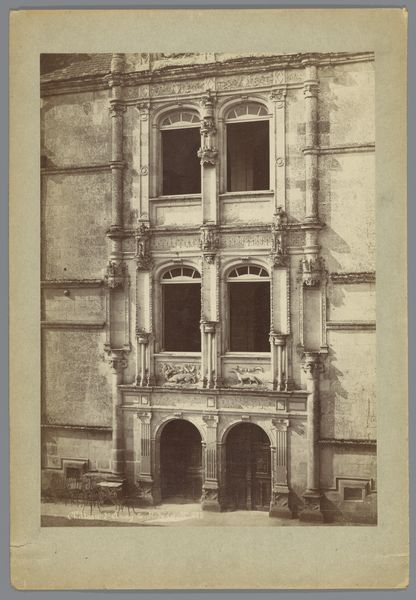
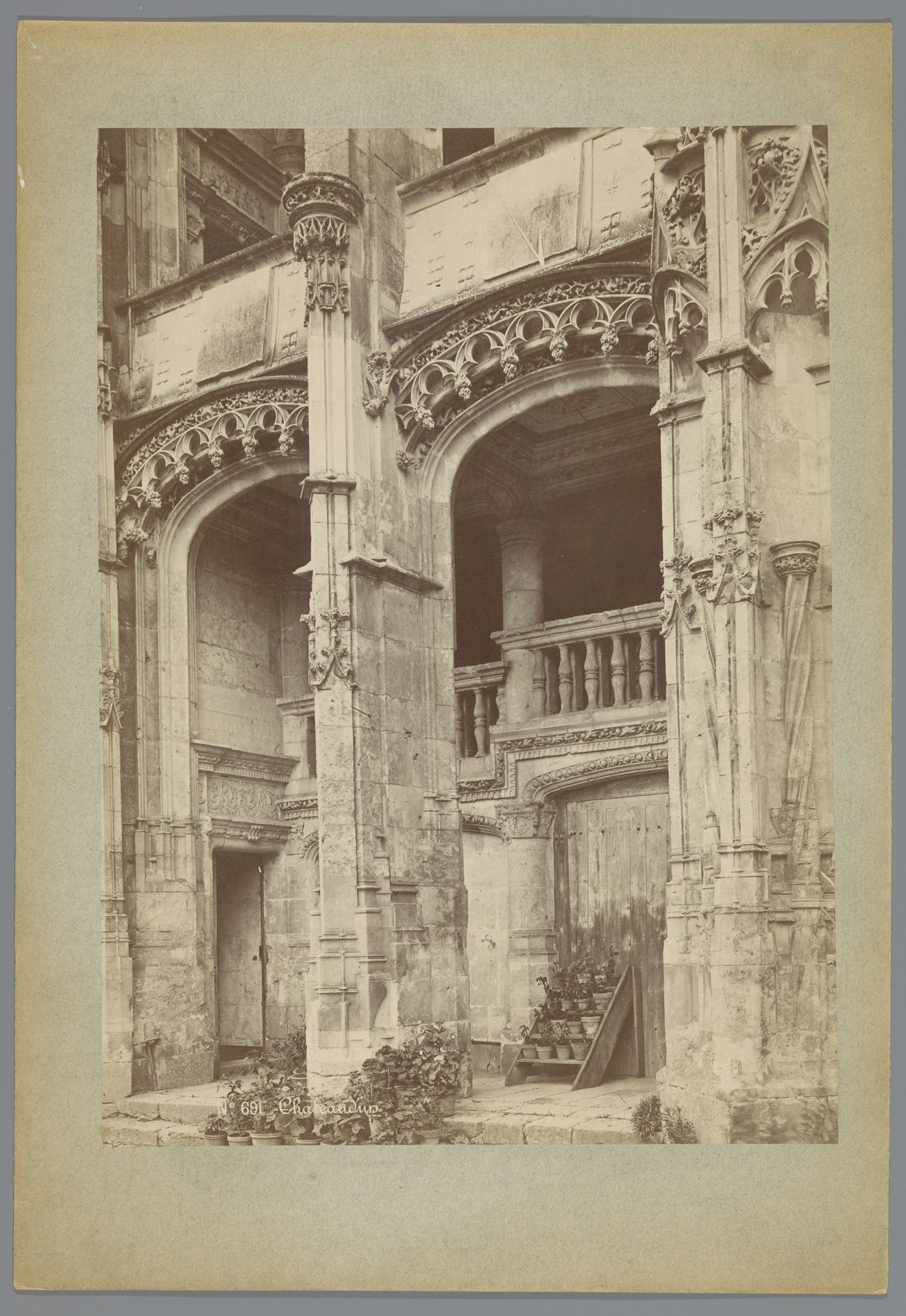
Médéric Mieusement captured this photogravure titled "Trappenhuis van Château Châteaudun met bloempotten" using paper. The photograph presents a symmetrical composition of architectural forms and shadows that evoke a sense of depth and historical weight. The repetitive arches and detailed stonework, rendered in soft sepia tones, create a visually complex yet harmonious pattern. Mieusement’s focus on the structural elements—the arches, columns, and staircases—invites us to consider the photograph as a study in architectural semiotics. The interplay of light and shadow enhances the texture of the stonework, and the composition suggests a dialogue between the solidity of the building and the ephemeral nature of light. This interaction destabilizes a fixed reading of the space, proposing instead a field of shifting perspectives and historical interpretations. Ultimately, the sepia tone reinforces the photograph's temporal ambiguity, suggesting a ruin that is beautiful but also a site of ongoing cultural and philosophical reflection.
Trappenhuis van Château Châteaudun met bloempotten c. 1875 - 1900

Médéric Mieusement
1840 - 1905Location
RijksmuseumArtwork details
- Dimensions
- height 347 mm, width 250 mm
- Location
- Rijksmuseum
- Copyright
- Rijks Museum: Open Domain
Comments
No comments
About this artwork
Médéric Mieusement captured this photogravure titled "Trappenhuis van Château Châteaudun met bloempotten" using paper. The photograph presents a symmetrical composition of architectural forms and shadows that evoke a sense of depth and historical weight. The repetitive arches and detailed stonework, rendered in soft sepia tones, create a visually complex yet harmonious pattern. Mieusement’s focus on the structural elements—the arches, columns, and staircases—invites us to consider the photograph as a study in architectural semiotics. The interplay of light and shadow enhances the texture of the stonework, and the composition suggests a dialogue between the solidity of the building and the ephemeral nature of light. This interaction destabilizes a fixed reading of the space, proposing instead a field of shifting perspectives and historical interpretations. Ultimately, the sepia tone reinforces the photograph's temporal ambiguity, suggesting a ruin that is beautiful but also a site of ongoing cultural and philosophical reflection.
Comments
No comments