1672
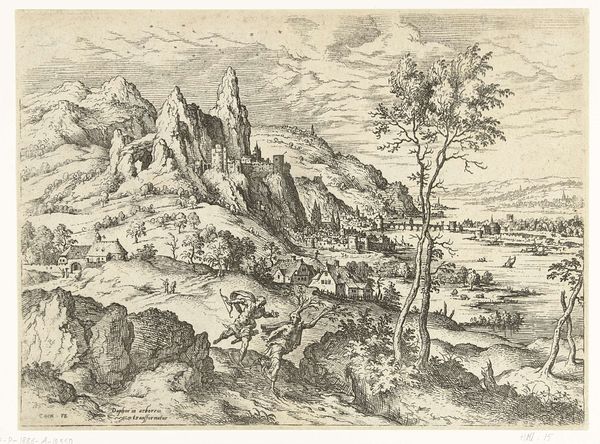
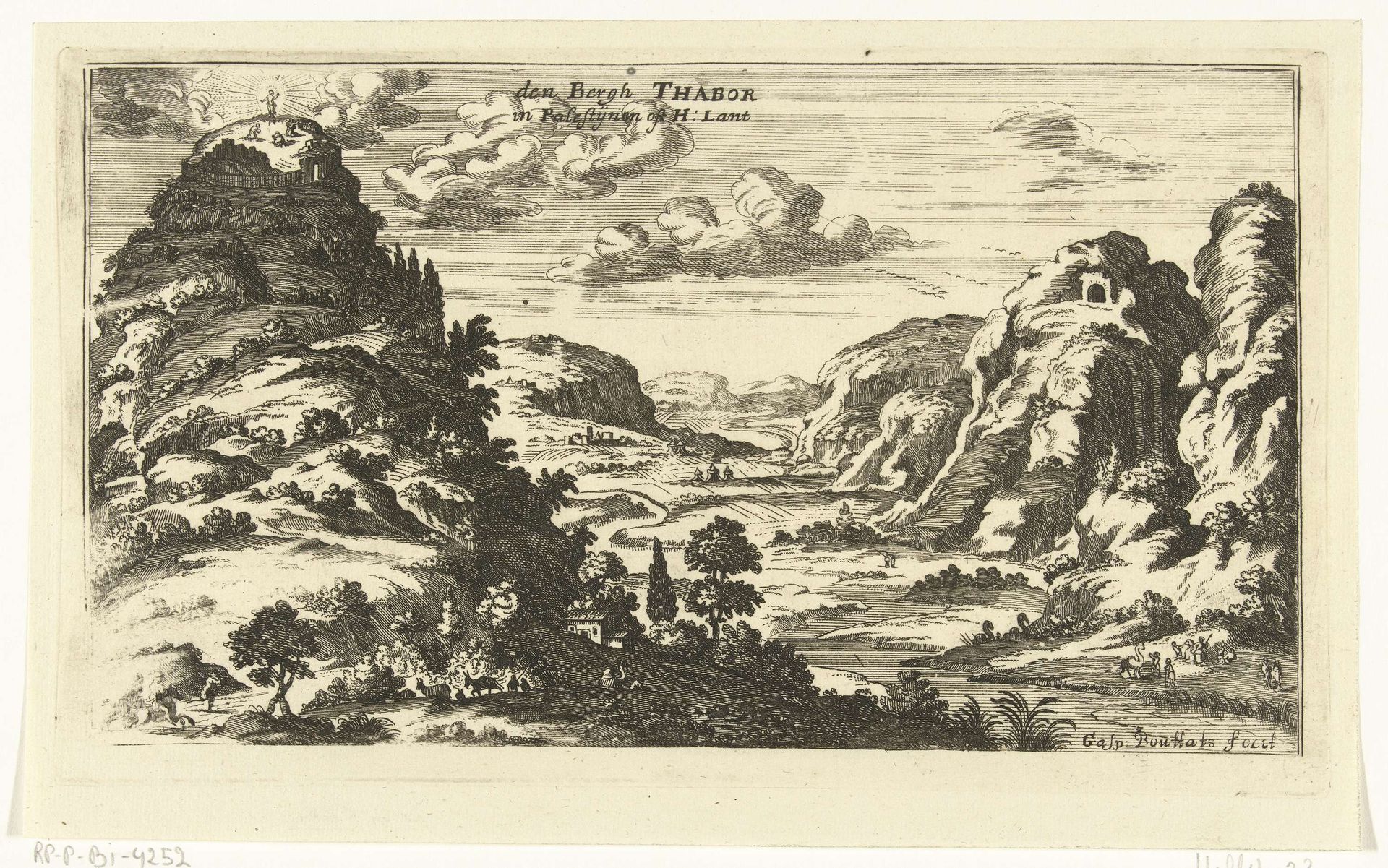
Gezicht op de berg Tabor en de transfiguratie van Christus

Gaspar Bouttats
1648 - 1695Location
RijksmuseumListen to curator's interpretation
Curatorial notes
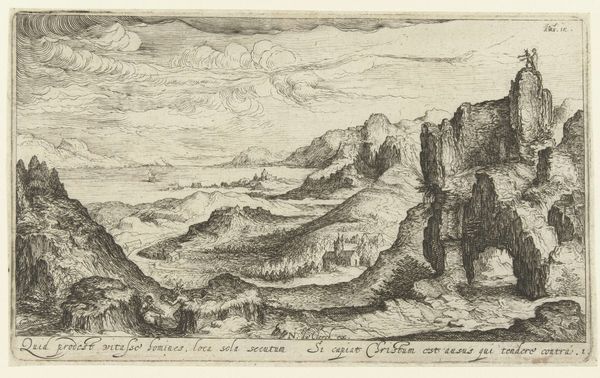
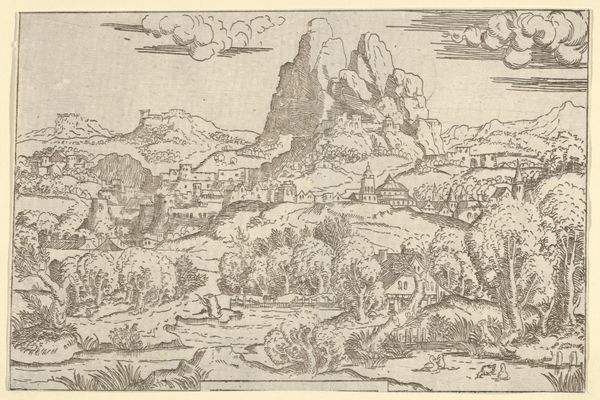
This is Gaspar Bouttats's "View of Mount Tabor and the Transfiguration of Christ," made in the 17th century. Dominating the landscape is Mount Tabor, crowned with a cross, marking it as a site of profound religious significance. The mountain as sacred space echoes across cultures. Recall Mount Olympus, the home of the Greek gods, or Mount Sinai, where Moses received the Ten Commandments. The elevated position brings one closer to the divine, a motif that resonates deeply within the human psyche. The transfiguration itself, though not explicitly depicted, suggests a moment of revelation. This idea of a divine epiphany is like the blossoming almond tree, a symbol of awakening. It represents a moment of clarity and transformation, of seeing beyond the mundane, and touches upon our collective yearning for spiritual insight. These symbols are not static; they evolve, reflecting our ever-changing understanding of the world.