About this artwork
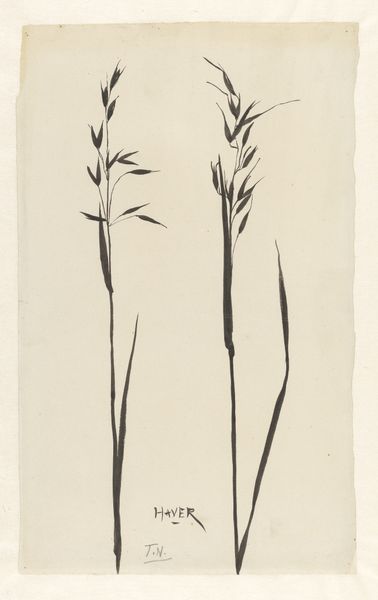
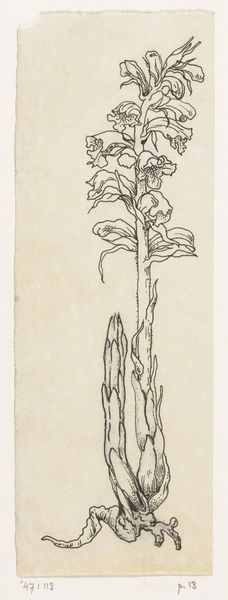
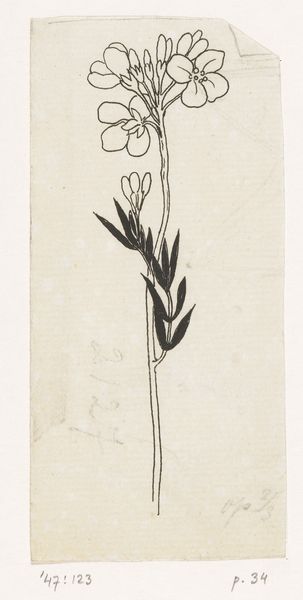
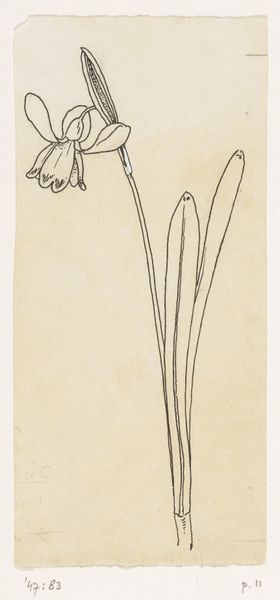
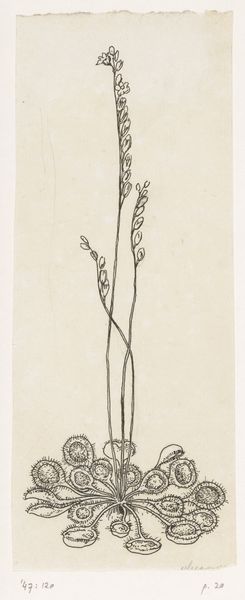
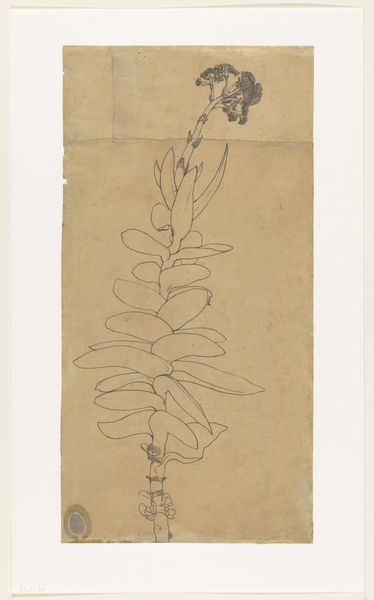
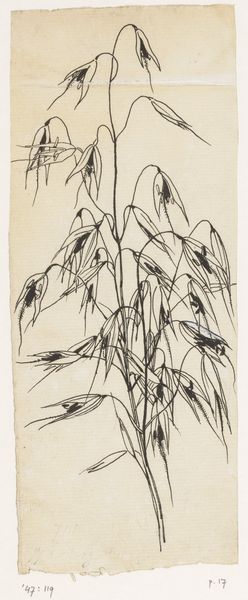
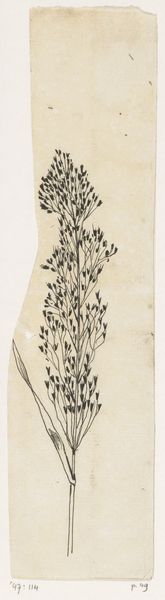
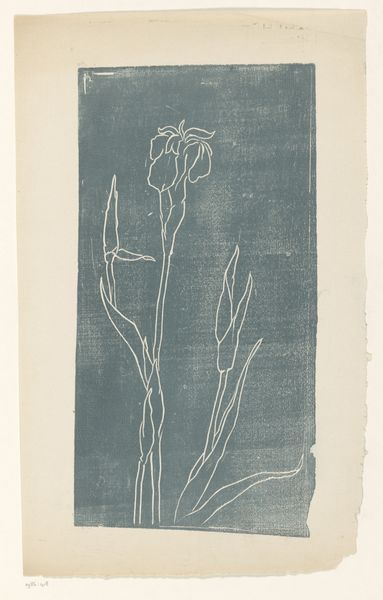
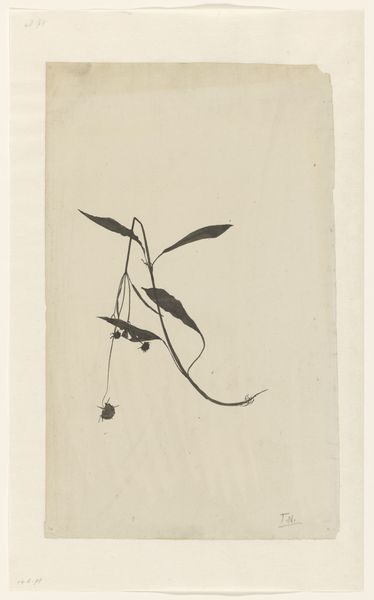
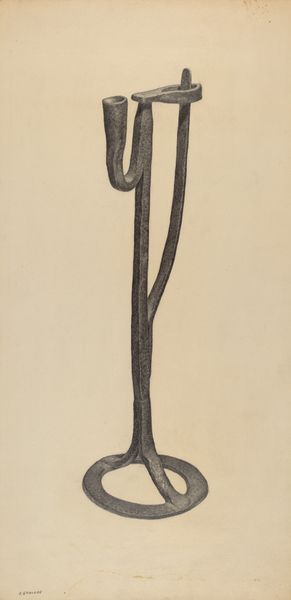
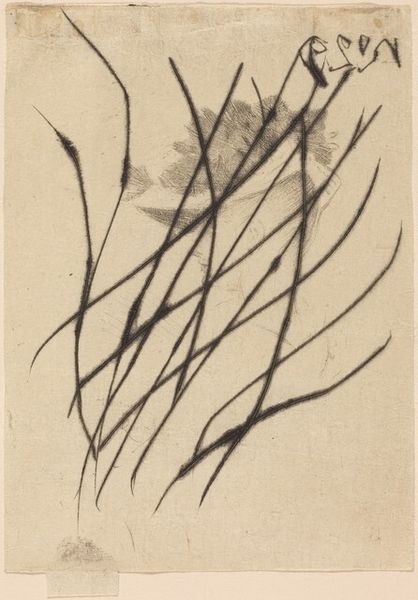
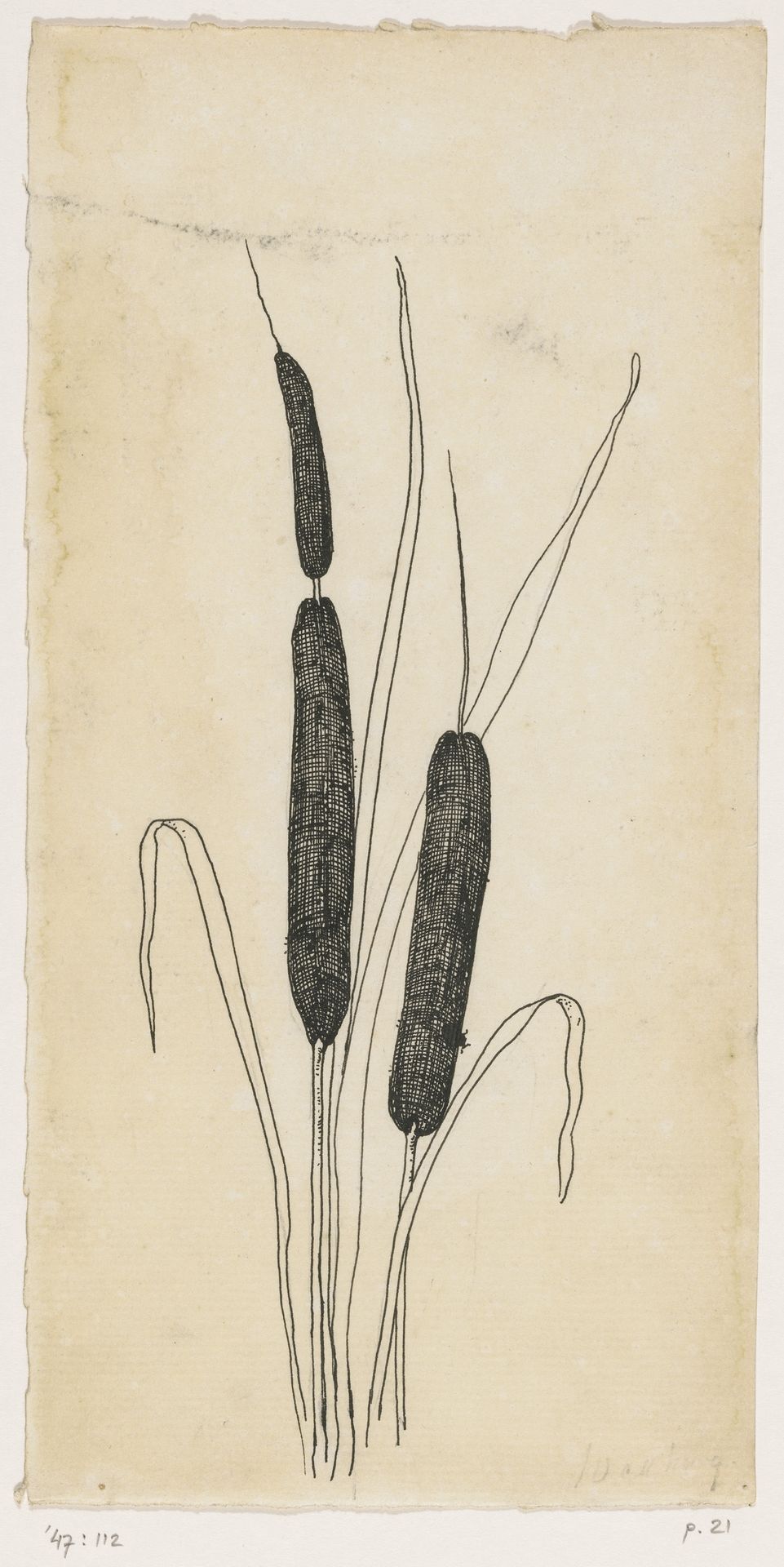
Curator: Here we have Willem Wenckebach's "Lisdodden," a drawing made sometime before 1893, now held at the Rijksmuseum. Editor: My immediate impression is of raw simplicity. It has an almost primitive quality, doesn't it? You see the clear strokes, the obvious handmade quality, and the limitations of the medium laid bare. It feels so close to the hand that made it. Curator: Indeed. Cattails themselves carry quite a bit of symbolic weight, often connected to ideas of abundance and provision. One could argue that in Dutch art, these native plants reflect ideas of localized plenty but rendered in stark terms, avoiding romanticization. Editor: And consider the materials themselves. Ink and paper were incredibly accessible. This drawing emphasizes how readily available artistic creation could be. It points to the everyday reality and accessible methods of artistic expression available, bypassing more expensive methods. It emphasizes what could be done outside the confines of official academic settings. Curator: Yes, this artwork sidesteps grand pronouncements and presents, instead, a focused study. The attention to detail, particularly the texture of the cattails rendered through such a limited tonal range, speaks of close observation, like an ethnographer's field notes. Editor: But do the limitations force creativity? Could it be argued that more humble supplies require deeper study? There is a tactile element too. Looking at the image, it would be lovely to know the quality of the paper and weight of the ink on it. This process highlights the inherent value in simplicity. Curator: That is a fine point. In a sense, this uncomplicated approach reflects an intrinsic connection to the local ecology, a reminder of basic survival made elegant through the artistry, almost talismanic through depiction. It is a quiet acknowledgement. Editor: I appreciate how Wenckebach, by embracing the constraints of the readily available and humble tools, actually illuminates art-making in such a down to earth manner. Curator: And seeing the drawing now provides a window into how the artist viewed and gave expression to what was immediately available, creating a visual archive to reflect upon for generations to come.

Artwork details
- Medium
- drawing, paper, ink
- Dimensions
- height 252 mm, width 125 mm
- Location
- Rijksmuseum
- Copyright
- Rijks Museum: Open Domain
Tags
Comments
Share your thoughts
About this artwork
Curator: Here we have Willem Wenckebach's "Lisdodden," a drawing made sometime before 1893, now held at the Rijksmuseum. Editor: My immediate impression is of raw simplicity. It has an almost primitive quality, doesn't it? You see the clear strokes, the obvious handmade quality, and the limitations of the medium laid bare. It feels so close to the hand that made it. Curator: Indeed. Cattails themselves carry quite a bit of symbolic weight, often connected to ideas of abundance and provision. One could argue that in Dutch art, these native plants reflect ideas of localized plenty but rendered in stark terms, avoiding romanticization. Editor: And consider the materials themselves. Ink and paper were incredibly accessible. This drawing emphasizes how readily available artistic creation could be. It points to the everyday reality and accessible methods of artistic expression available, bypassing more expensive methods. It emphasizes what could be done outside the confines of official academic settings. Curator: Yes, this artwork sidesteps grand pronouncements and presents, instead, a focused study. The attention to detail, particularly the texture of the cattails rendered through such a limited tonal range, speaks of close observation, like an ethnographer's field notes. Editor: But do the limitations force creativity? Could it be argued that more humble supplies require deeper study? There is a tactile element too. Looking at the image, it would be lovely to know the quality of the paper and weight of the ink on it. This process highlights the inherent value in simplicity. Curator: That is a fine point. In a sense, this uncomplicated approach reflects an intrinsic connection to the local ecology, a reminder of basic survival made elegant through the artistry, almost talismanic through depiction. It is a quiet acknowledgement. Editor: I appreciate how Wenckebach, by embracing the constraints of the readily available and humble tools, actually illuminates art-making in such a down to earth manner. Curator: And seeing the drawing now provides a window into how the artist viewed and gave expression to what was immediately available, creating a visual archive to reflect upon for generations to come.
Comments
Share your thoughts