About this artwork
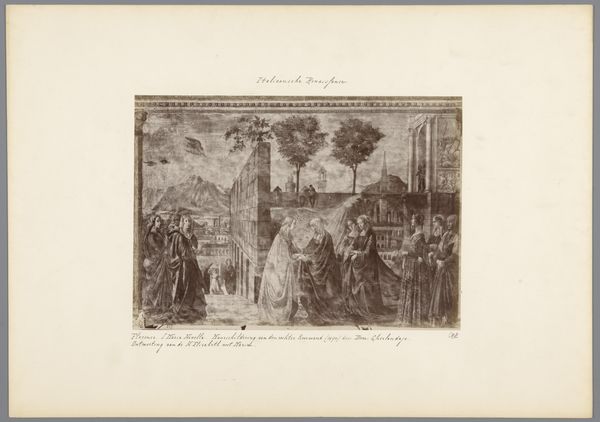
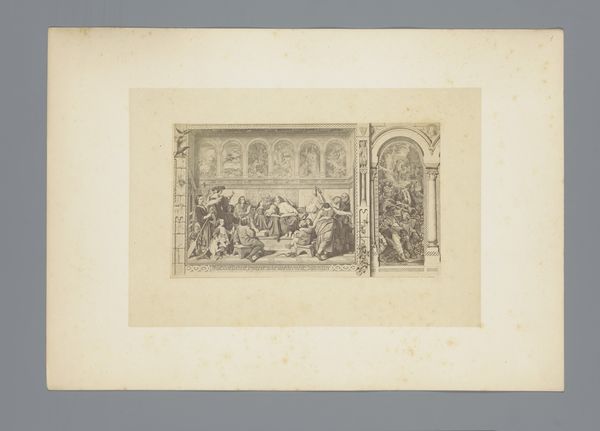
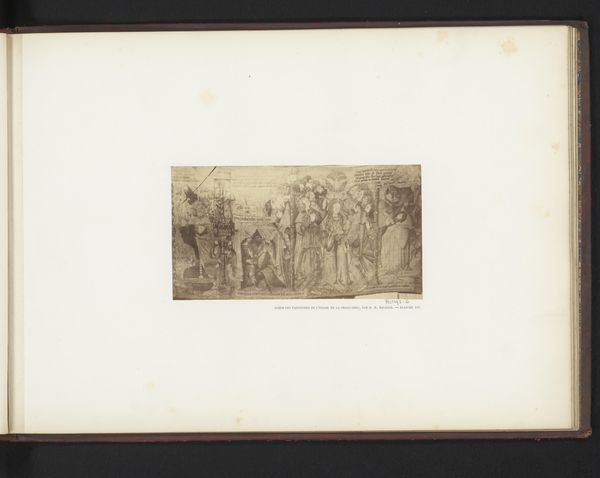
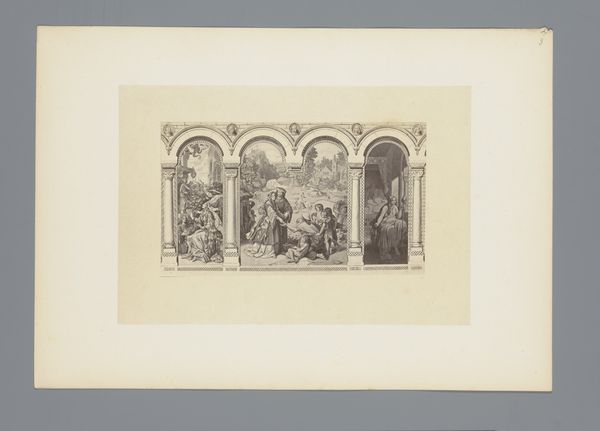
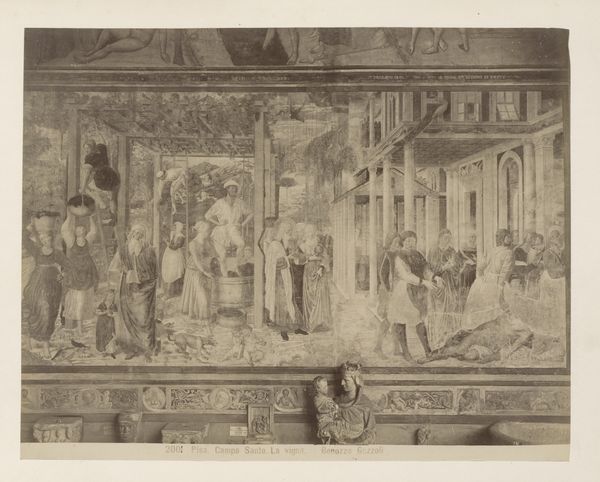
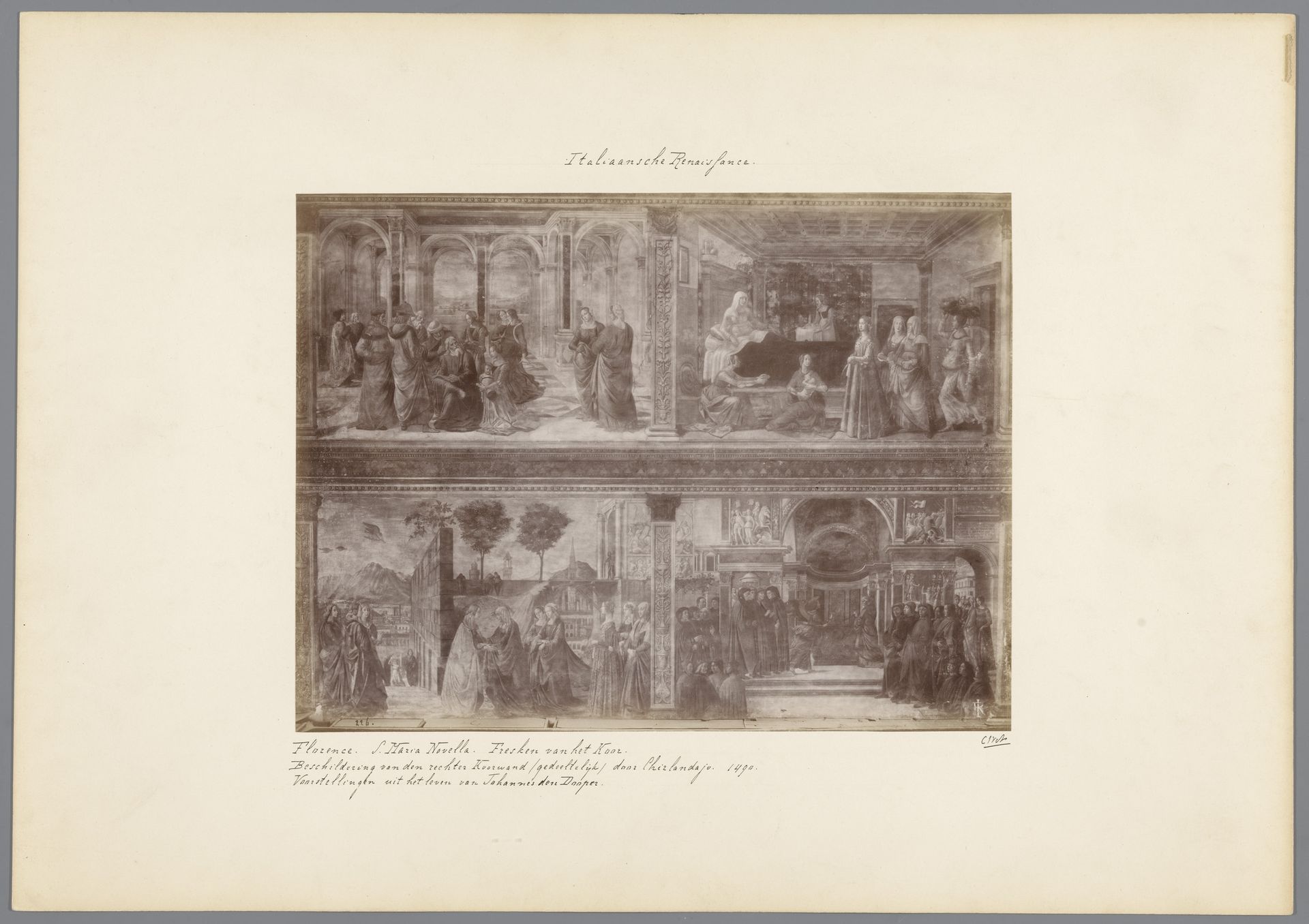
This photograph captures a fresco in Florence's Santa Maria Novella, painted by Domenico Ghirlandaio and others, depicting scenes from the life of John the Baptist. Observe how the figures are arranged in horizontal registers, echoing ancient Roman reliefs and suggesting a connection to classical virtues and civic duty. Notice, in the top register, the figures attending a birth, while in the bottom, the gathering of elders. The grouping recalls similar arrangements in depictions of the Roman Senate, yet here, they illustrate a biblical narrative. Consider the psychological weight of these compositions. The figures, though rendered with Renaissance naturalism, inherit the solemnity of their classical predecessors. It is as if the collective memory of civic virtue and moral authority is being invoked to lend gravity to the life of the saint. This fresco doesn't merely narrate a story; it embodies the cyclical nature of cultural memory, where past forms resurface, imbued with new significance.
Fotoreproductie van een fresco in de Santa Maria Novella te Florence door Domenico Ghirlandaio en anderen, voorstellend passages uit het leven van Johannes de Doper c. 1875 - 1900

Artwork details
- Medium
- print, fresco, photography, gelatin-silver-print
- Dimensions
- height 186 mm, width 248 mm
- Copyright
- Rijks Museum: Open Domain
Tags
portrait
narrative-art
fresco
photography
gelatin-silver-print
history-painting
italian-renaissance
Comments
No comments
About this artwork
This photograph captures a fresco in Florence's Santa Maria Novella, painted by Domenico Ghirlandaio and others, depicting scenes from the life of John the Baptist. Observe how the figures are arranged in horizontal registers, echoing ancient Roman reliefs and suggesting a connection to classical virtues and civic duty. Notice, in the top register, the figures attending a birth, while in the bottom, the gathering of elders. The grouping recalls similar arrangements in depictions of the Roman Senate, yet here, they illustrate a biblical narrative. Consider the psychological weight of these compositions. The figures, though rendered with Renaissance naturalism, inherit the solemnity of their classical predecessors. It is as if the collective memory of civic virtue and moral authority is being invoked to lend gravity to the life of the saint. This fresco doesn't merely narrate a story; it embodies the cyclical nature of cultural memory, where past forms resurface, imbued with new significance.
Comments
No comments