1702 - 1767
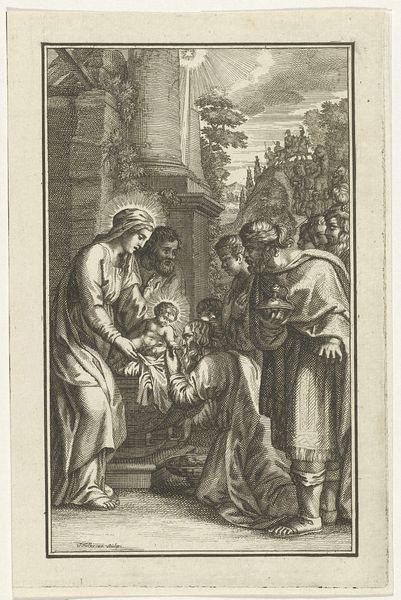
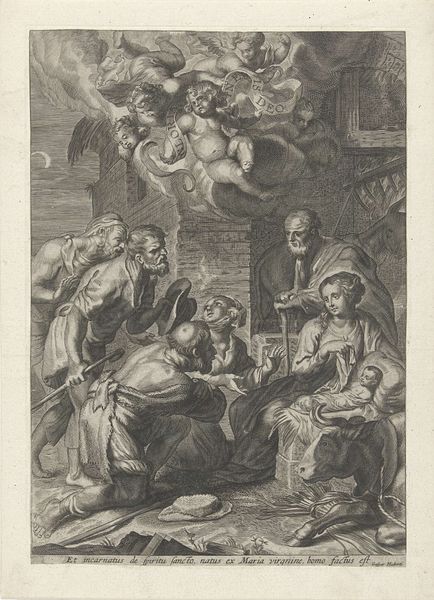
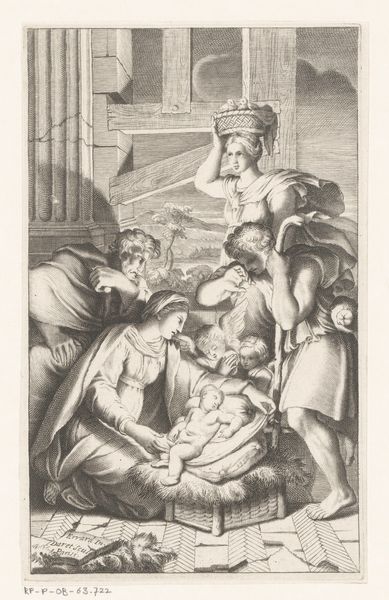
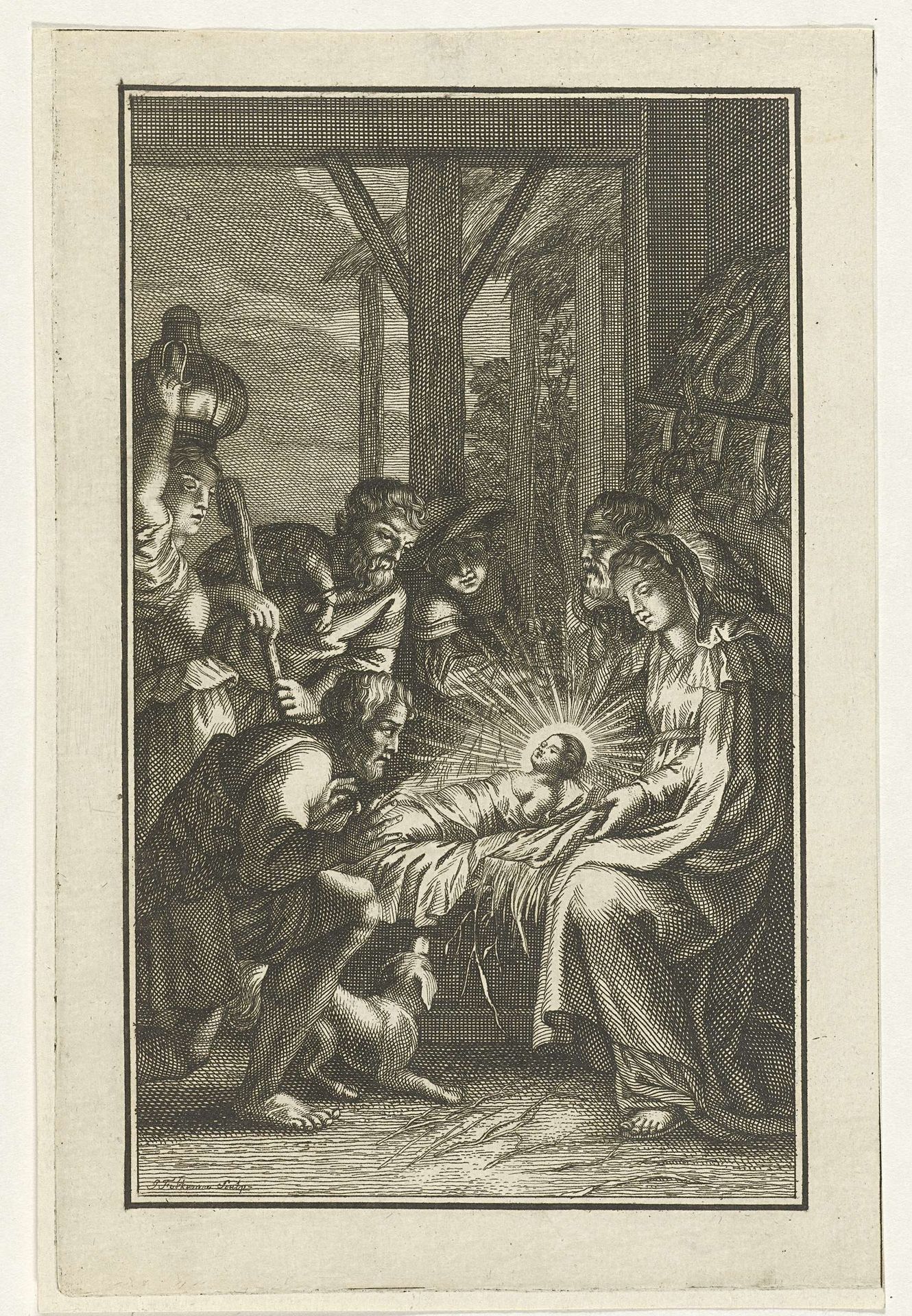
Aanbidding door de herders

Jacob Folkema
1692 - 1767Location
RijksmuseumListen to curator's interpretation
Curatorial notes
Editor: Here we have "Adoration of the Shepherds" by Jacob Folkema, made sometime between 1702 and 1767. It's an etching, a print, so it's been reproduced... What do you see in this work that really stands out? Curator: Well, looking at the means of production, it’s fascinating how an etching like this could disseminate a specific religious ideology to a wider audience. This isn’t just about the depicted scene but also about how easily this image could be circulated and consumed. It turns the 'divine' into a commodity, wouldn’t you say? Editor: That's interesting. I was focused on the almost caricature-like faces, and the classical composition of the figures. I hadn’t considered the mass production aspect. Curator: Consider the engraver as artisan. Folkema's labour directly produced multiples, each a tangible piece. The very material of the print - the paper, the ink, the etched lines – all speak to the industrial aspects of image making at the time, shifting away from unique works toward distributed representations. Do you think that accessibility influenced Baroque style, then? Editor: Perhaps, if the point was to connect to more people through easily consumable images. It sort of democratizes the narrative, in a way. Curator: Precisely! By examining this piece through materiality and consumption, we reveal how religious themes intertwine with early modern production and social change. Editor: That shifts my perspective completely. I came looking at figures and styles, but now I'm thinking about factories, materials, and labor. Curator: Exactly. It is a window onto social systems surrounding the means of art production. It is, therefore, much more than what meets the eye.