About this artwork
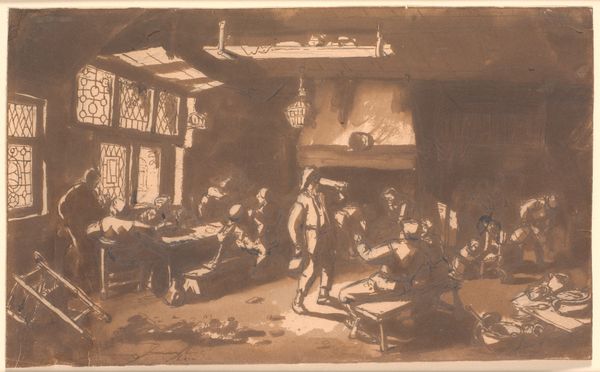
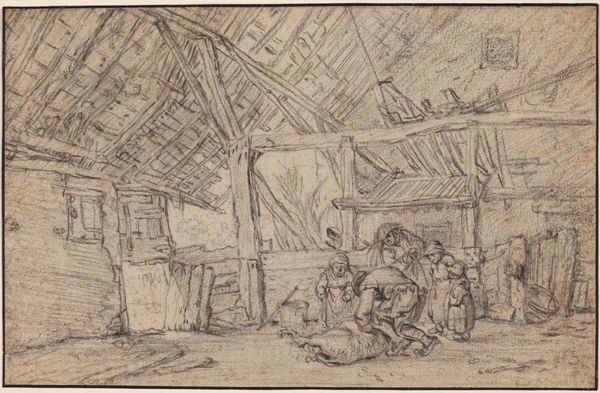
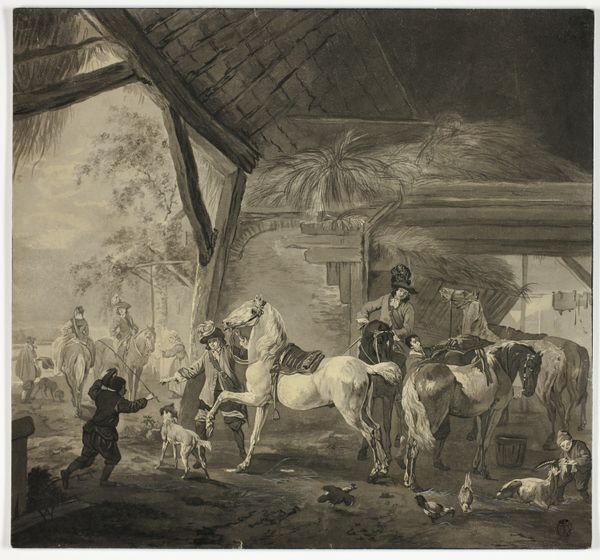
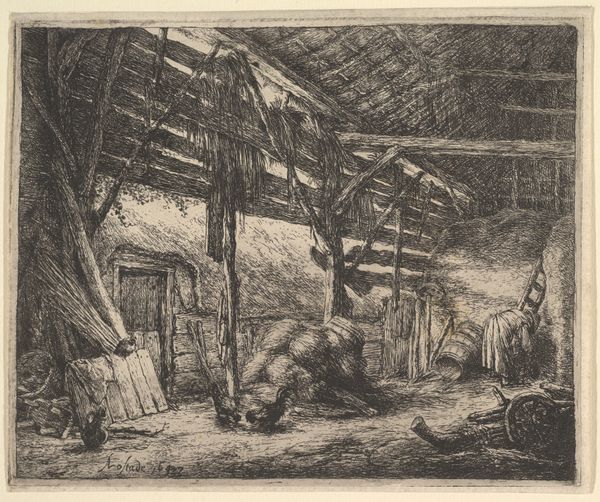
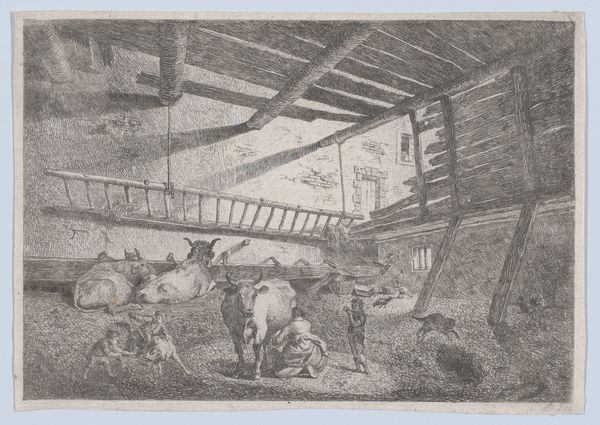
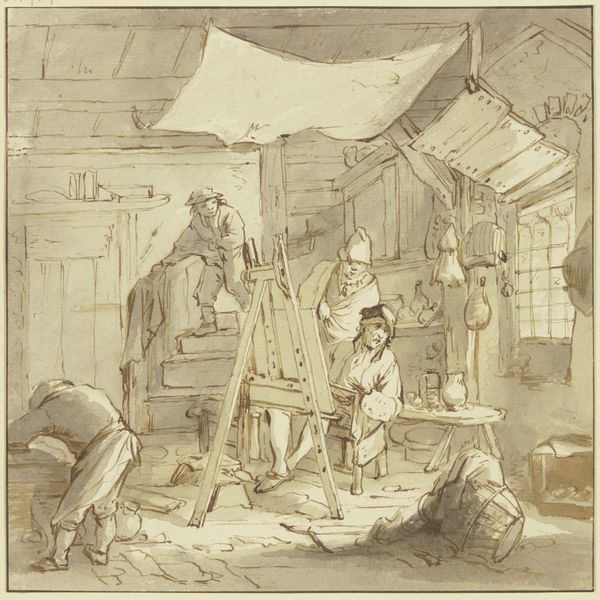
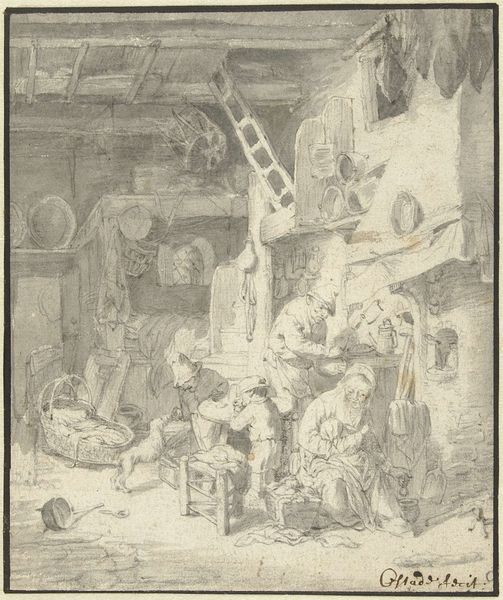
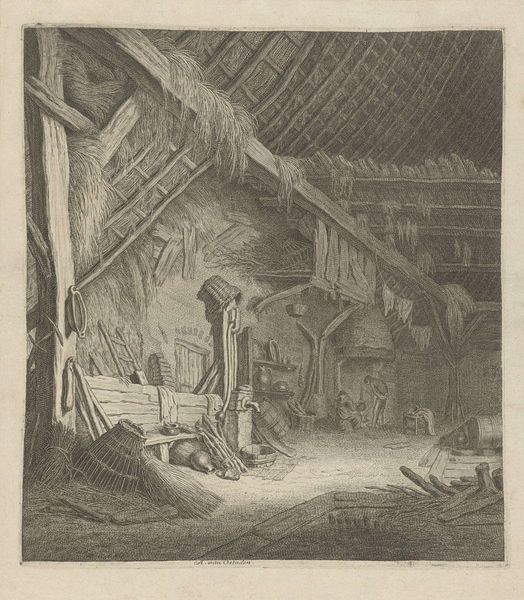
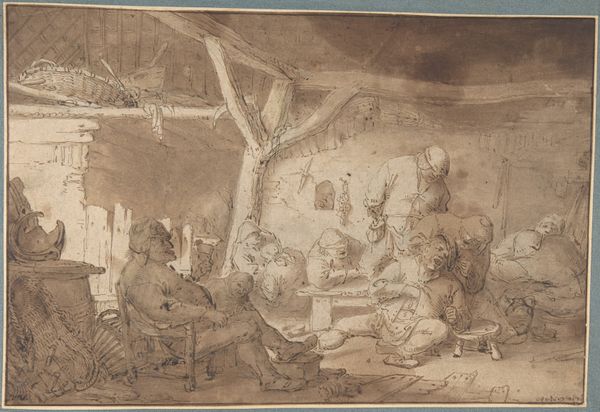
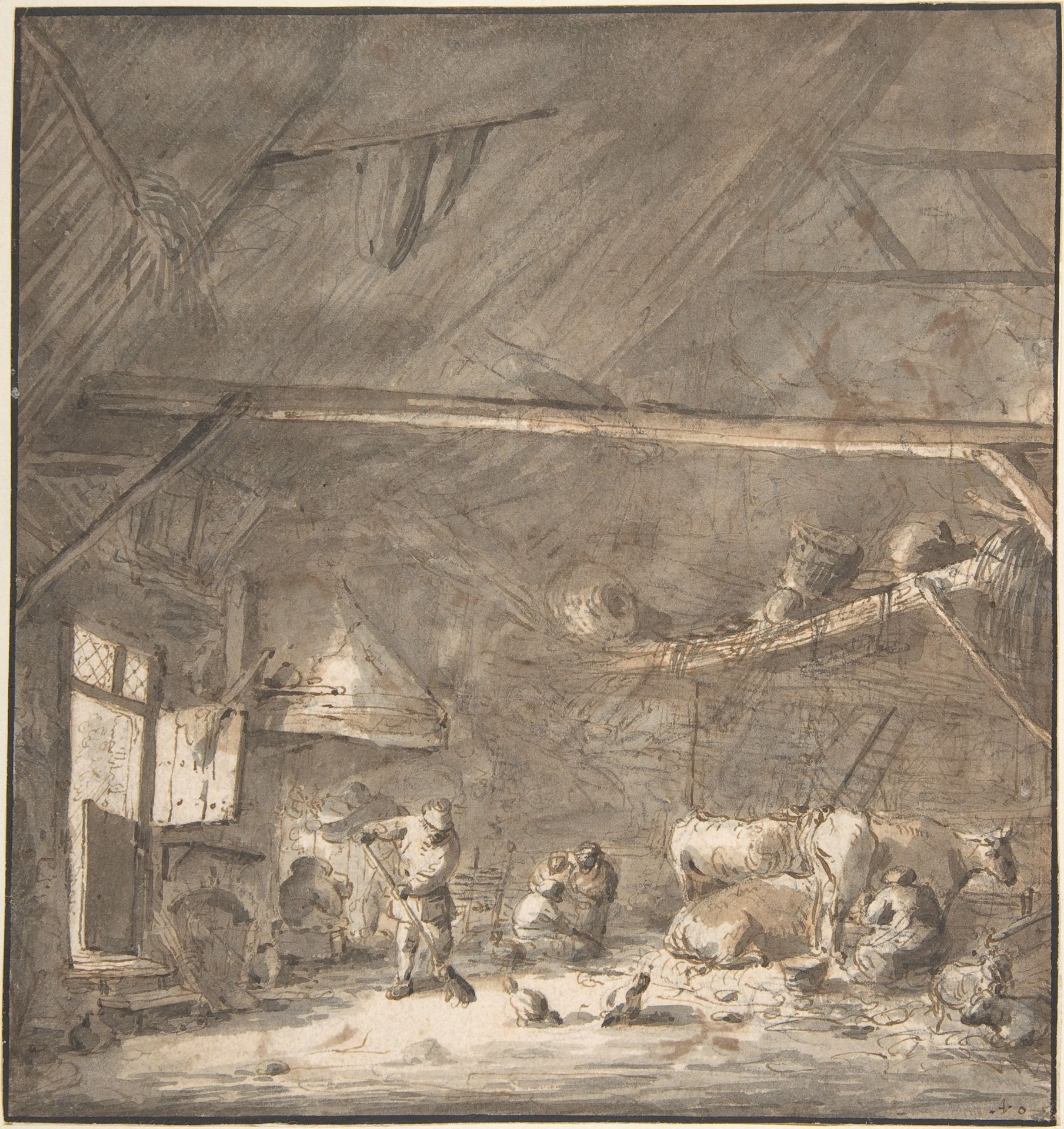
Isaac van Ostade rendered "Barn Interior with Peasants and Cows" in pen and brown ink with gray wash during the Dutch Golden Age, a period marked by immense economic prosperity alongside stark social stratification. The drawing offers an intimate look into the lives of rural laborers. Unlike the idealized landscapes often associated with the era, van Ostade presents an unvarnished view of peasant life, set within the confines of a dimly lit barn. The figures, rendered with a sense of lived experience, suggest the complex interplay of gender, class, and labor. The intimate scale of the drawing invites us to consider our relationship to the scene. Are we detached observers, or are we implicated in the social dynamics depicted? Van Ostade challenges us to confront the realities of labor and survival. The scene evokes a quiet stillness that speaks to the cyclical nature of agricultural life and the enduring connection between humans and the natural world.
Barn Interior with Peasants and Cows Verso: Six Studies of Peasants
1630s - 1640s


Artwork details
- Medium
- drawing, print, paper, ink, pen
- Dimensions
- sheet: 7 5/16 x 7 in. (18.5 x 17.8 cm)
- Location
- Metropolitan Museum of Art, New York, NY
- Copyright
- Public Domain
Tags
Comments
Share your thoughts
About this artwork
Isaac van Ostade rendered "Barn Interior with Peasants and Cows" in pen and brown ink with gray wash during the Dutch Golden Age, a period marked by immense economic prosperity alongside stark social stratification. The drawing offers an intimate look into the lives of rural laborers. Unlike the idealized landscapes often associated with the era, van Ostade presents an unvarnished view of peasant life, set within the confines of a dimly lit barn. The figures, rendered with a sense of lived experience, suggest the complex interplay of gender, class, and labor. The intimate scale of the drawing invites us to consider our relationship to the scene. Are we detached observers, or are we implicated in the social dynamics depicted? Van Ostade challenges us to confront the realities of labor and survival. The scene evokes a quiet stillness that speaks to the cyclical nature of agricultural life and the enduring connection between humans and the natural world.
Comments
Share your thoughts