About this artwork
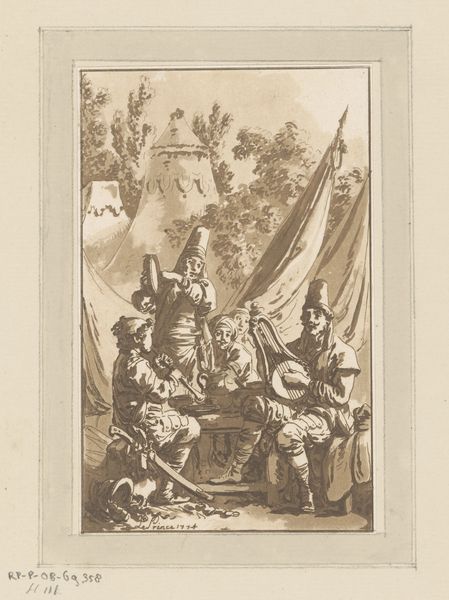
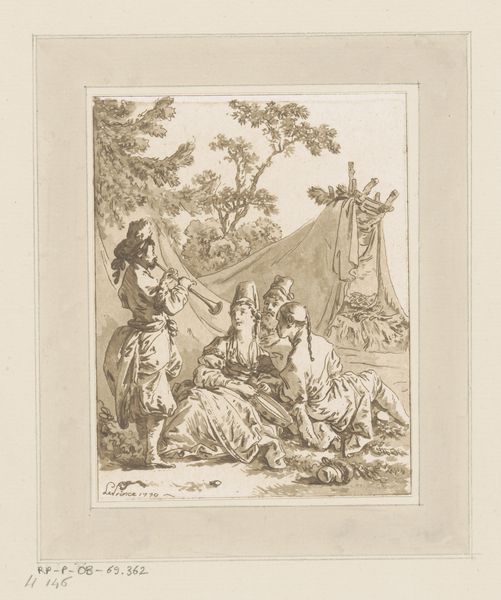
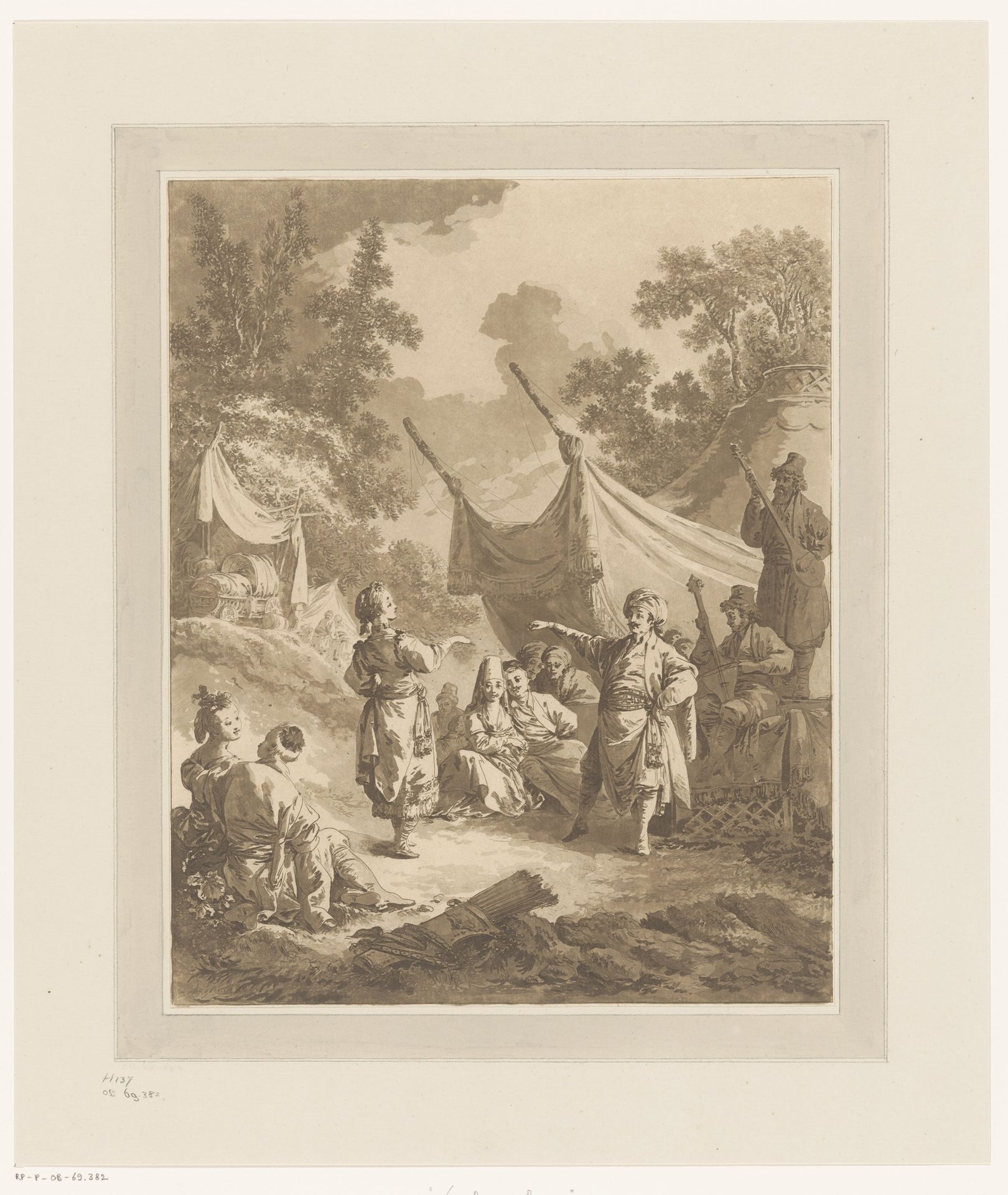
Jean-Baptist Leprince created this wash drawing, "Resting and Dancing Travelers Before a Tent," in the 18th century. Leprince was known for his exoticized depictions of Russian life, a fascination fueled by his travels to Russia in the 1760s. This work, like many others of its time, reflects the West's romantic, often inaccurate, view of other cultures. The figures, possibly imagined through a Western lens, are shown in a moment of leisure, dancing and resting near a tent. How does Leprince perpetuate or subvert stereotypes about non-Western people? What does it mean to represent other cultures, especially when the artist holds positions of power and privilege? The drawing serves as a visual document of cultural exchange and representation during a time of increasing global interaction, prompting us to reflect on the power dynamics inherent in looking, depicting, and interpreting cultures different from our own.
Rustende en dansende reizigers voor een tent 1769

Jean Baptist Leprince
1734 - 1781Location
RijksmuseumArtwork details
- Medium
- print, engraving
- Dimensions
- height 302 mm, width 241 mm
- Location
- Rijksmuseum
- Copyright
- Rijks Museum: Open Domain
Tags
old engraving style
landscape
figuration
line
genre-painting
engraving
rococo
Comments
No comments
About this artwork
Jean-Baptist Leprince created this wash drawing, "Resting and Dancing Travelers Before a Tent," in the 18th century. Leprince was known for his exoticized depictions of Russian life, a fascination fueled by his travels to Russia in the 1760s. This work, like many others of its time, reflects the West's romantic, often inaccurate, view of other cultures. The figures, possibly imagined through a Western lens, are shown in a moment of leisure, dancing and resting near a tent. How does Leprince perpetuate or subvert stereotypes about non-Western people? What does it mean to represent other cultures, especially when the artist holds positions of power and privilege? The drawing serves as a visual document of cultural exchange and representation during a time of increasing global interaction, prompting us to reflect on the power dynamics inherent in looking, depicting, and interpreting cultures different from our own.
Comments
No comments