About this artwork
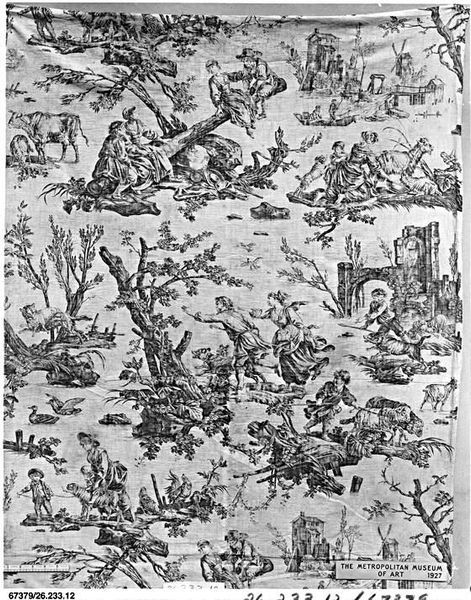
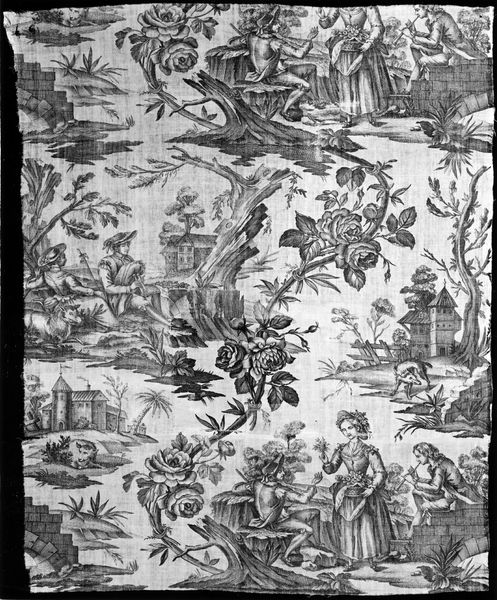
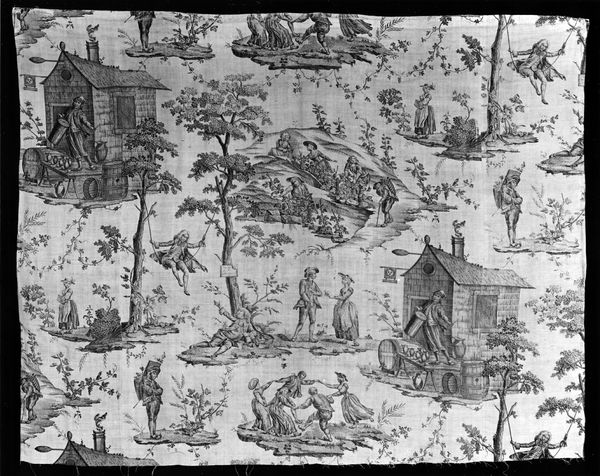
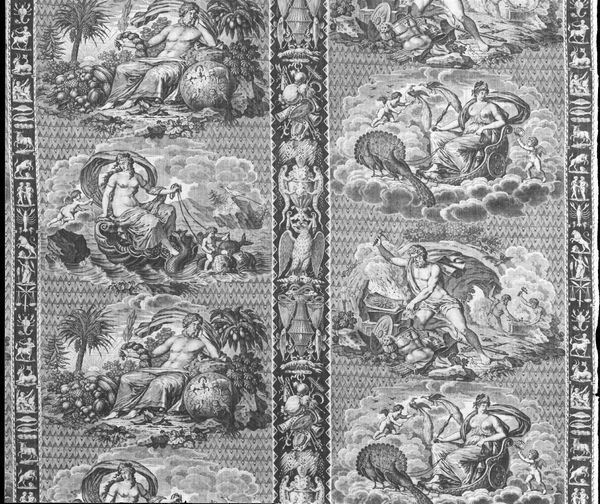
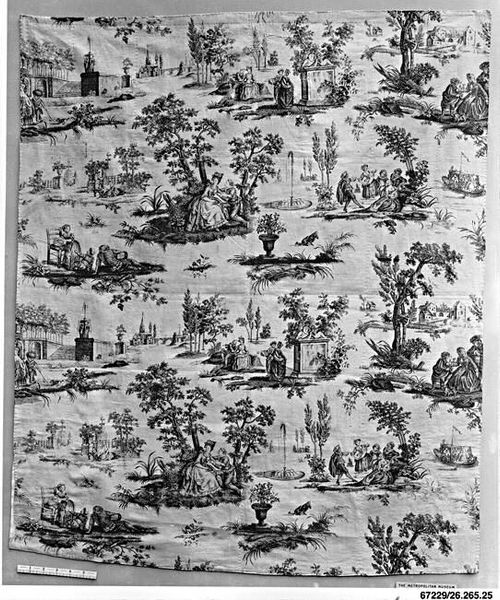
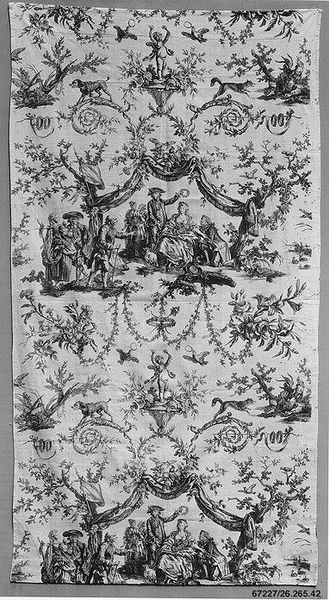
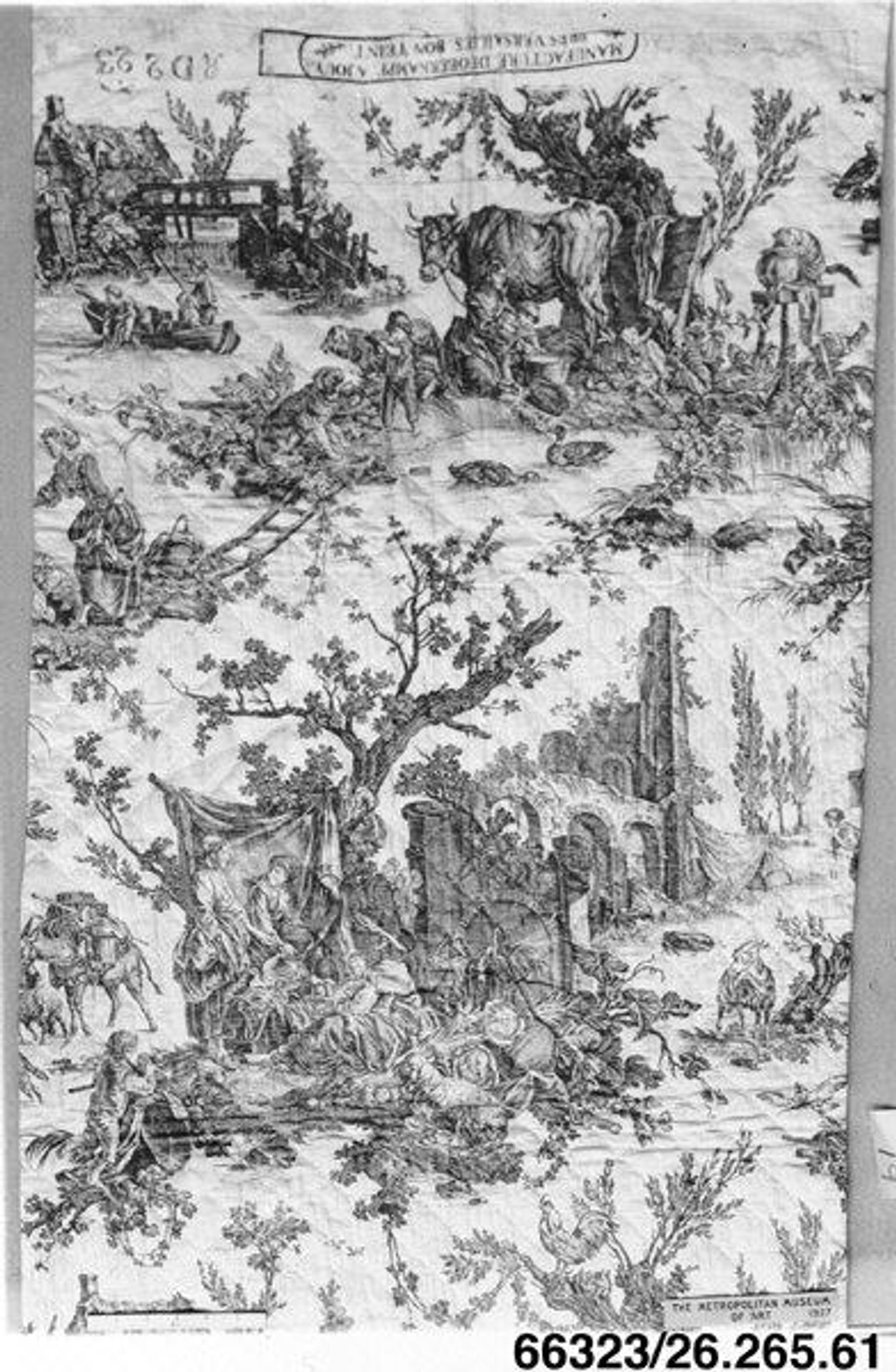
"Pleasures of the Farm," created by the Oberkampf Manufactory in the late 18th or early 19th century, presents a monochromatic tapestry which offers a glimpse into pastoral life. The composition is dense, filled with myriad figures and scenes that blend seamlessly, creating a continuous narrative across the textile. The use of a single color enhances the intricate detailing of each element. The lines are finely drawn, delineating figures, foliage, and architectural ruins with equal precision. This formal choice emphasizes the structure of the textile design, where each component contributes to a layered tableau that invites close inspection. The tapestry's scenes reflect contemporary philosophical interest in nature and simple life. However, the highly stylized representation and the dense composition also suggest a constructed view of the rural idyll, reflecting broader cultural codes and artistic conventions of the period. The artwork invites ongoing interpretation, and each viewer may find new meanings within its detailed structure.
"Pleasures of the Farm"
1785 - 1790

Oberkampf Manufactory
1760 - 1843
The Metropolitan Museum of Art
Metropolitan Museum of Art, New York, NYArtwork details
- Dimensions
- L. 77 x W. 49 inches 195.6 x 124.5 cm
- Location
- Metropolitan Museum of Art, New York, NY
- Copyright
- Public Domain
Comments
Share your thoughts
About this artwork
"Pleasures of the Farm," created by the Oberkampf Manufactory in the late 18th or early 19th century, presents a monochromatic tapestry which offers a glimpse into pastoral life. The composition is dense, filled with myriad figures and scenes that blend seamlessly, creating a continuous narrative across the textile. The use of a single color enhances the intricate detailing of each element. The lines are finely drawn, delineating figures, foliage, and architectural ruins with equal precision. This formal choice emphasizes the structure of the textile design, where each component contributes to a layered tableau that invites close inspection. The tapestry's scenes reflect contemporary philosophical interest in nature and simple life. However, the highly stylized representation and the dense composition also suggest a constructed view of the rural idyll, reflecting broader cultural codes and artistic conventions of the period. The artwork invites ongoing interpretation, and each viewer may find new meanings within its detailed structure.
Comments
Share your thoughts