Dimensions: height 105 mm, width 126 mm
Copyright: Rijks Museum: Open Domain
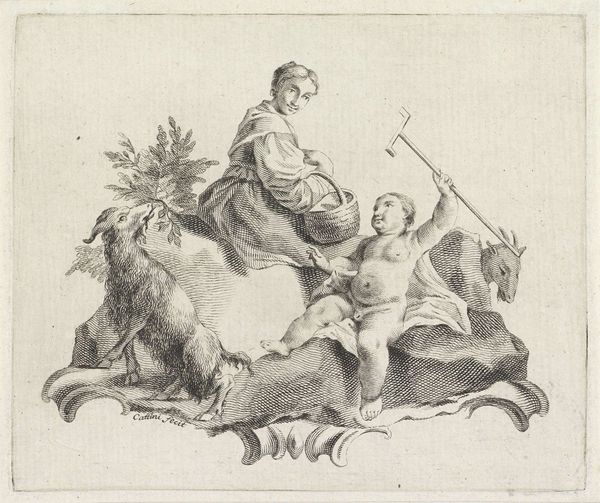
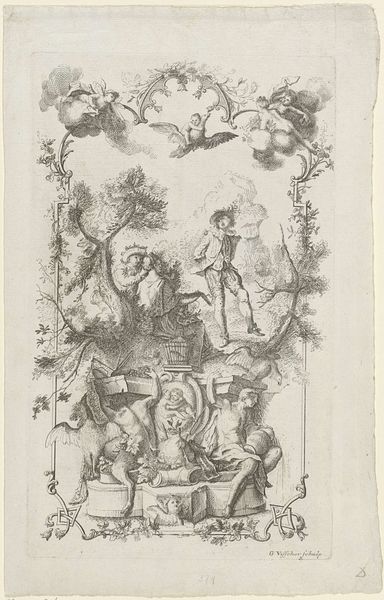
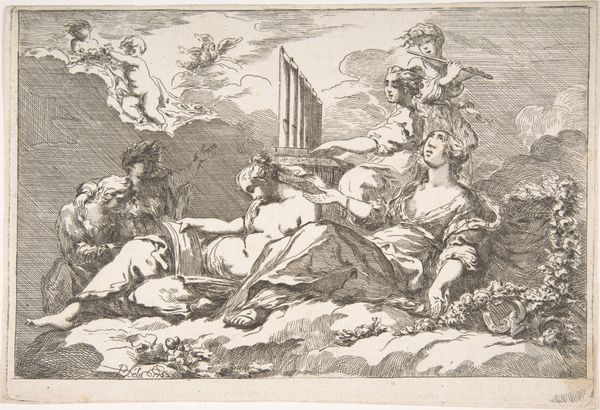
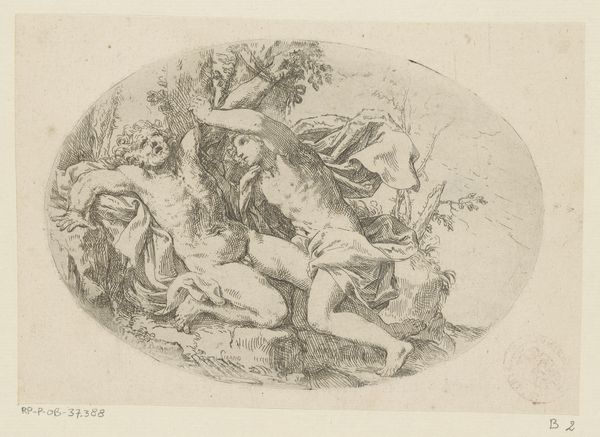
Giovanni Cattini created this etching, “Drie putti,” sometime in the 18th century. During the Rococo period, idealized cherubic figures like these were used to convey themes of love, innocence, and playfulness, often adorning the homes of the wealthy. Here, three putti are set against an elaborate display of foliage, the central figure clutches drapery, while the others frolic in the clouds. Though seemingly innocent, the putti carry complex historical weight. They often appear in religious paintings where they may be seen as symbols of divine love, but can also be read as sentimental props which reinforce societal ideals of purity and beauty. Cattini’s detailed etching invites us to consider how these images shape our understanding of childhood and innocence, and how they reflect the values of the society that produced them.
Comments
No comments
Be the first to comment and join the conversation on the ultimate creative platform.
 Collect
 React
React Comment
More like this