About this artwork
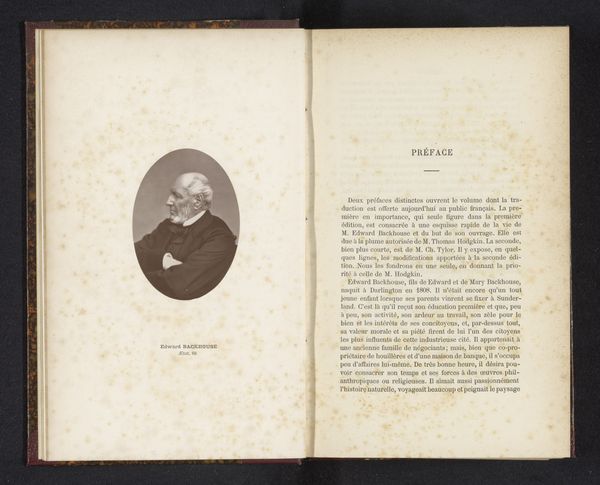
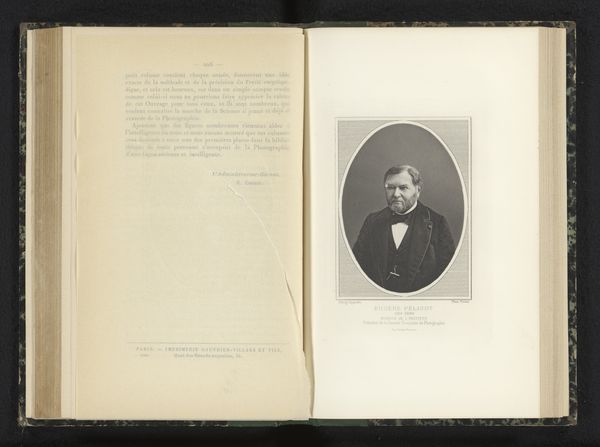
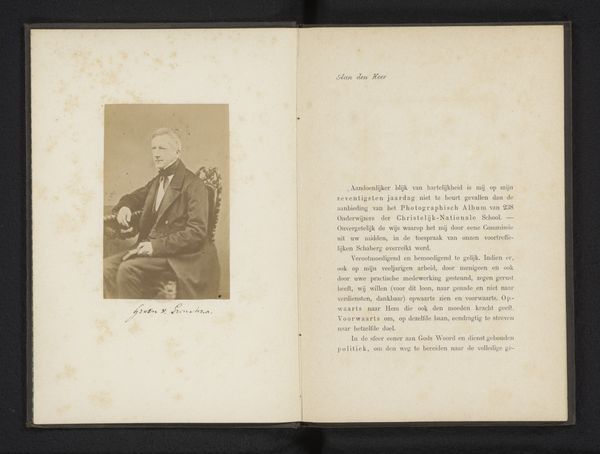
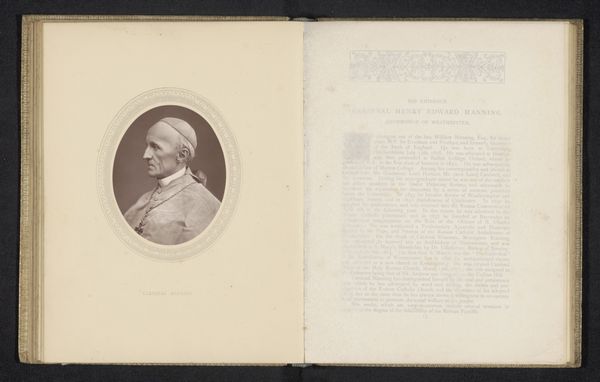
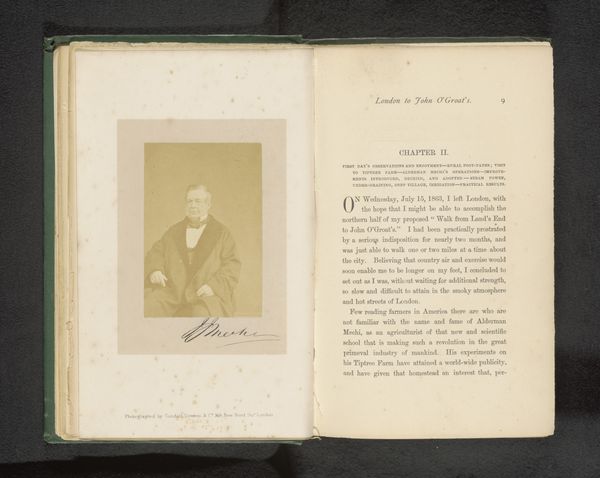
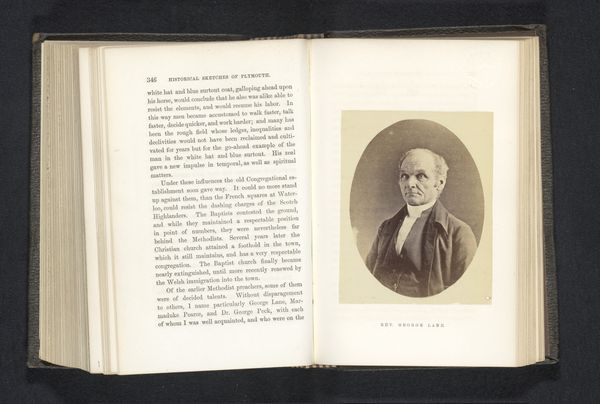
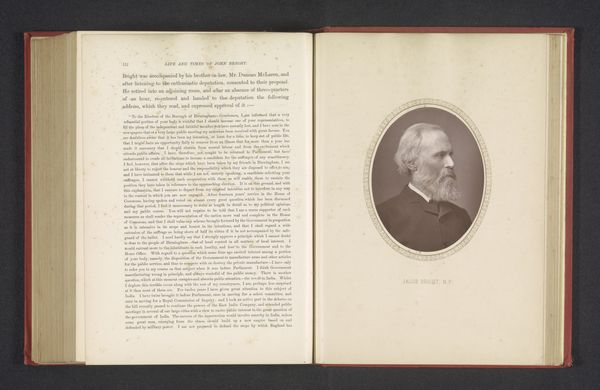
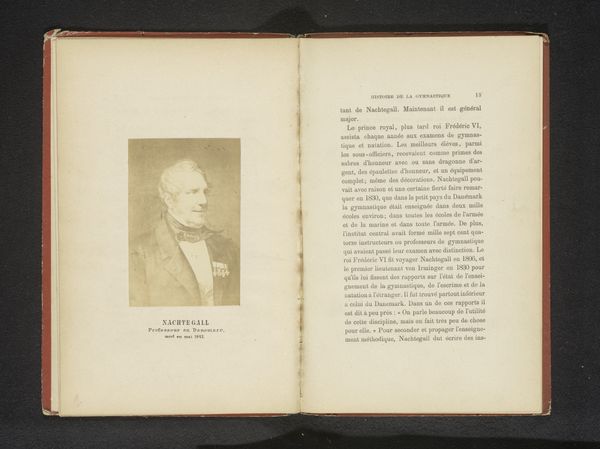
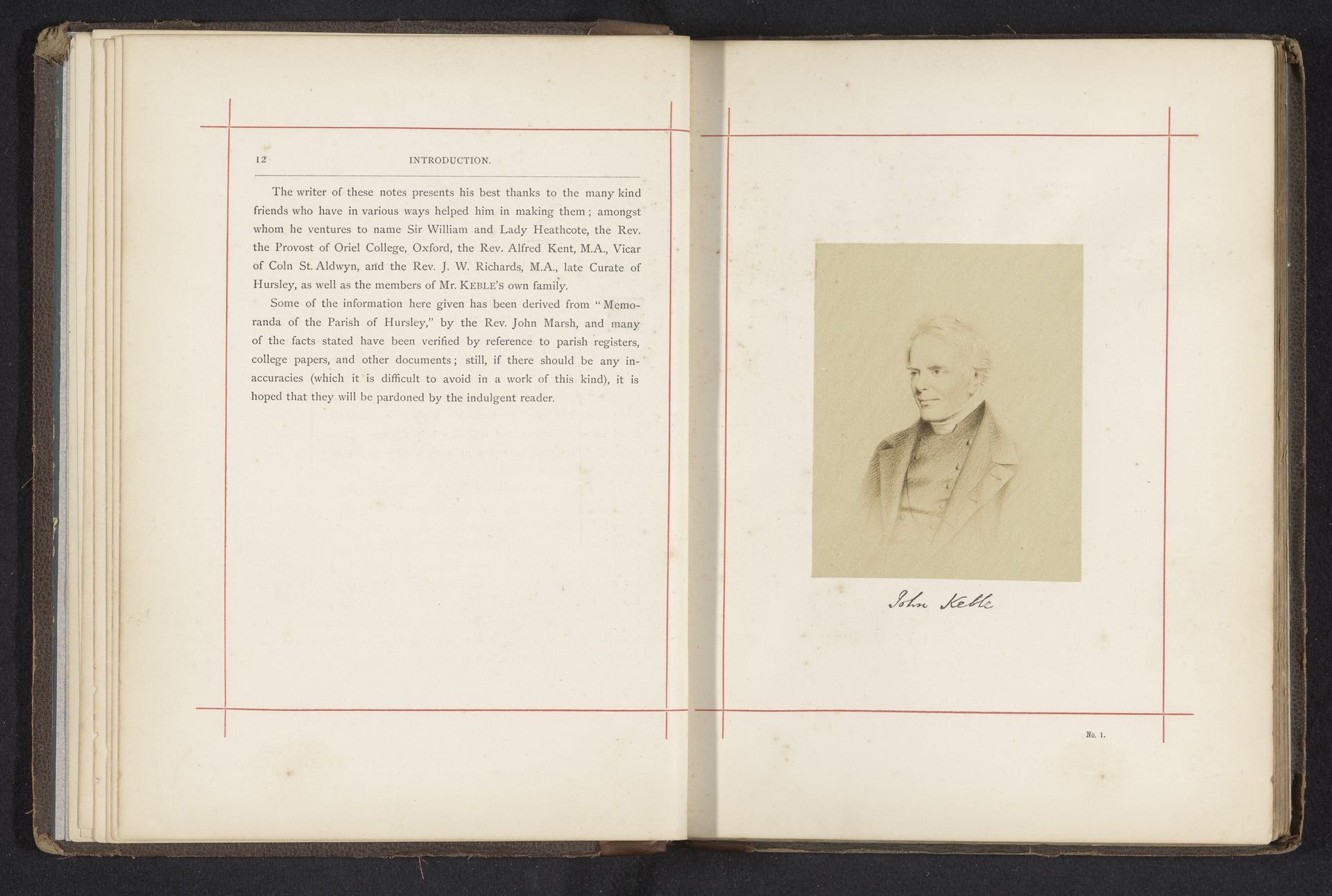
Curator: Here we have "Fotoreproductie van een getekend portret van John Keble," made before 1866, attributed to William Savage. It's fascinating how it lives within the pages of this aged book. What strikes you about it? Editor: It's sepia-toned softness— almost like looking at a memory. You get the sense it’s distanced from us, yet present through those firm lines in his features. I feel the weight of tradition, somehow. Curator: Indeed. Considering the reproductive nature indicated by the title, “Fotoreproductie”, points to the piece as a document rather than solely a portrait, suggesting the original drawing had an inherent importance needing preservation and distribution via the relatively new photographic print medium. Savage’s hand here feels mediated. Editor: Interesting. It raises the question about access, doesn't it? A print makes the image much more easily distributed than a single drawing. But thinking about materials - paper, ink, photographic chemicals... Who had access to those means of reproduction at this time? This opens a social-historical dimension beyond simply appreciating Keble’s likeness. It connects the elite world portrayed to emerging technological capacities. Curator: Precisely. The very act of reproducing a drawing photographically, highlights the intersection of artistry and technology, craftsmanship and industry. This reminds me a bit of thinking about the alchemic process behind photography itself, the careful manipulation of light and chemicals feels more akin to making than capturing, even when representing something previously drawn. Editor: It almost flips the artistic intention. With a painting or drawing, you think first about expression. But framed within these pages, using printmaking as a medium, transforms a person into something of an idea or document – instantly more shareable. What stories did Keble help disseminate during his time? Curator: It makes me ponder the value systems attached: what’s lost and gained as hand-rendered artistry turns industrial and widespread. Maybe that feeling of distantness I sense isn't the time gap, but something to do with the making. Editor: A perfect question to carry forward, I would say, like echoing after turning this delicate page.
Fotoreproductie van een getekend portret van John Keble before 1866

Artwork details
- Medium
- print, photography
- Dimensions
- height 104 mm, width 83 mm
- Copyright
- Rijks Museum: Open Domain
Tags
portrait
photography
academic-art
Comments
No comments
About this artwork
Curator: Here we have "Fotoreproductie van een getekend portret van John Keble," made before 1866, attributed to William Savage. It's fascinating how it lives within the pages of this aged book. What strikes you about it? Editor: It's sepia-toned softness— almost like looking at a memory. You get the sense it’s distanced from us, yet present through those firm lines in his features. I feel the weight of tradition, somehow. Curator: Indeed. Considering the reproductive nature indicated by the title, “Fotoreproductie”, points to the piece as a document rather than solely a portrait, suggesting the original drawing had an inherent importance needing preservation and distribution via the relatively new photographic print medium. Savage’s hand here feels mediated. Editor: Interesting. It raises the question about access, doesn't it? A print makes the image much more easily distributed than a single drawing. But thinking about materials - paper, ink, photographic chemicals... Who had access to those means of reproduction at this time? This opens a social-historical dimension beyond simply appreciating Keble’s likeness. It connects the elite world portrayed to emerging technological capacities. Curator: Precisely. The very act of reproducing a drawing photographically, highlights the intersection of artistry and technology, craftsmanship and industry. This reminds me a bit of thinking about the alchemic process behind photography itself, the careful manipulation of light and chemicals feels more akin to making than capturing, even when representing something previously drawn. Editor: It almost flips the artistic intention. With a painting or drawing, you think first about expression. But framed within these pages, using printmaking as a medium, transforms a person into something of an idea or document – instantly more shareable. What stories did Keble help disseminate during his time? Curator: It makes me ponder the value systems attached: what’s lost and gained as hand-rendered artistry turns industrial and widespread. Maybe that feeling of distantness I sense isn't the time gap, but something to do with the making. Editor: A perfect question to carry forward, I would say, like echoing after turning this delicate page.
Comments
No comments