About this artwork
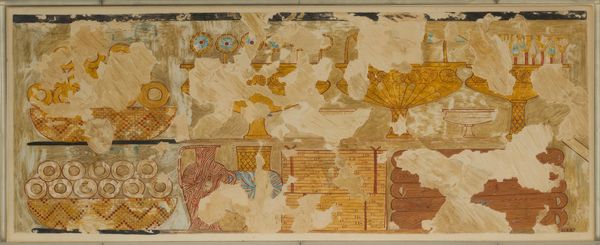
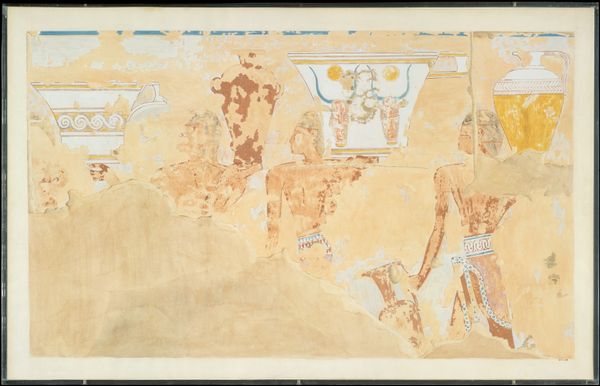
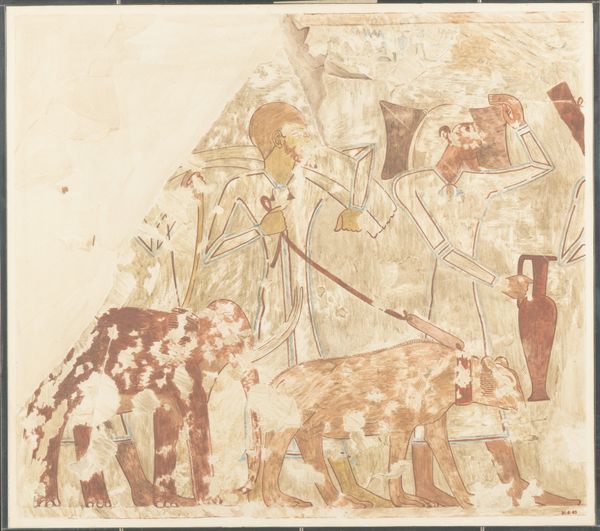
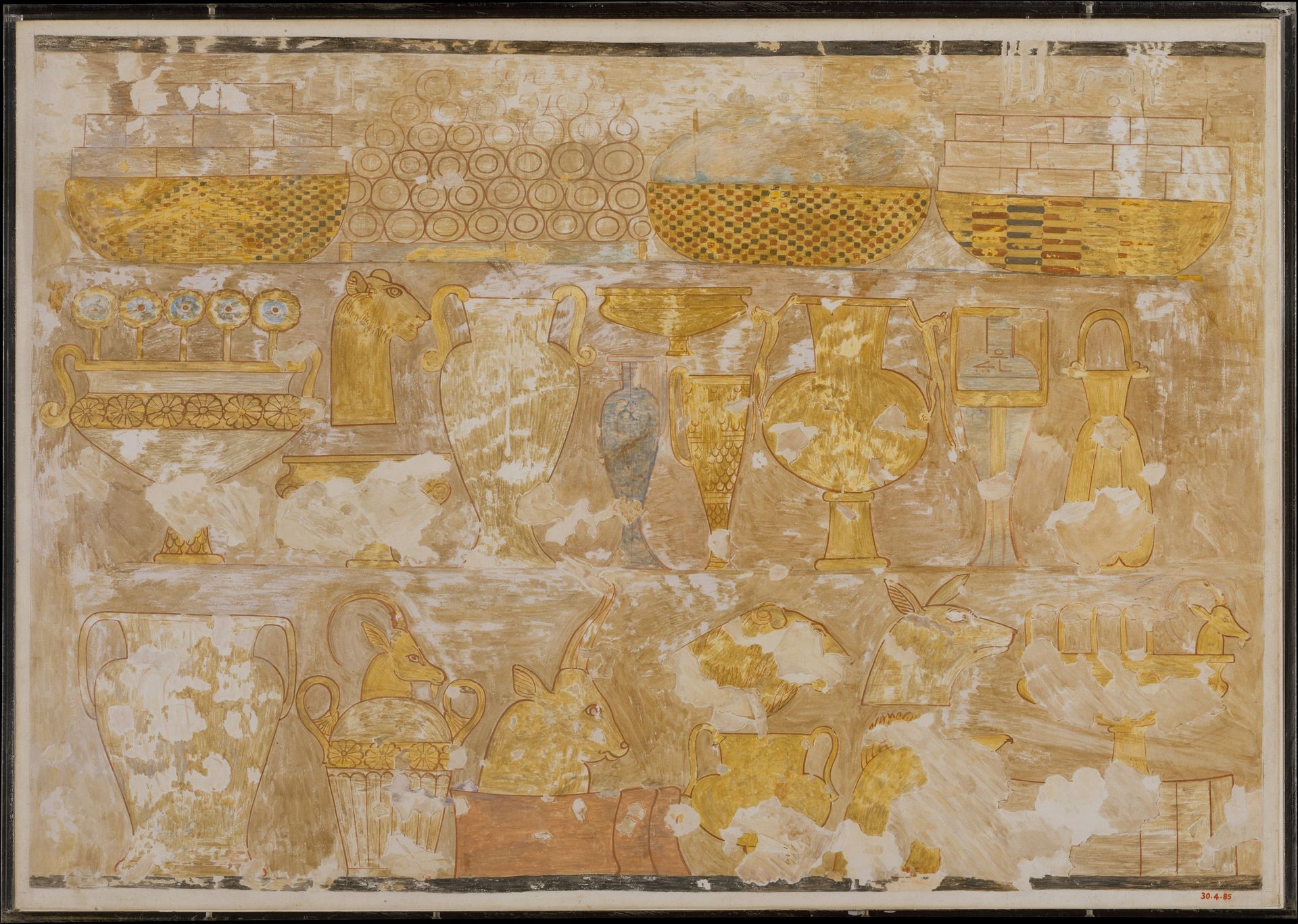
Nina de Garis Davies created this watercolor facsimile of a wall painting in the Tomb of Rekhmire, capturing a scene of tribute bearers. The original was painted on plaster, a common technique in ancient Egyptian art, offering a smooth surface for detailed work. Davies’s copy allows us to appreciate the vibrant materiality of the original. Look closely at the depictions of vessels and goods brought as gifts. The textures and forms suggest a society rich in craft traditions, from pottery and metalworking to weaving. The act of presenting these gifts speaks to a complex social structure, where labor and skill were valued and exchanged. Davies’s work invites us to consider the relationship between the original artisans and the materials they skillfully transformed. By focusing on the modes of production, we gain a deeper insight into the cultural values embedded within the artwork, blurring the lines between art, craft, and social history.
Gifts from the Keftiu, Tomb of Rekhmire
1479 BC

Nina de Garis Davies
1881 - 1965
The Metropolitan Museum of Art
Metropolitan Museum of Art, New York, NYArtwork details
- Medium
- tempera, fresco, mural
- Dimensions
- facsimile: h. 45 cm (17 11/16 in); w. 65 cm (25 9/16 in) scale 1:1 framed: h.
- Location
- Metropolitan Museum of Art, New York, NY
- Copyright
- Public Domain
Tags
narrative-art
tempera
ancient-egyptian-art
figuration
fresco
carved into stone
ancient-mediterranean
history-painting
mural
Comments
Be the first to share your thoughts about this work.
About this artwork
Nina de Garis Davies created this watercolor facsimile of a wall painting in the Tomb of Rekhmire, capturing a scene of tribute bearers. The original was painted on plaster, a common technique in ancient Egyptian art, offering a smooth surface for detailed work. Davies’s copy allows us to appreciate the vibrant materiality of the original. Look closely at the depictions of vessels and goods brought as gifts. The textures and forms suggest a society rich in craft traditions, from pottery and metalworking to weaving. The act of presenting these gifts speaks to a complex social structure, where labor and skill were valued and exchanged. Davies’s work invites us to consider the relationship between the original artisans and the materials they skillfully transformed. By focusing on the modes of production, we gain a deeper insight into the cultural values embedded within the artwork, blurring the lines between art, craft, and social history.
Comments
Be the first to share your thoughts about this work.