About this artwork
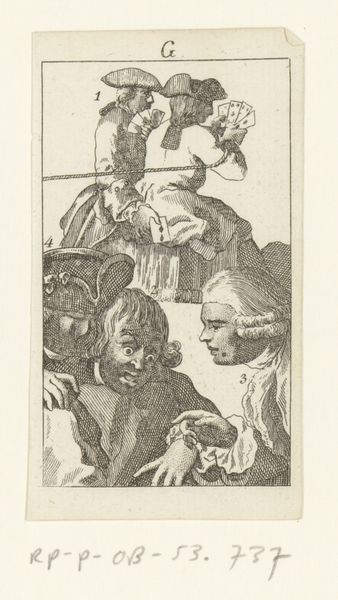
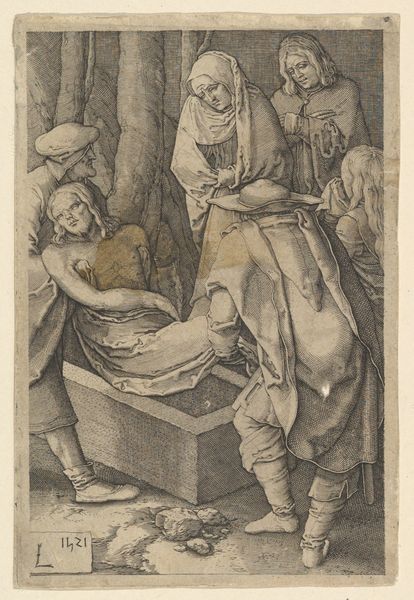
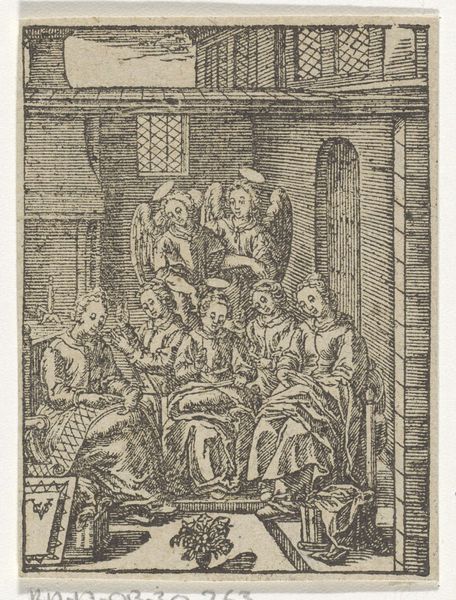
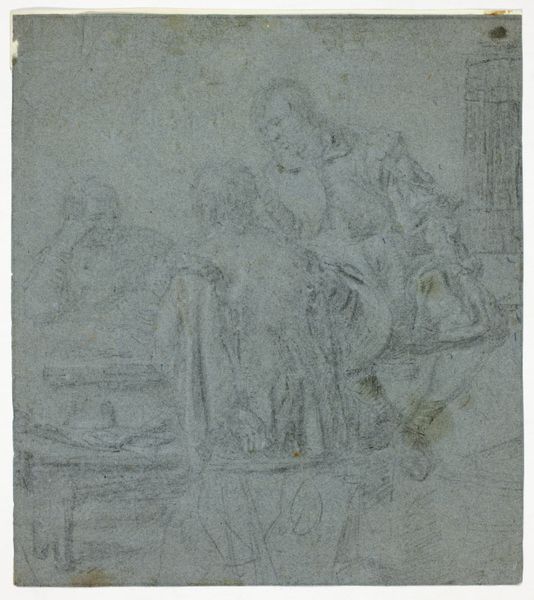
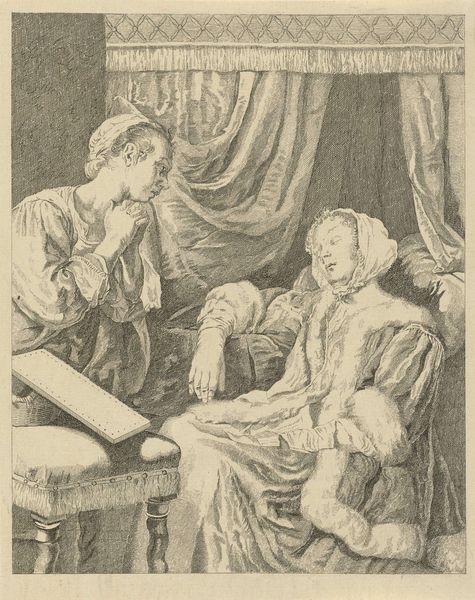
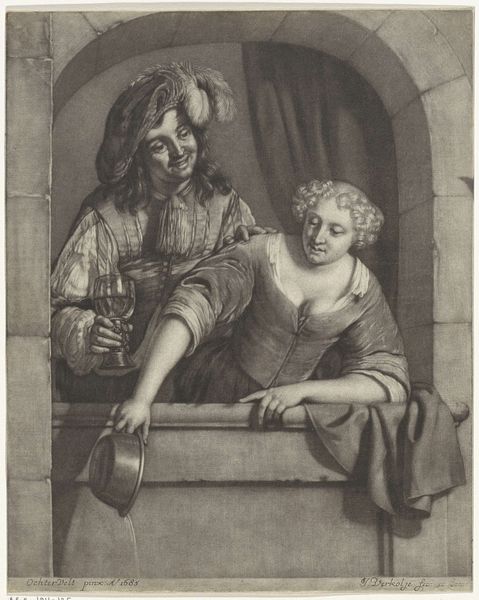
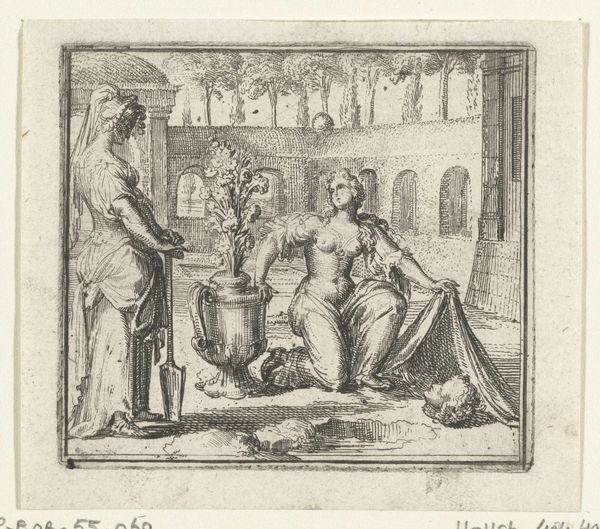
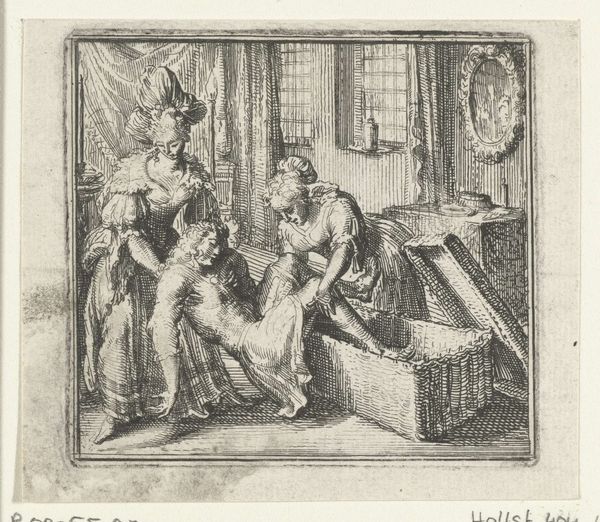
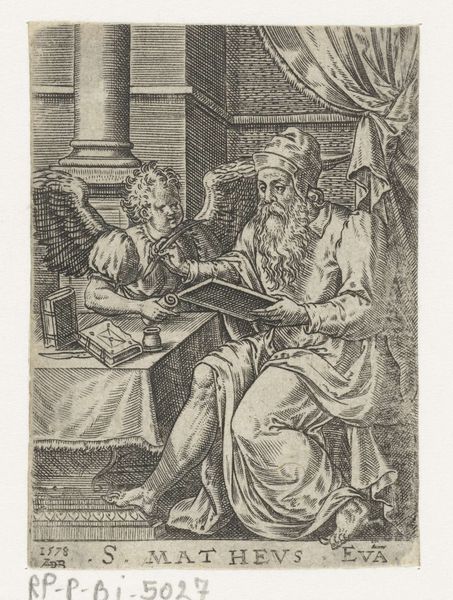
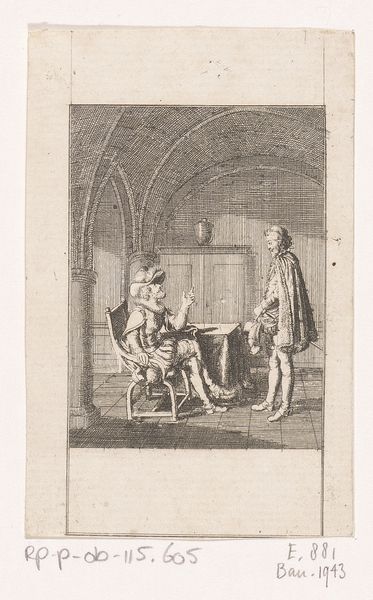
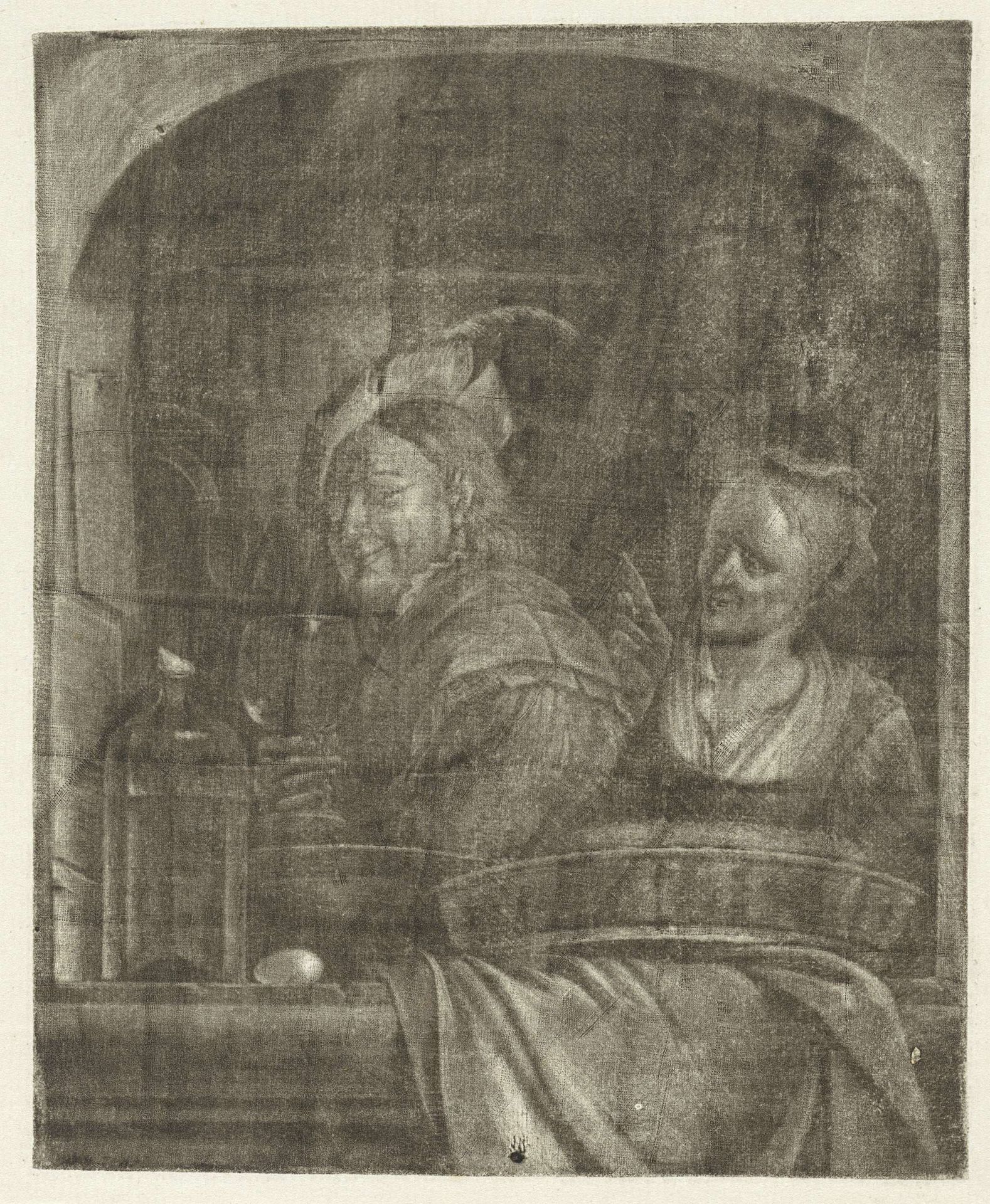
Aert Schouman created this artwork, "Man en vrouw in een venster," using etching—a printmaking technique where lines are incised into a metal plate with acid. The nature of etching allows for fine detail, visible here in the delicate rendering of fabric and facial expressions, but the process also gives the image a slightly rough quality, as the acid bites into the metal. Notice the tonal gradations achieved through varied line density, creating depth and shadow. The composition is built up through a series of controlled marks, each contributing to the overall image. Etching, as a reproductive medium, democratized image-making in the 18th century. It enabled the wider circulation of visual information, detaching art from unique, hand-painted origins. This print is not just an image; it is also a testament to the changing landscape of art production and consumption, blurring boundaries between art, craft, and industry.

Artwork details
- Medium
- drawing, pencil
- Dimensions
- height 170 mm, width 137 mm
- Location
- Rijksmuseum
- Copyright
- Rijks Museum: Open Domain
Tags
Comments
Share your thoughts
About this artwork
Aert Schouman created this artwork, "Man en vrouw in een venster," using etching—a printmaking technique where lines are incised into a metal plate with acid. The nature of etching allows for fine detail, visible here in the delicate rendering of fabric and facial expressions, but the process also gives the image a slightly rough quality, as the acid bites into the metal. Notice the tonal gradations achieved through varied line density, creating depth and shadow. The composition is built up through a series of controlled marks, each contributing to the overall image. Etching, as a reproductive medium, democratized image-making in the 18th century. It enabled the wider circulation of visual information, detaching art from unique, hand-painted origins. This print is not just an image; it is also a testament to the changing landscape of art production and consumption, blurring boundaries between art, craft, and industry.
Comments
Share your thoughts