About this artwork
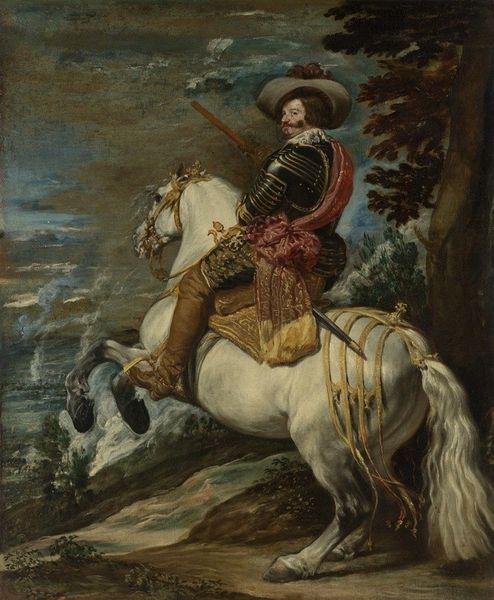
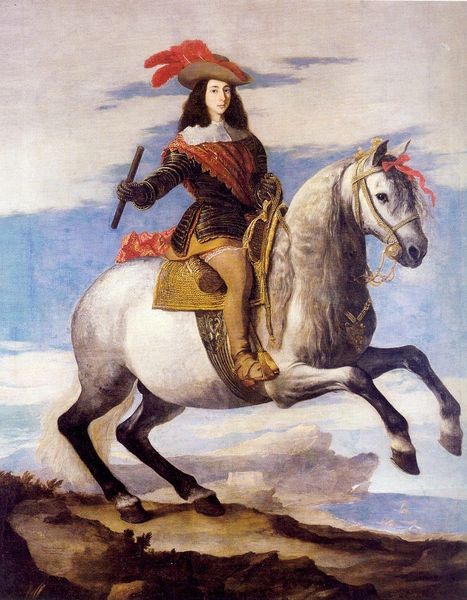
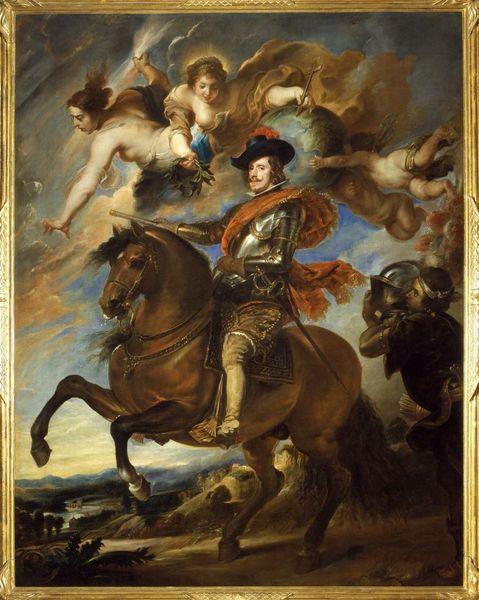
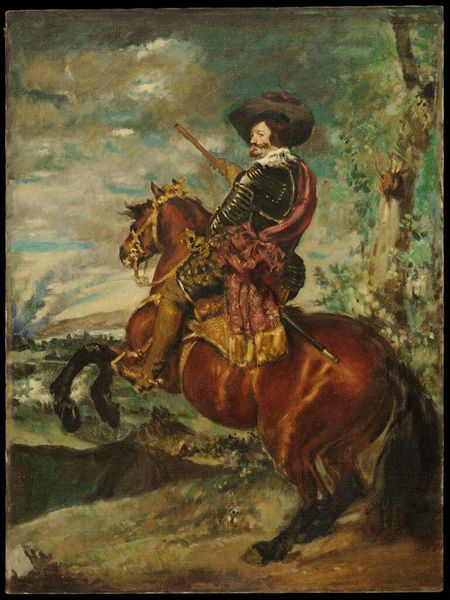
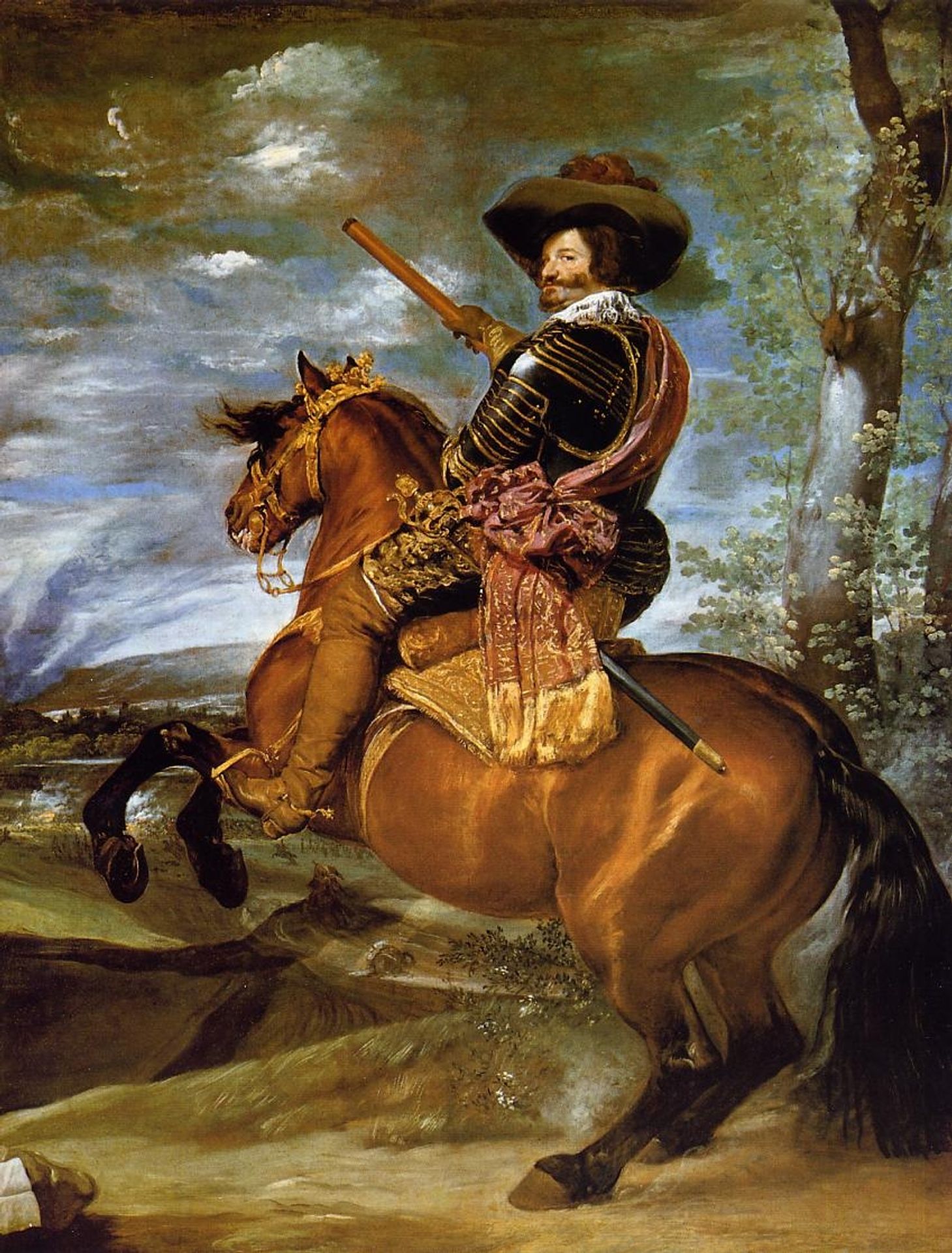
Diego Velázquez painted this equestrian portrait of Don Gaspar de Guzman, the Count-Duke of Olivares, in the 17th century. The Count-Duke, mounted on a rearing horse, brandishes a baton—a symbol of military command and authority. This motif echoes the Roman emperors of antiquity, who were often depicted in similar equestrian poses, conveying power and victory. This baton, reminiscent of a scepter, links Olivares to a lineage of rulers and conquerors across time. Note the theatrical drama of the rearing horse, a visual device used since the Renaissance to signify dominance and control. Yet, such displays also carry an inherent tension, a suggestion of instability and the potential for a fall. Consider how these symbols are adapted and reinterpreted. The baton, once a straightforward emblem of power, becomes tinged with the Count-Duke's own complex ambitions and the shifting political landscape of his time. The baton, the horse, and the Count-Duke himself, stand as vivid reminders of how images and their meanings are continually reshaped by history and human experience.
Equestrian Portrait of Don Gaspar de GuzmanCount Duke of Olivares 1634

Diego Velázquez
1599 - 1660Location
Museo del Prado, Madrid, SpainArtwork details
- Medium
- oil-paint
- Dimensions
- 239 x 313 cm
- Location
- Museo del Prado, Madrid, Spain
- Copyright
- Public domain
Tags
portrait
baroque
oil-paint
landscape
oil painting
horse
history-painting
Comments
No comments
About this artwork
Diego Velázquez painted this equestrian portrait of Don Gaspar de Guzman, the Count-Duke of Olivares, in the 17th century. The Count-Duke, mounted on a rearing horse, brandishes a baton—a symbol of military command and authority. This motif echoes the Roman emperors of antiquity, who were often depicted in similar equestrian poses, conveying power and victory. This baton, reminiscent of a scepter, links Olivares to a lineage of rulers and conquerors across time. Note the theatrical drama of the rearing horse, a visual device used since the Renaissance to signify dominance and control. Yet, such displays also carry an inherent tension, a suggestion of instability and the potential for a fall. Consider how these symbols are adapted and reinterpreted. The baton, once a straightforward emblem of power, becomes tinged with the Count-Duke's own complex ambitions and the shifting political landscape of his time. The baton, the horse, and the Count-Duke himself, stand as vivid reminders of how images and their meanings are continually reshaped by history and human experience.
Comments
No comments