About this artwork
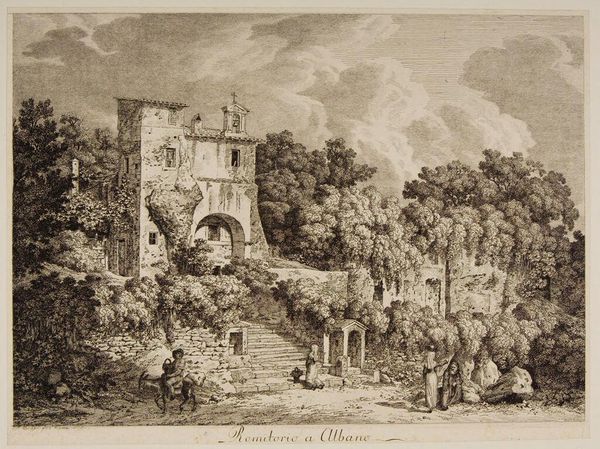
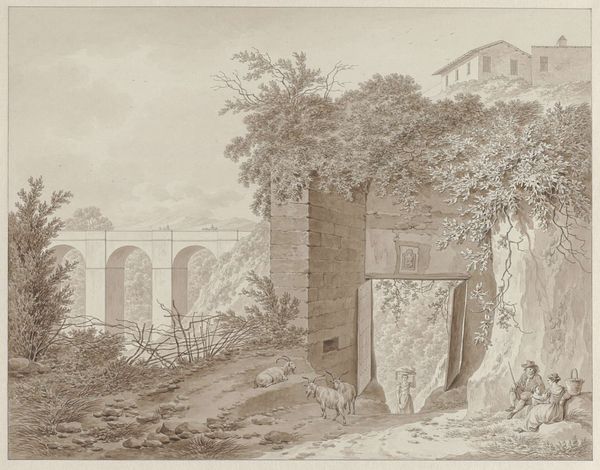
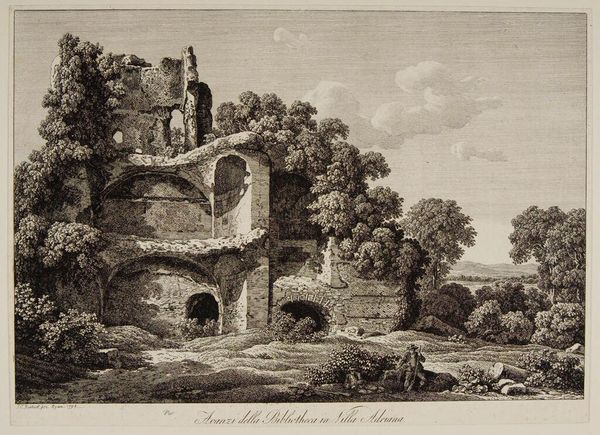
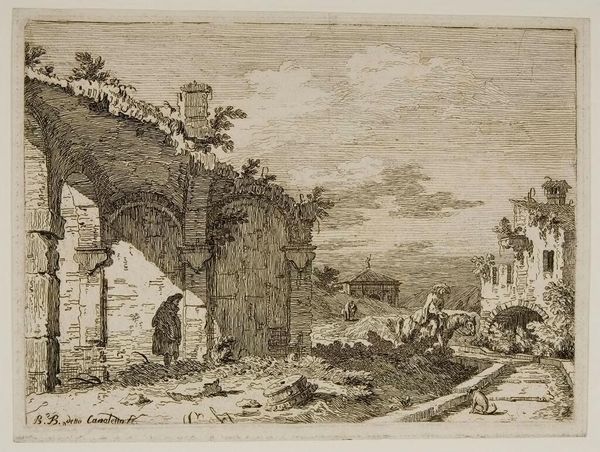
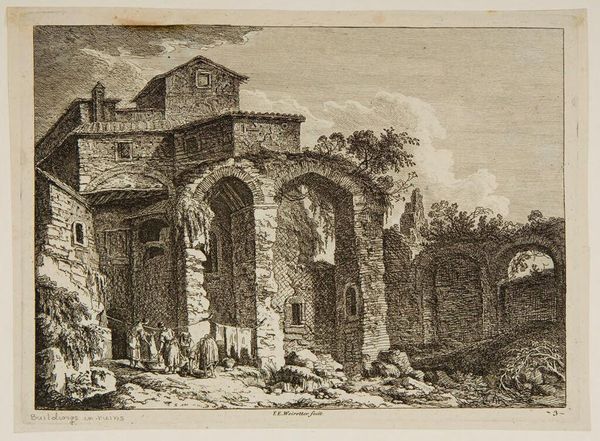
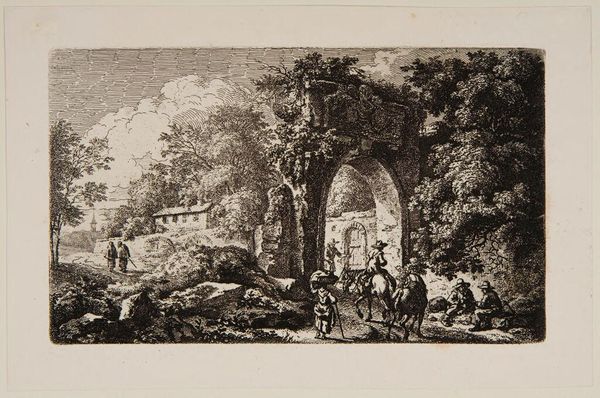
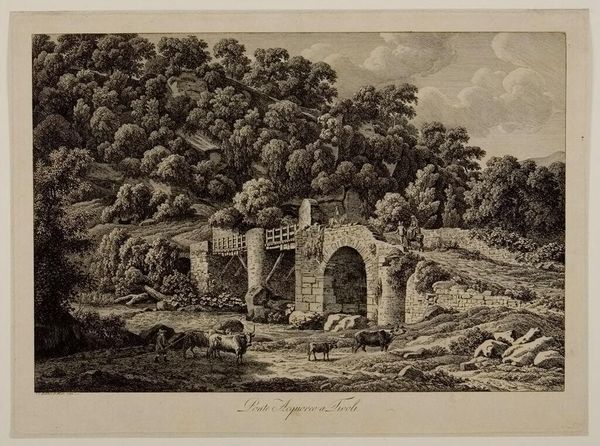
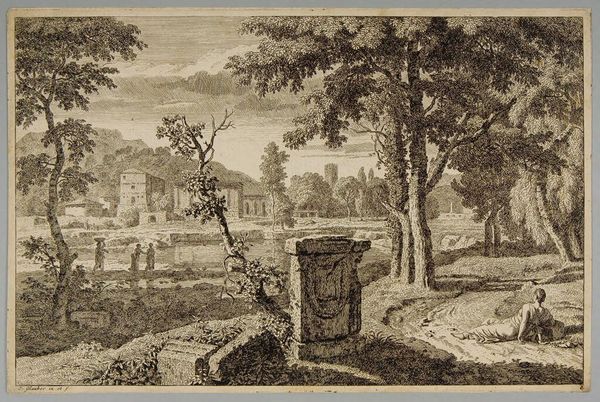
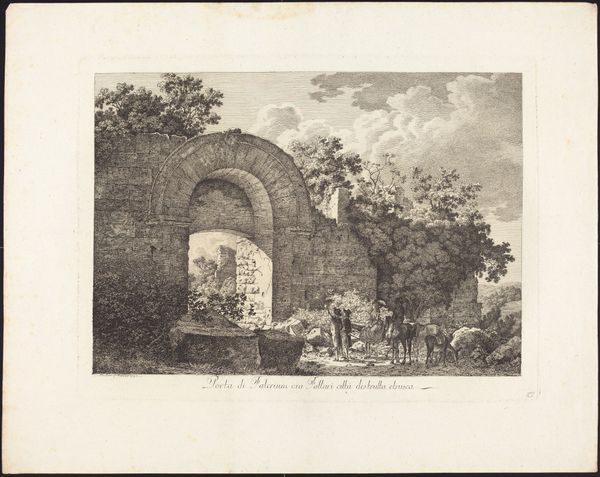
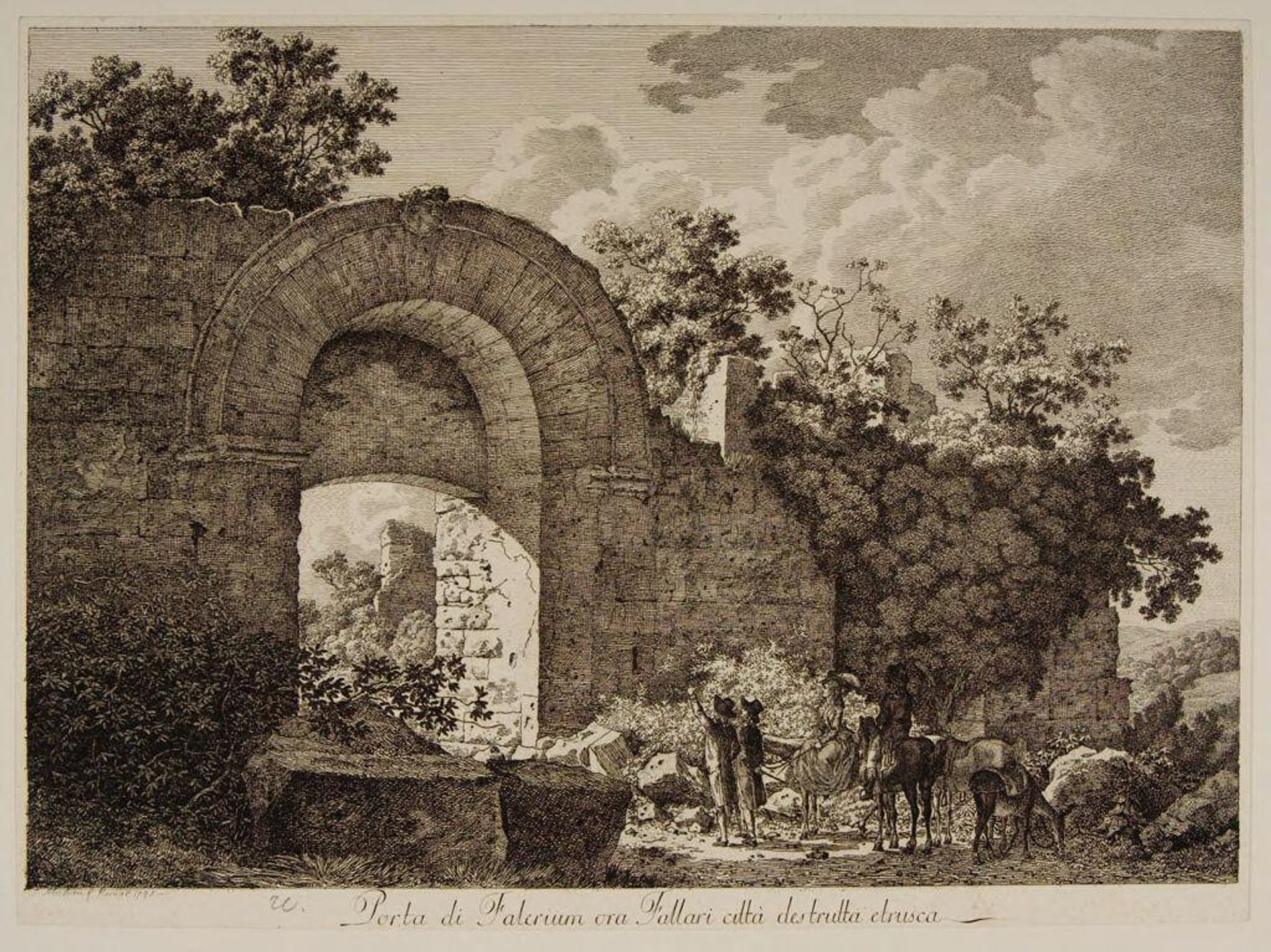
Editor: This is Jacob Wilhelm Mechau's "Porta di Falerium", an etching. It feels so detailed, yet distant, like a memory. What stands out to you? Curator: The appeal lies in the labor involved. Consider the copper plate, the acid etching process, the press, and the paper. Mechau is not just depicting a scene, but engaging in a chain of production and consumption. The etching becomes a commodity, disseminating classical ideals through reproducible form. Editor: So, the value isn't just in the image, but in its means of creation and distribution? Curator: Precisely. The print embodies a complex interplay of materiality, labor, and the social circulation of images in Mechau's time. We see not just ruins, but the roots of a visual economy. Editor: That changes how I see the print; it’s not just a picture, but a product. Curator: Exactly, and considering this, how does this relate to today?
Porta di Falerium
18th-19th century


Artwork details
- Location
- Harvard Art Museums
- Copyright
- CC0 1.0
Comments
Share your thoughts
About this artwork
Editor: This is Jacob Wilhelm Mechau's "Porta di Falerium", an etching. It feels so detailed, yet distant, like a memory. What stands out to you? Curator: The appeal lies in the labor involved. Consider the copper plate, the acid etching process, the press, and the paper. Mechau is not just depicting a scene, but engaging in a chain of production and consumption. The etching becomes a commodity, disseminating classical ideals through reproducible form. Editor: So, the value isn't just in the image, but in its means of creation and distribution? Curator: Precisely. The print embodies a complex interplay of materiality, labor, and the social circulation of images in Mechau's time. We see not just ruins, but the roots of a visual economy. Editor: That changes how I see the print; it’s not just a picture, but a product. Curator: Exactly, and considering this, how does this relate to today?
Comments
Share your thoughts