About this artwork
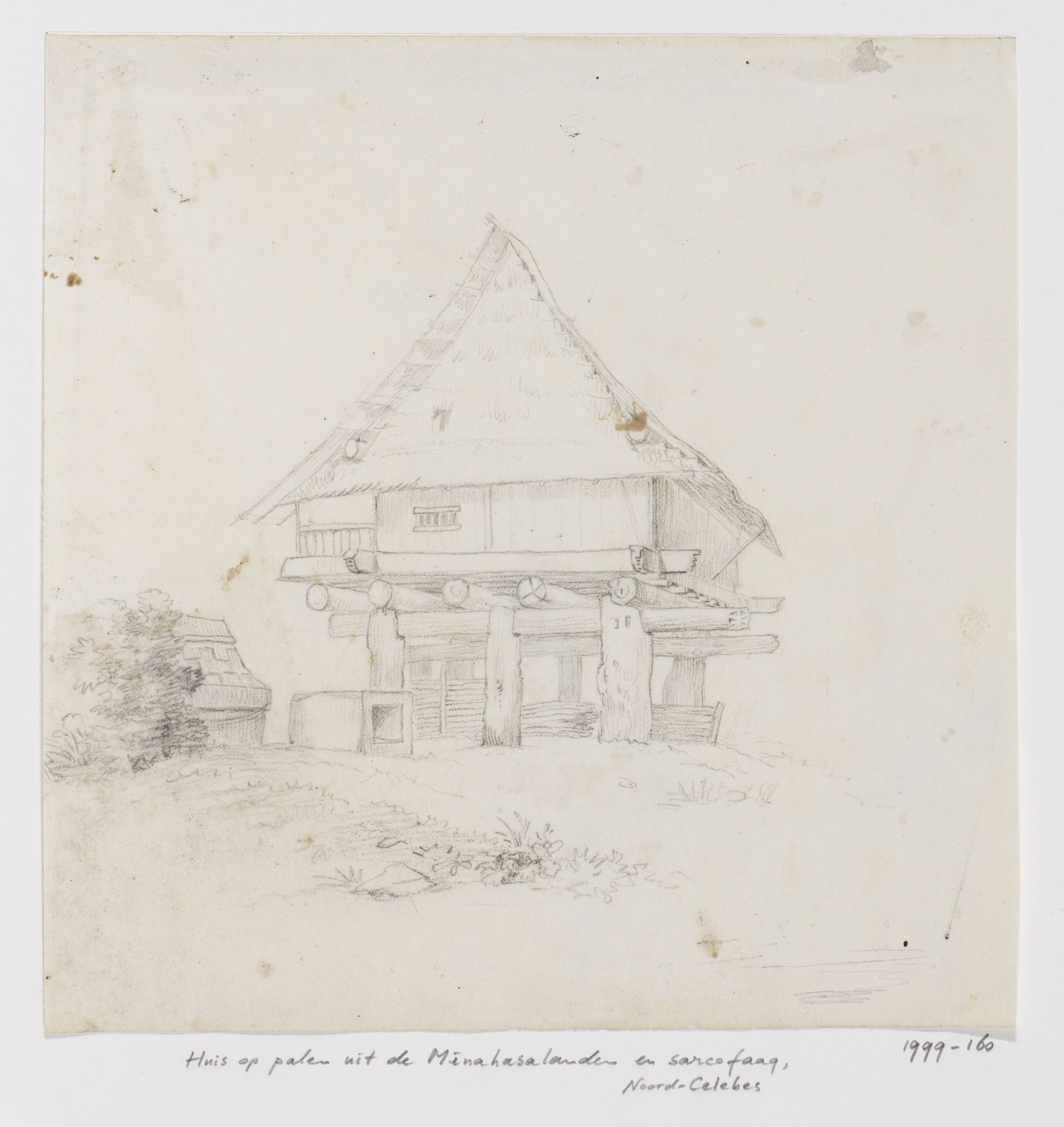
This is a pencil drawing of a house on stilts, and a sarcophagus, from North Celebes, made by Adrianus Johannes Bik. The lightness of the pencil on paper gives a delicate impression, but consider for a moment the weight and density of the timber it depicts. The structure is evidently built from felled trees, carefully squared and stacked. The stilts raise the house above the ground, a practical response to the damp climate and potential for flooding. Yet, the way the timbers are joined also reveals a sophisticated understanding of structural engineering. The image is a window onto local building practices. Bik’s interest in this vernacular architecture is of its time, during the period of Dutch colonialism. But the drawing also points to the skill and labor involved in building, which is perhaps easily overlooked. The materiality of the house reminds us of the relationship between people and their environment.
Huis op palen uit de Minahasalanden en sarcofaag, Noord-Celebes
c. 1821 - 1824

Adrianus Johannes Bik
1790 - 1872Location
RijksmuseumArtwork details
- Medium
- drawing, pencil, architecture
- Dimensions
- height 230 mm, width 227 mm
- Location
- Rijksmuseum
- Copyright
- Rijks Museum: Open Domain
Tags
Comments
Share your thoughts
About this artwork
This is a pencil drawing of a house on stilts, and a sarcophagus, from North Celebes, made by Adrianus Johannes Bik. The lightness of the pencil on paper gives a delicate impression, but consider for a moment the weight and density of the timber it depicts. The structure is evidently built from felled trees, carefully squared and stacked. The stilts raise the house above the ground, a practical response to the damp climate and potential for flooding. Yet, the way the timbers are joined also reveals a sophisticated understanding of structural engineering. The image is a window onto local building practices. Bik’s interest in this vernacular architecture is of its time, during the period of Dutch colonialism. But the drawing also points to the skill and labor involved in building, which is perhaps easily overlooked. The materiality of the house reminds us of the relationship between people and their environment.
Comments
Share your thoughts