About this artwork
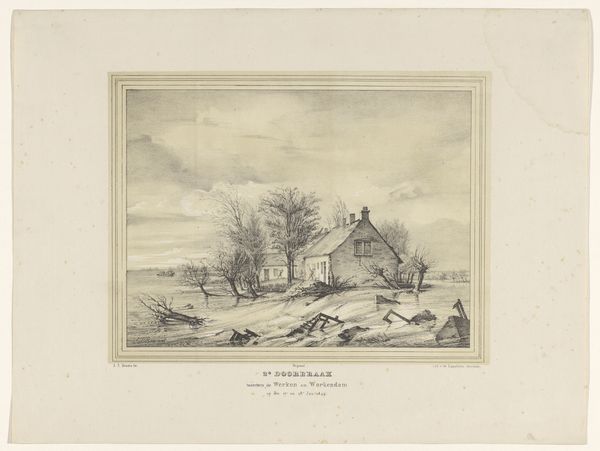
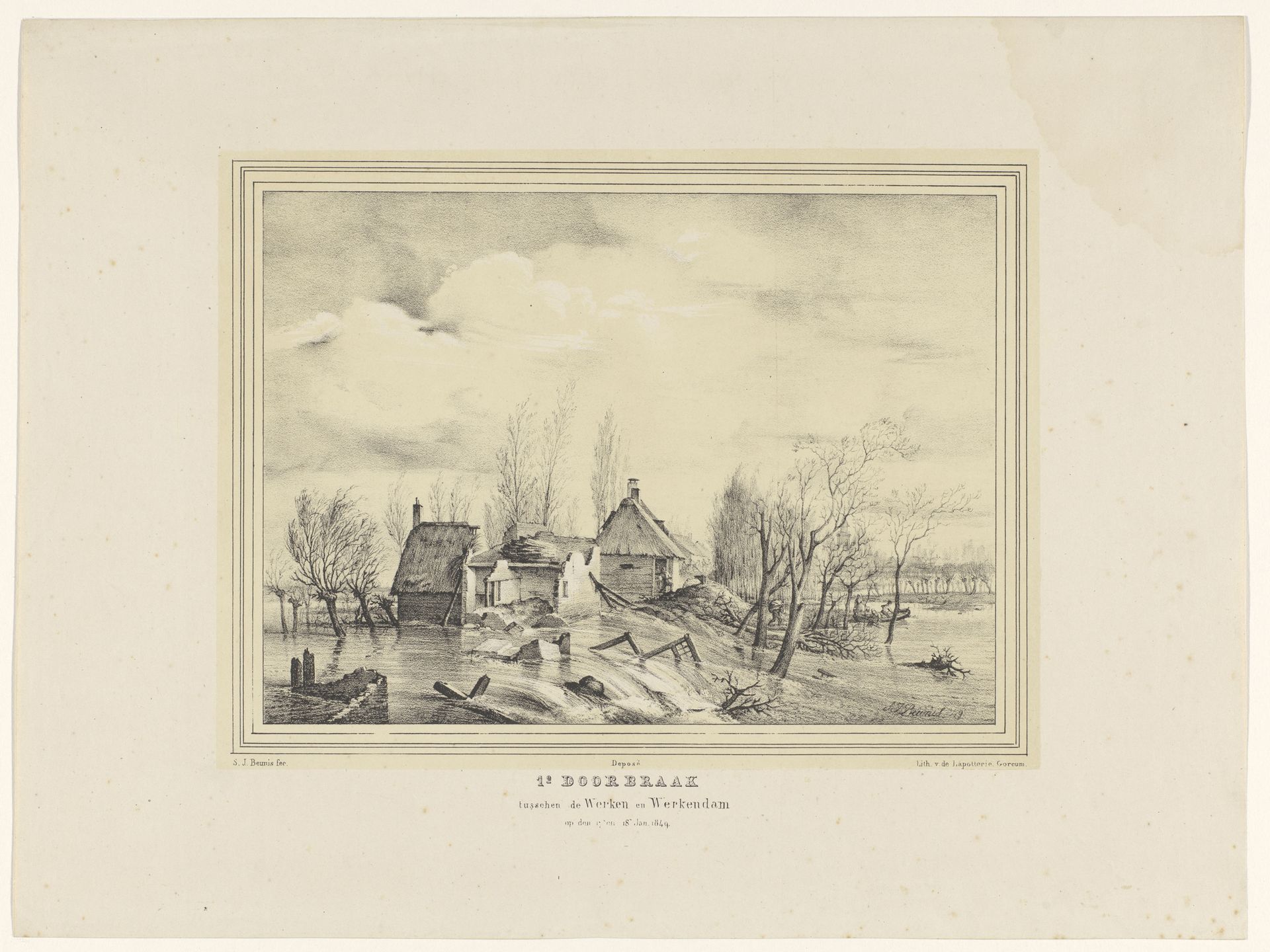
Johannes Beunis made this print titled '1e Doorbraak tusschen de Werken en Werkendam op den 17 en 18 Jan. 1849' without a specified date, using an etching technique. Consider the 19th century, a period marked by significant industrial and social upheaval, as well as the rising impacts of climate change. Beunis captures the breach between Werken and Werkendam during the January 1849 flood, an event that would have dramatically altered the landscape and lives of those who lived there. Notice the somber tones and detailed rendering of the flooded landscape. The submerged houses and uprooted trees speak to the vulnerability of the communities which were at the mercy of natural disasters. How did the economic hardships of the time amplify the suffering of those affected by the flood? The print invites us to reflect on how communities cope with disasters and the role of infrastructure in protecting vulnerable populations. Beunis’ print is a stark reminder of our relationship with nature. It acts as a historical record and a poignant commentary on the delicate balance between human life and the environment.
1e Doorbraak tusschen de Werken en Werkendam op den 17 en 18 Jan. 1849
1849

Artwork details
- Medium
- print, engraving
- Dimensions
- height 246 mm, width 286 mm
- Copyright
- Rijks Museum: Open Domain
Tags
landscape
romanticism
engraving
realism
Comments
Be the first to share your thoughts about this work.
About this artwork
Johannes Beunis made this print titled '1e Doorbraak tusschen de Werken en Werkendam op den 17 en 18 Jan. 1849' without a specified date, using an etching technique. Consider the 19th century, a period marked by significant industrial and social upheaval, as well as the rising impacts of climate change. Beunis captures the breach between Werken and Werkendam during the January 1849 flood, an event that would have dramatically altered the landscape and lives of those who lived there. Notice the somber tones and detailed rendering of the flooded landscape. The submerged houses and uprooted trees speak to the vulnerability of the communities which were at the mercy of natural disasters. How did the economic hardships of the time amplify the suffering of those affected by the flood? The print invites us to reflect on how communities cope with disasters and the role of infrastructure in protecting vulnerable populations. Beunis’ print is a stark reminder of our relationship with nature. It acts as a historical record and a poignant commentary on the delicate balance between human life and the environment.
Comments
Be the first to share your thoughts about this work.