About this artwork
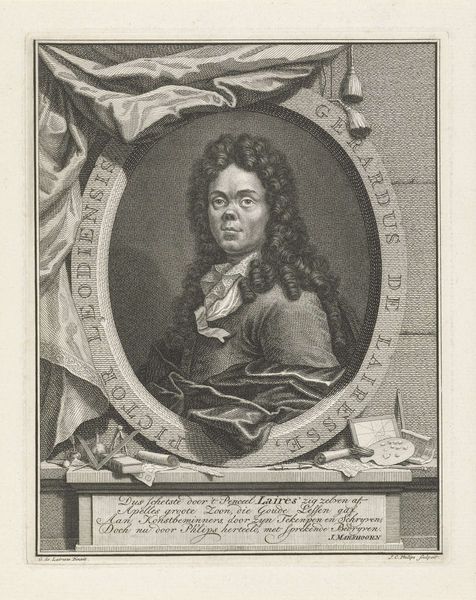
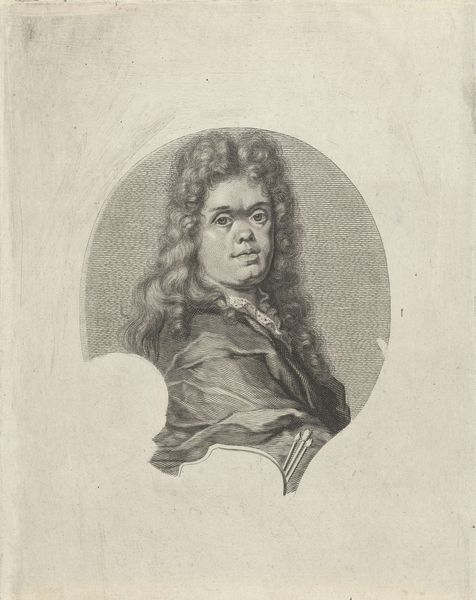
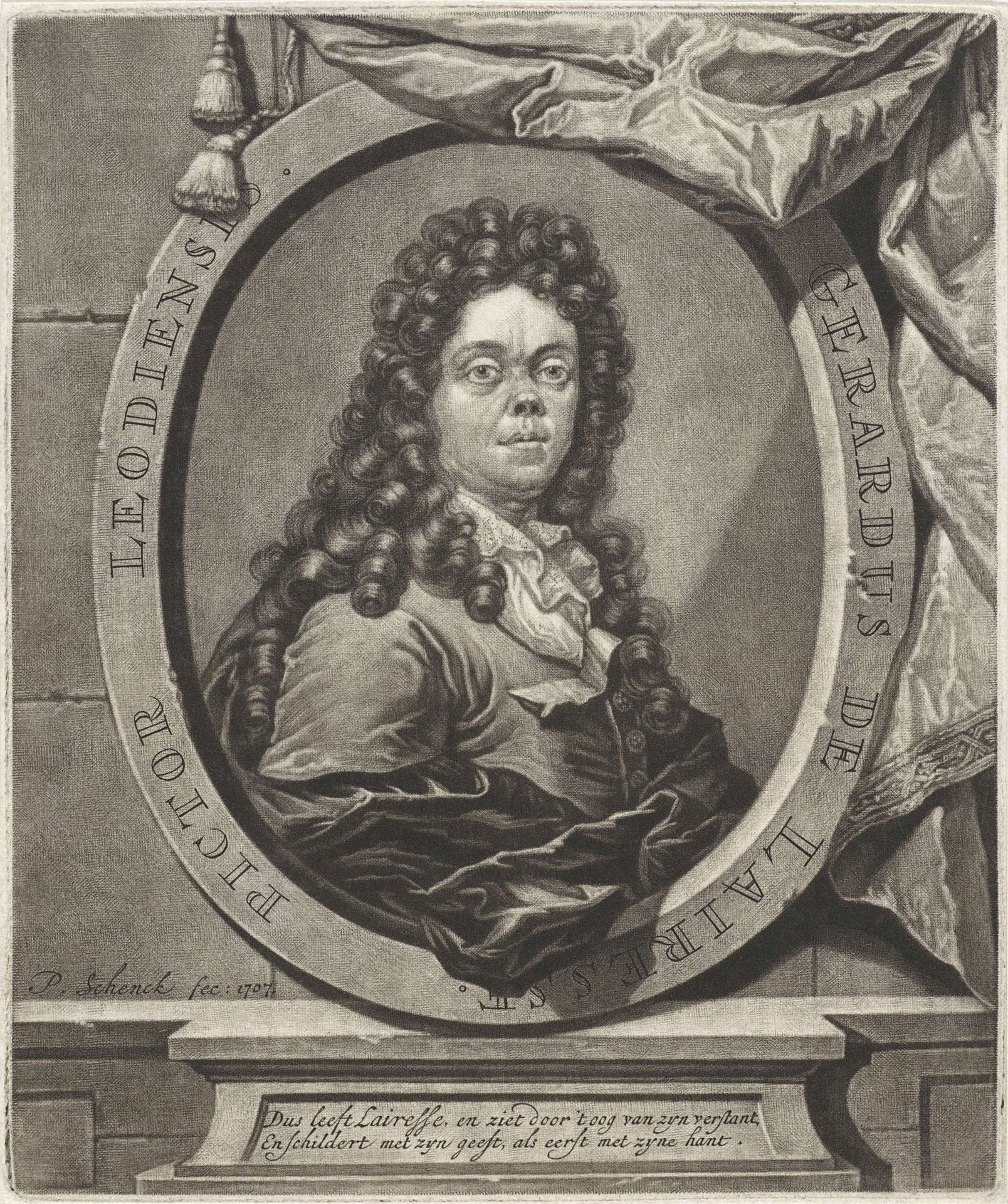
Curator: Here we have Pieter Schenk’s 1707 engraving, "Portret van de prentmaker en schilder Gerard de Lairesse," housed here at the Rijksmuseum. It’s quite an arresting image, isn’t it? Editor: It's incredibly Baroque. Overwhelming even, with that enormous wig. Almost comical, but there’s a sadness, or maybe vulnerability in the sitter's gaze. It draws you in, even with all the pomp. Curator: Indeed. The wig itself speaks volumes, a symbol of status and the theatricality of the age. Lairesse himself was a prominent painter and art theorist, quite celebrated in his time. Editor: Celebrated, yes, but the drooping eyelid suggests a physical ailment...or is it merely the engraver's rendering? It hints at the transience of worldly success, despite the best efforts to present a formidable image. And there’s also something melancholic in how he's framed—literally—by the draped fabric. Like a stage curtain closing. Curator: The oval frame and surrounding drapery certainly add to the drama, typical of Baroque portraiture. It directs our focus firmly towards Lairesse's face. Also consider the inscription, noting that "thus lives Lairesse" with his sight compromised "he paints with spirit rather than with his hand" acknowledging his challenges in a time when physical perfection was prioritized. Editor: That's beautiful. It makes you wonder what stories are etched into his face. The man exudes both strength and frailty. I see defiance, too, not just vulnerability. Defiance in the face of what? Diminishing sight? Mortality itself? He looks like he knows something we don’t, some great artistic secret. Curator: Perhaps he does. The portrait serves as a powerful statement about enduring legacy. Here, sight becomes insight. He continues through his art. And Pieter Schenk captured him just so, using fine lines and delicate shading to reveal both the man and the myth. Editor: It's a remarkable example of portraiture of the time. It is both honest and theatrical, creating that lasting, unforgettable impression. Curator: I concur, the visual layers woven together speak volumes about the complexities of identity. Editor: Precisely. An engaging subject that stays with you.
Portret van de prentmaker en schilder Gerard de Lairesse
1707

Pieter Schenk
1660 - 1711Location
RijksmuseumArtwork details
- Medium
- print, engraving
- Dimensions
- height 161 mm, width 134 mm
- Location
- Rijksmuseum
- Copyright
- Rijks Museum: Open Domain
Tags
Comments
Share your thoughts
About this artwork
Curator: Here we have Pieter Schenk’s 1707 engraving, "Portret van de prentmaker en schilder Gerard de Lairesse," housed here at the Rijksmuseum. It’s quite an arresting image, isn’t it? Editor: It's incredibly Baroque. Overwhelming even, with that enormous wig. Almost comical, but there’s a sadness, or maybe vulnerability in the sitter's gaze. It draws you in, even with all the pomp. Curator: Indeed. The wig itself speaks volumes, a symbol of status and the theatricality of the age. Lairesse himself was a prominent painter and art theorist, quite celebrated in his time. Editor: Celebrated, yes, but the drooping eyelid suggests a physical ailment...or is it merely the engraver's rendering? It hints at the transience of worldly success, despite the best efforts to present a formidable image. And there’s also something melancholic in how he's framed—literally—by the draped fabric. Like a stage curtain closing. Curator: The oval frame and surrounding drapery certainly add to the drama, typical of Baroque portraiture. It directs our focus firmly towards Lairesse's face. Also consider the inscription, noting that "thus lives Lairesse" with his sight compromised "he paints with spirit rather than with his hand" acknowledging his challenges in a time when physical perfection was prioritized. Editor: That's beautiful. It makes you wonder what stories are etched into his face. The man exudes both strength and frailty. I see defiance, too, not just vulnerability. Defiance in the face of what? Diminishing sight? Mortality itself? He looks like he knows something we don’t, some great artistic secret. Curator: Perhaps he does. The portrait serves as a powerful statement about enduring legacy. Here, sight becomes insight. He continues through his art. And Pieter Schenk captured him just so, using fine lines and delicate shading to reveal both the man and the myth. Editor: It's a remarkable example of portraiture of the time. It is both honest and theatrical, creating that lasting, unforgettable impression. Curator: I concur, the visual layers woven together speak volumes about the complexities of identity. Editor: Precisely. An engaging subject that stays with you.
Comments
Share your thoughts