About this artwork
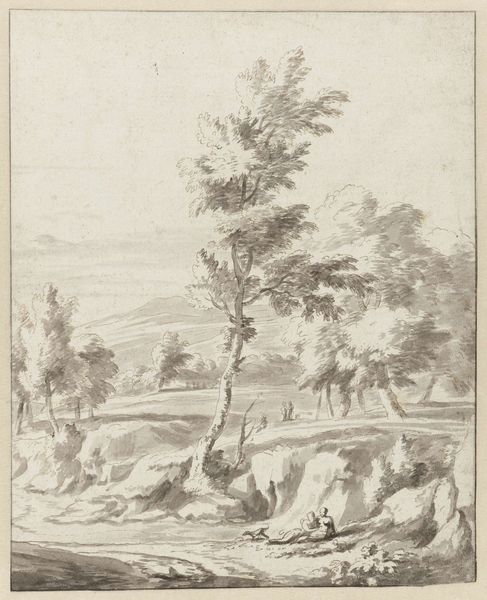
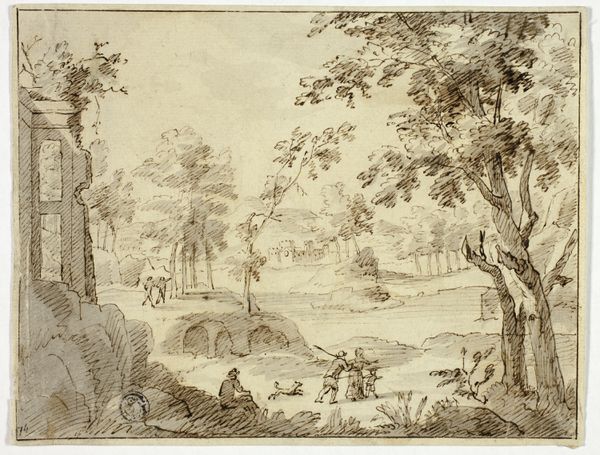
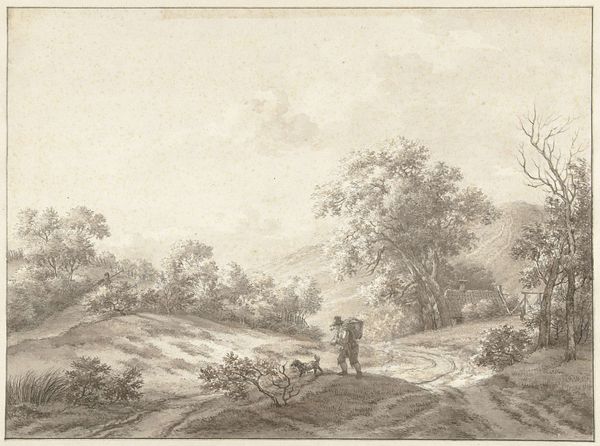
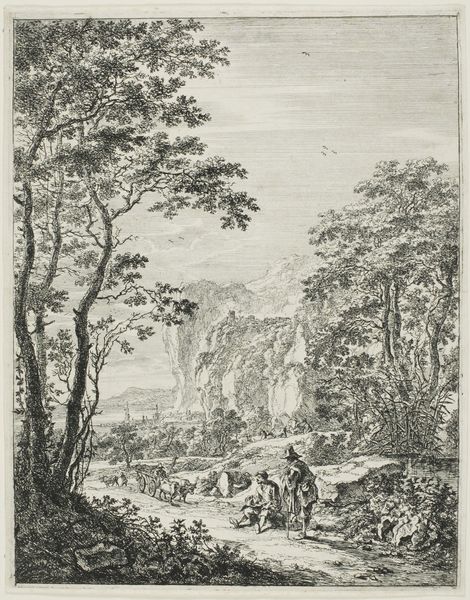
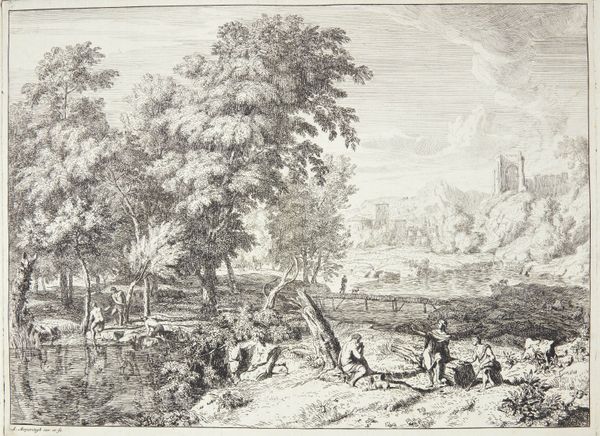
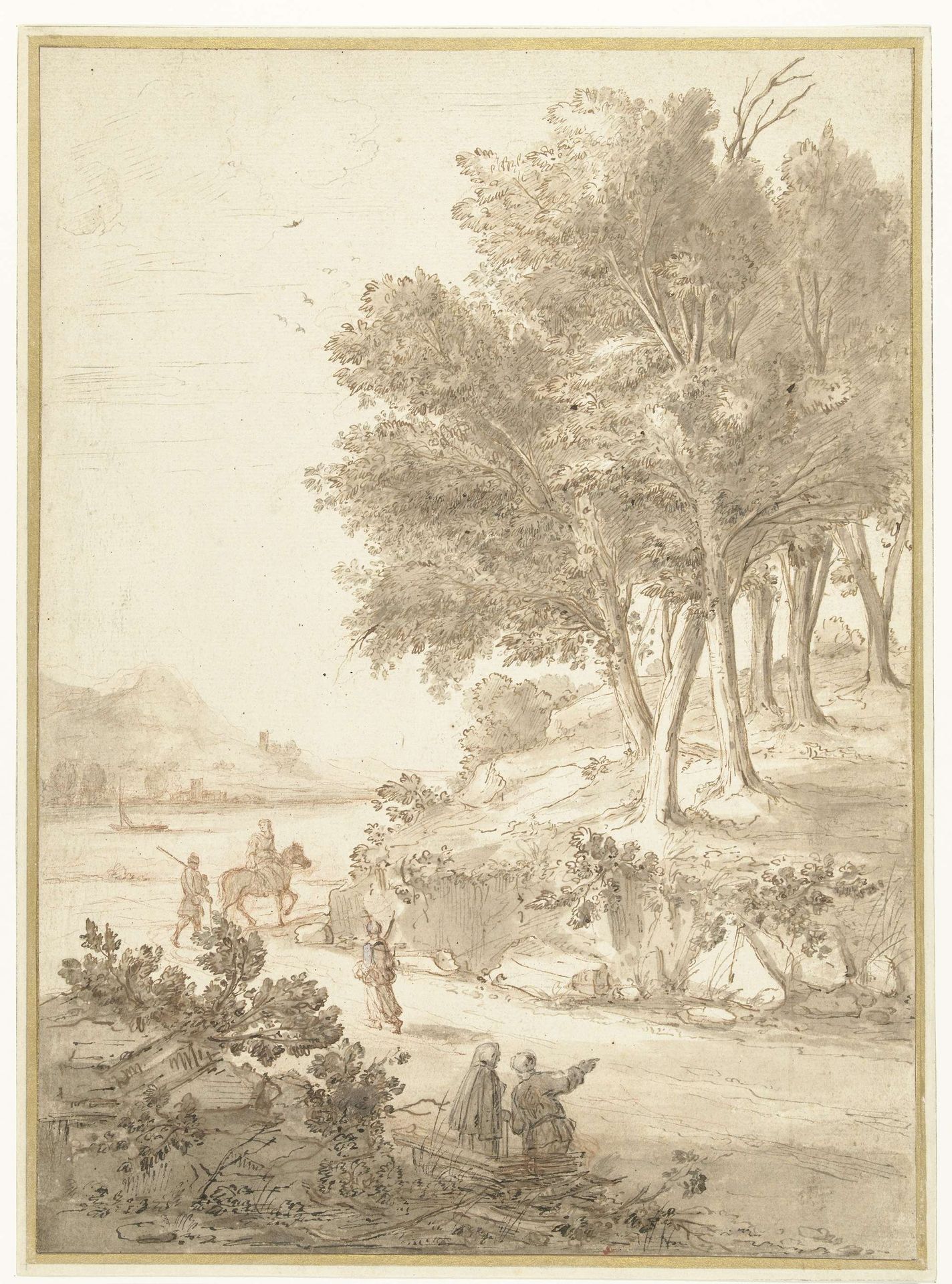
Caspar van Wittel created this Italianate landscape drawing with pen and brush in brown ink. The subdued palette focuses our attention on the composition itself, divided into distinct horizontal layers. The eye is drawn from the detailed figures in the foreground, along a winding road, to a distant river and mountains. The trees, rendered with layered, textured brushstrokes, frame the scene and guide our view, their verticality contrasting with the landscape's horizontal spread. This structured arrangement is not just aesthetic; it reflects a broader desire to impose order on the natural world. Van Wittel uses perspective to create a sense of depth, inviting the viewer into this constructed reality. The drawing becomes a stage where nature and human presence interact. Consider how the careful arrangement of elements, like the trees and figures, creates a harmonious yet artificial landscape, reflecting ideas about how we perceive and relate to our environment.
Italianate Landscape with Figures along a Road and a River in the Background
1674 - 1736

Artwork details
- Medium
- drawing, ink
- Dimensions
- height 415 mm, width 301 mm
- Copyright
- Rijks Museum: Open Domain
Tags
drawing
baroque
landscape
figuration
ink
genre-painting
Comments
Be the first to share your thoughts about this work.
About this artwork
Caspar van Wittel created this Italianate landscape drawing with pen and brush in brown ink. The subdued palette focuses our attention on the composition itself, divided into distinct horizontal layers. The eye is drawn from the detailed figures in the foreground, along a winding road, to a distant river and mountains. The trees, rendered with layered, textured brushstrokes, frame the scene and guide our view, their verticality contrasting with the landscape's horizontal spread. This structured arrangement is not just aesthetic; it reflects a broader desire to impose order on the natural world. Van Wittel uses perspective to create a sense of depth, inviting the viewer into this constructed reality. The drawing becomes a stage where nature and human presence interact. Consider how the careful arrangement of elements, like the trees and figures, creates a harmonious yet artificial landscape, reflecting ideas about how we perceive and relate to our environment.
Comments
Be the first to share your thoughts about this work.