1637
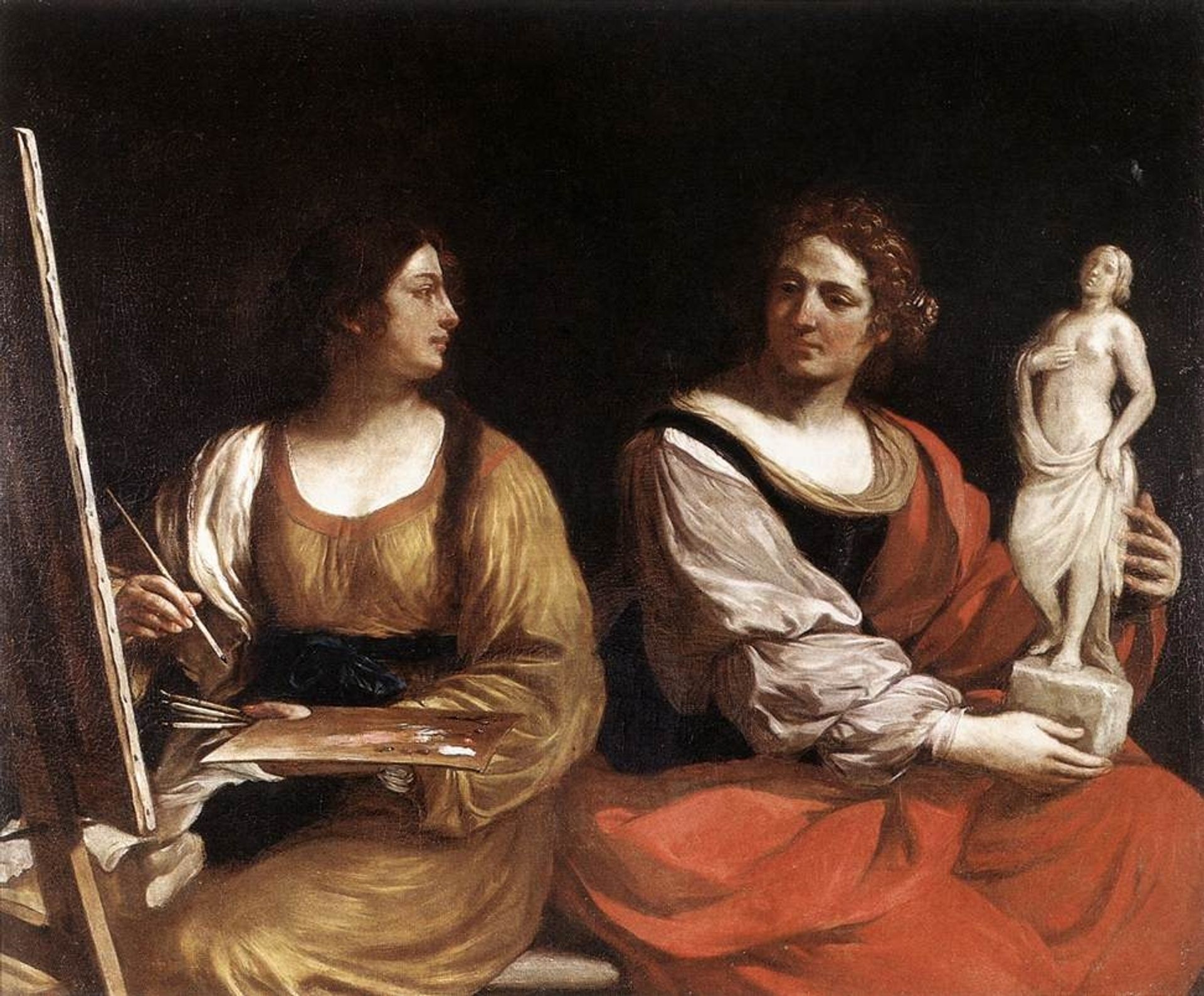
Allegory of Painting and Sculpture

Guercino
1591 - 1666Location
National Gallery of Ancient Art (GNAA), Rome, ItalyListen to curator's interpretation
Curatorial notes
Painting and Sculpture, in the flesh! This oil-on-canvas painting by the Italian painter known as Guercino (1591-1666) represents the two artistic disciplines as young women. The two women wear loose-fitting gowns and are depicted with symbols of their respective practices. The work is a great example of an ‘allegorical painting’, which uses symbolic images or figures to convey deeper meaning. 🖼️ Painted in 1637, ‘Allegory of Painting and Sculpture’ combines Baroque grandeur with classical influences. We can see the drama of the Baroque style in Guercino’s use of intense light and shadow (a technique known as ‘chiaroscuro’). The composition is more classical, as are the costumes of the two figures. The draped fabrics almost remind me of ancient sculpture! Except for the canvas which sits on the far left, the composition seems fairly flat: the figures exist in one dimension, while the canvas is placed in front of them. This work is now housed in Rome’s National Gallery of Ancient Art. ️ Here, the personification of Painting is depicted on the left. She holds a mixing palette and a selection of paintbrushes. We can see splatters and stains of paint on the surface of the palette. She gazes towards Sculpture, displaying her side profile which is reminiscent of an engraving or coin. 🪙 Sculpture, on the right side of the canvas, holds an intricately carved marble statue of a nude woman. The contemplative expressions of the two figures emphasise the intellectual processes of art, as well as the physical practice. Born Giovanni Francesco Barbieri in 1591, Guernico acquired his nickname (meaning ‘squinter’) due to an eye disorder known as strabismus. It’s believed that Picasso and Rembrandt also had strabismus! It’s interesting that the artwork on the canvas itself is left unseen by the viewer. We almost feel as though Guercino is encouraging us to fill in the gaps by visualising what might be on the canvas. What do you think it could be?