About this artwork
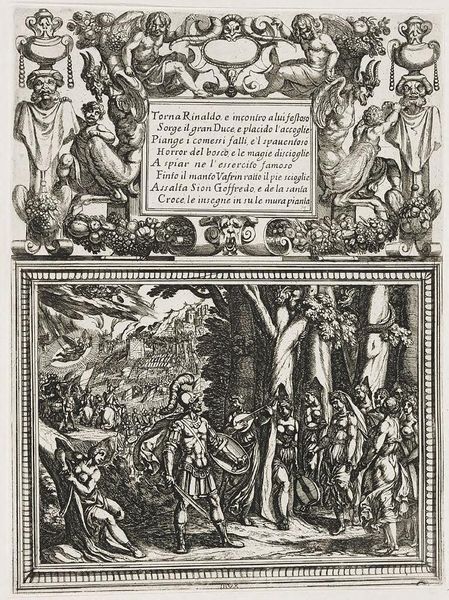
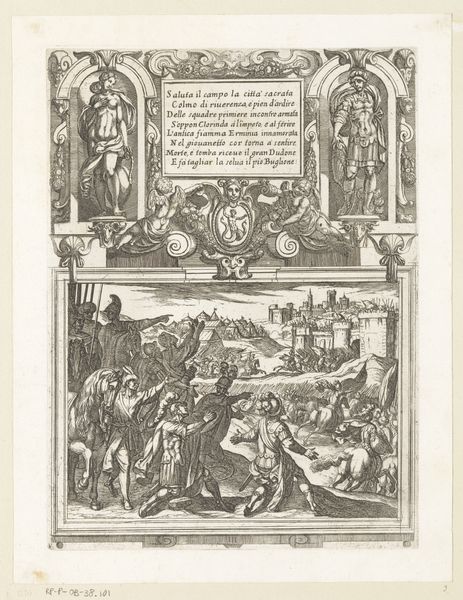
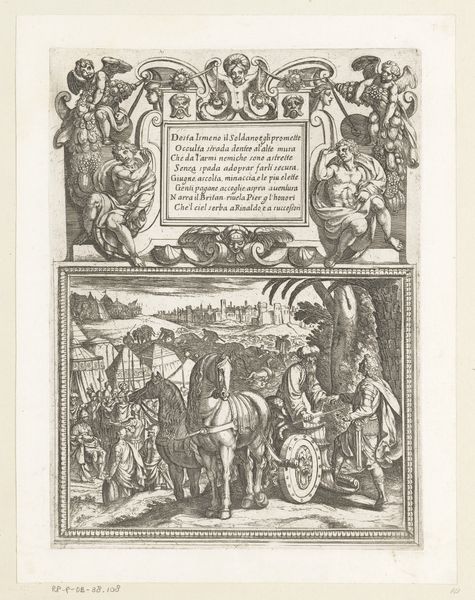
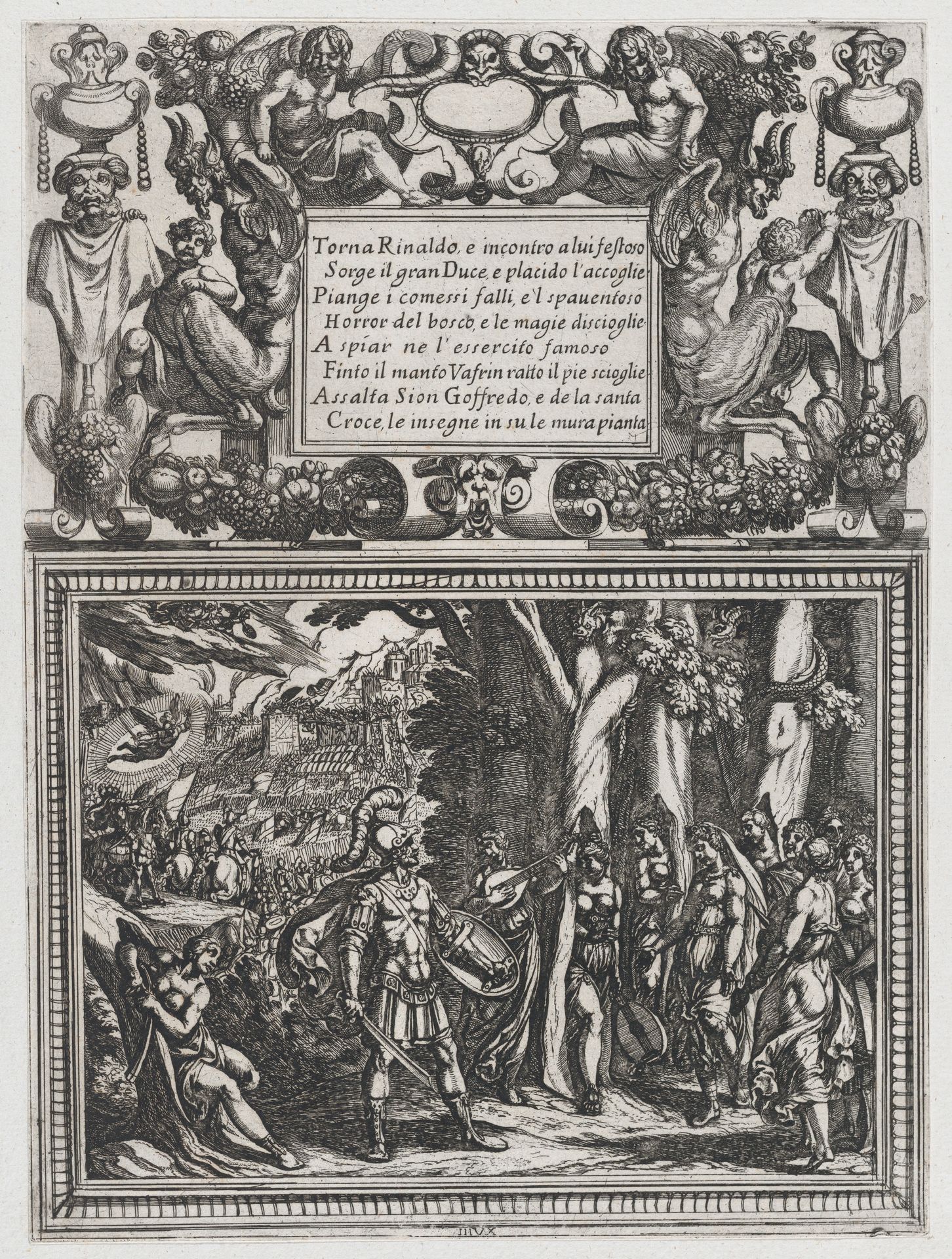
This is Antonio Tempesta's "Plate 18: Illustration to Canto XVIII, from Torquato Tasso's 'Gerusalemme liberata III'," made sometime in the late 16th or early 17th century. The print presents us with a densely packed scene, framed by elaborate ornamentation. Tempesta employs a masterful use of line to create depth and texture, notice the contrast between the chaotic battle scene and the serene figures in the foreground, a juxtaposition that destabilizes the conventional heroic narrative. The formal structure, divided into distinct registers, suggests a semiotic reading. The upper register with its ornate frame and textual inscription, acts as a meta-commentary on the visual narrative below. This division questions the authority of the image, suggesting that meaning is constructed through both visual and textual codes. Tempesta challenges the viewer to actively decode the layered meanings embedded within the artwork's structure.
Plate 18: Illustration to Canto XVIII, from Torquato Tasso's 'Gerusalemme liberata III' 1585 - 1630


Artwork details
- Medium
- drawing, print, engraving
- Dimensions
- Sheet (Trimmed): 10 13/16 × 8 1/16 in. (27.5 × 20.5 cm)
- Location
- Metropolitan Museum of Art, New York, NY
- Copyright
- Public Domain
Tags
drawing
narrative-art
baroque
history-painting
engraving
Comments
No comments
About this artwork
This is Antonio Tempesta's "Plate 18: Illustration to Canto XVIII, from Torquato Tasso's 'Gerusalemme liberata III'," made sometime in the late 16th or early 17th century. The print presents us with a densely packed scene, framed by elaborate ornamentation. Tempesta employs a masterful use of line to create depth and texture, notice the contrast between the chaotic battle scene and the serene figures in the foreground, a juxtaposition that destabilizes the conventional heroic narrative. The formal structure, divided into distinct registers, suggests a semiotic reading. The upper register with its ornate frame and textual inscription, acts as a meta-commentary on the visual narrative below. This division questions the authority of the image, suggesting that meaning is constructed through both visual and textual codes. Tempesta challenges the viewer to actively decode the layered meanings embedded within the artwork's structure.
Comments
No comments