About this artwork
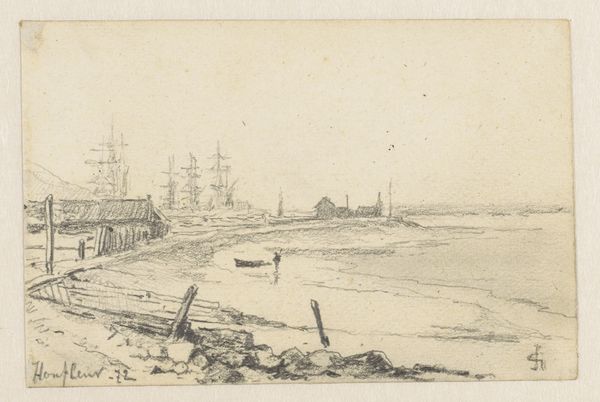
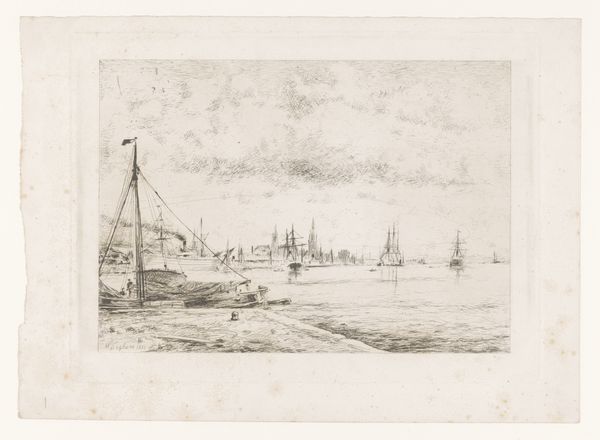
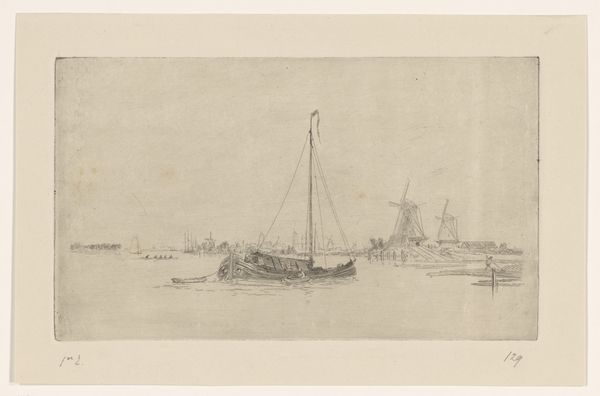
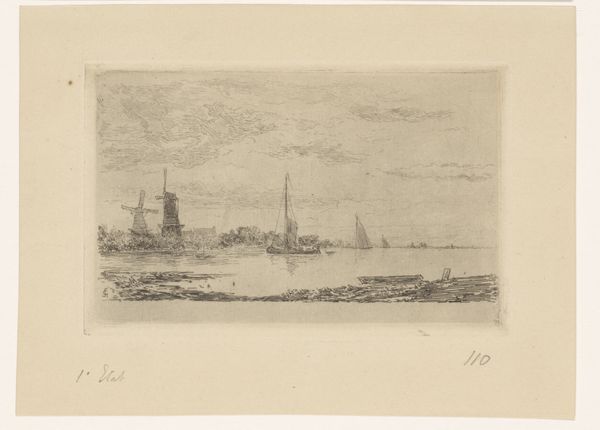
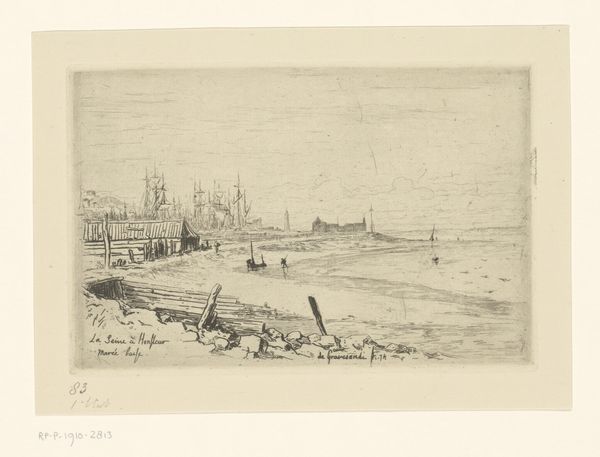
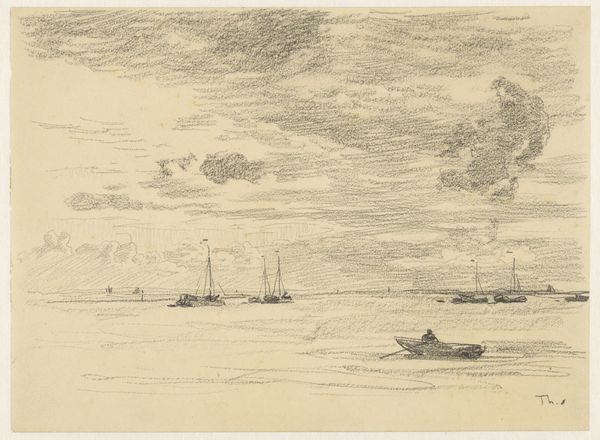
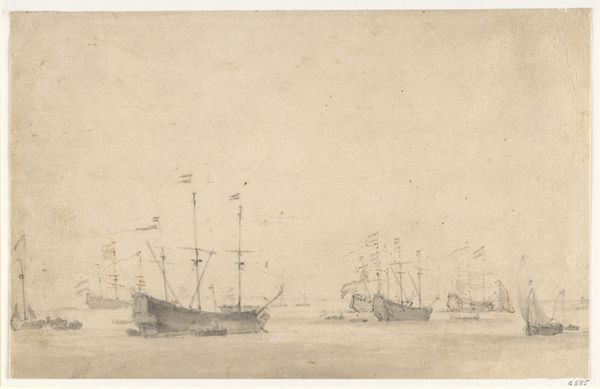
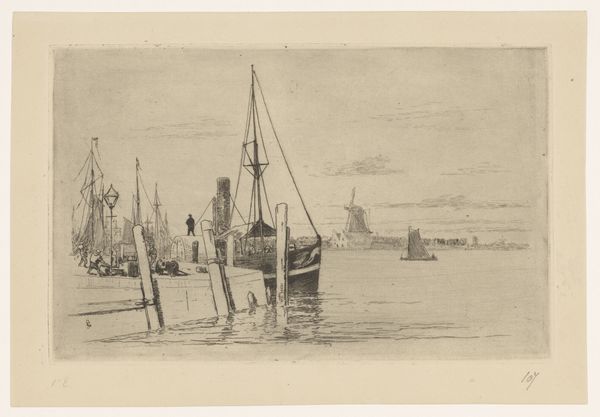
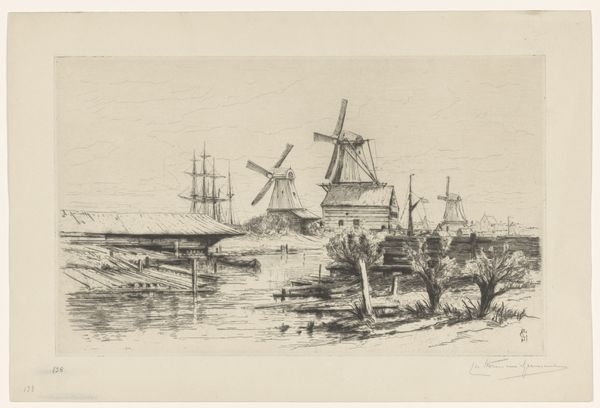
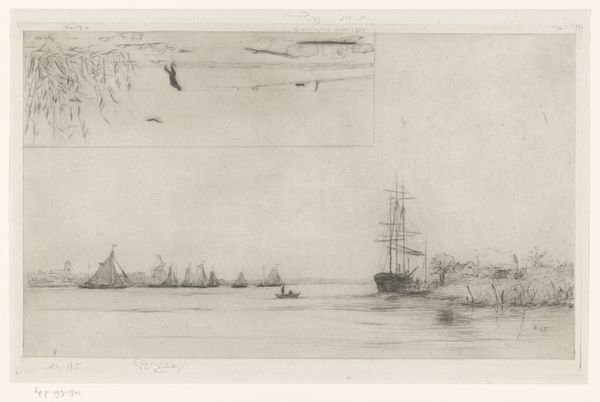
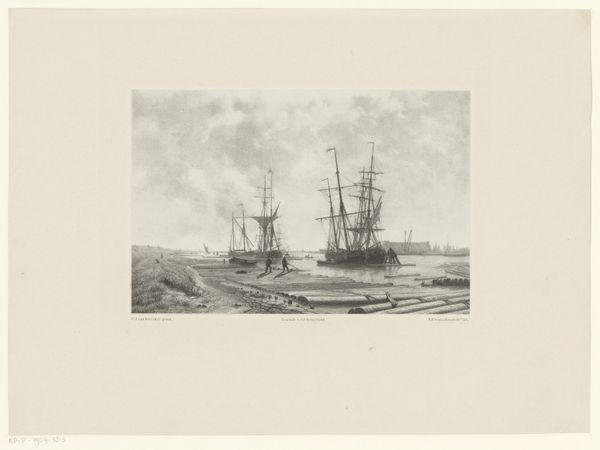
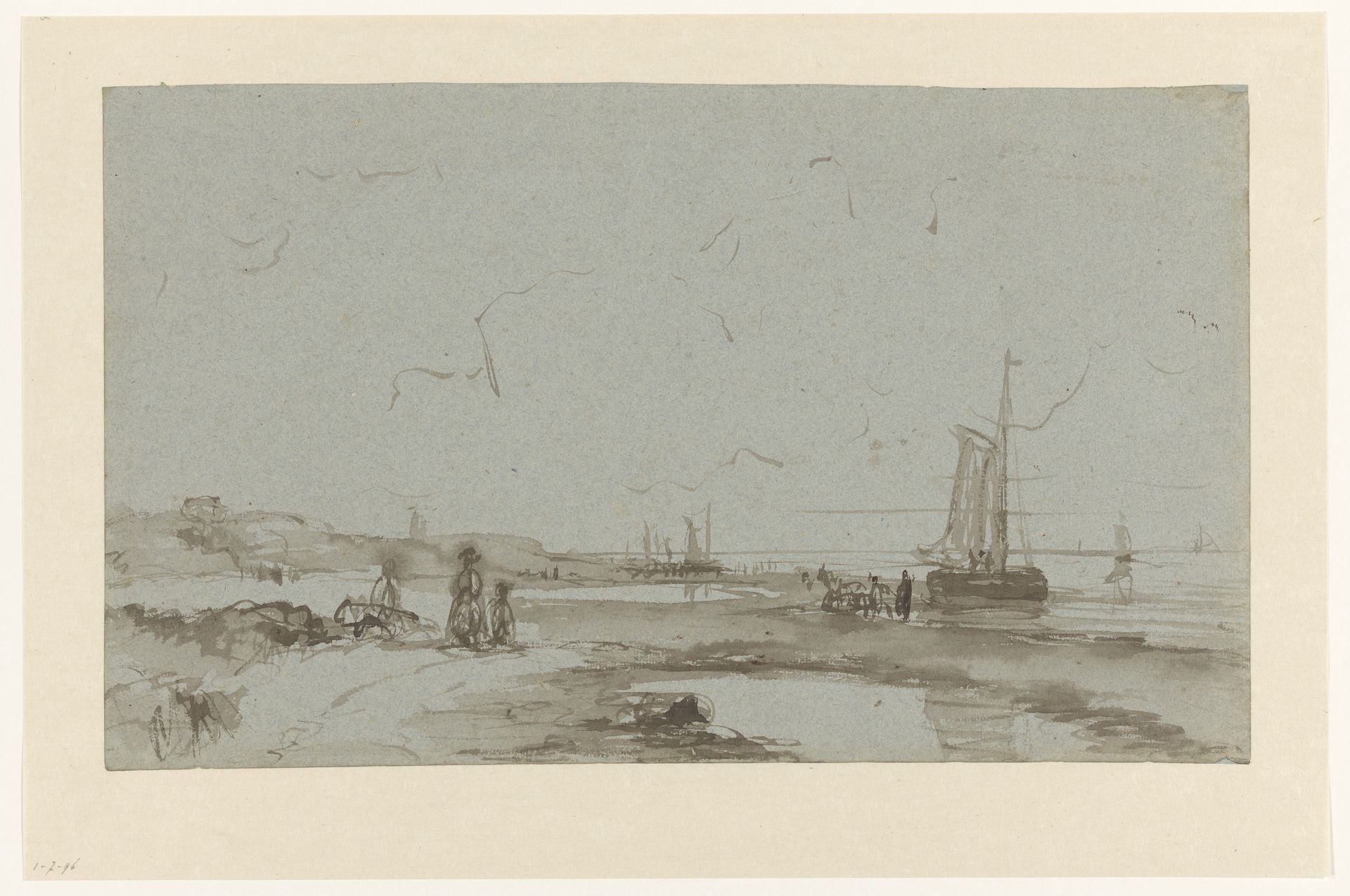
Albertus van Beest made this beach scene with sailboats and walkers using pen and brown ink, with brush in gray, on gray paper. Van Beest's use of gray paper influences the drawing's appearance by creating a muted, atmospheric effect. This choice of material, along with the delicate strokes of pen and brush, imbues the artwork with a sense of tranquility and realism. The work belongs to the tradition of Dutch landscape painting, but also reflects the social context of maritime activity and leisure. Van Beest skillfully captures the interplay of light, water, and human presence, inviting viewers to immerse themselves in the scene. The strokes of pen and brush suggest the labor involved in artistic creation, while also highlighting the artist's attention to detail and technical skill. By emphasizing the significance of materials, making, and context, we can appreciate the full meaning of this artwork and challenge traditional distinctions between fine art and craft.
Strandgezicht met zeilschepen en wandelaars
1830 - 1860

Albertus van Beest
1820 - 1860Location
RijksmuseumArtwork details
- Medium
- drawing, paper, ink
- Dimensions
- height 295 mm, width 494 mm
- Location
- Rijksmuseum
- Copyright
- Rijks Museum: Open Domain
Tags
Comments
Share your thoughts
About this artwork
Albertus van Beest made this beach scene with sailboats and walkers using pen and brown ink, with brush in gray, on gray paper. Van Beest's use of gray paper influences the drawing's appearance by creating a muted, atmospheric effect. This choice of material, along with the delicate strokes of pen and brush, imbues the artwork with a sense of tranquility and realism. The work belongs to the tradition of Dutch landscape painting, but also reflects the social context of maritime activity and leisure. Van Beest skillfully captures the interplay of light, water, and human presence, inviting viewers to immerse themselves in the scene. The strokes of pen and brush suggest the labor involved in artistic creation, while also highlighting the artist's attention to detail and technical skill. By emphasizing the significance of materials, making, and context, we can appreciate the full meaning of this artwork and challenge traditional distinctions between fine art and craft.
Comments
Share your thoughts