About this artwork
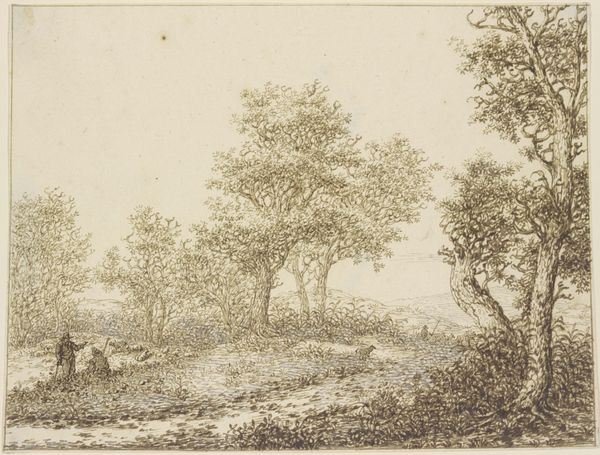
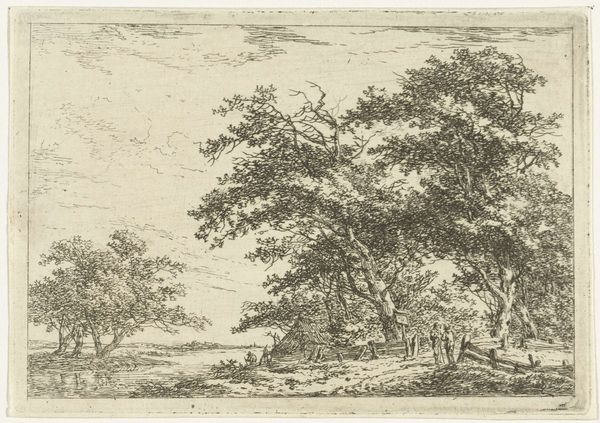
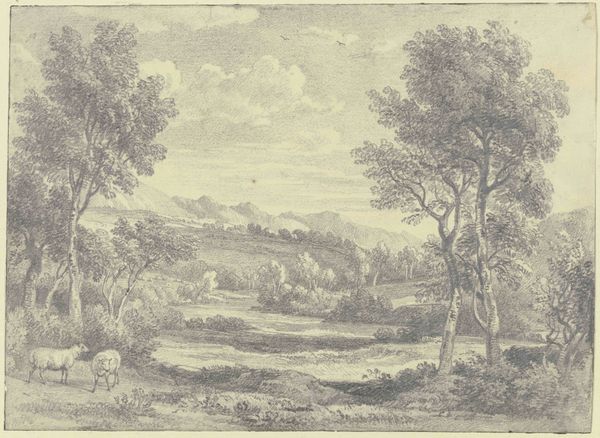
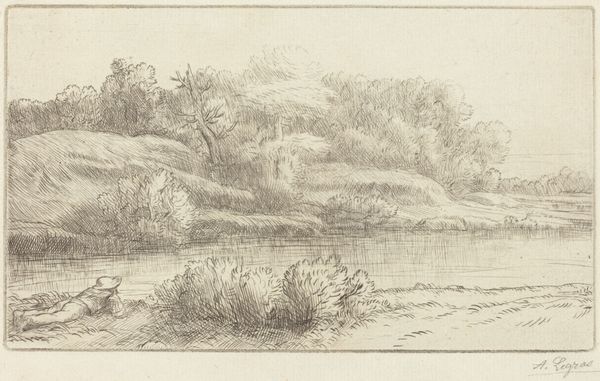
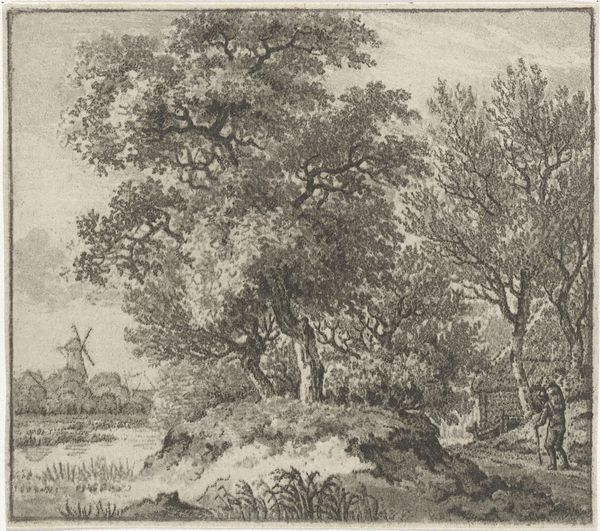
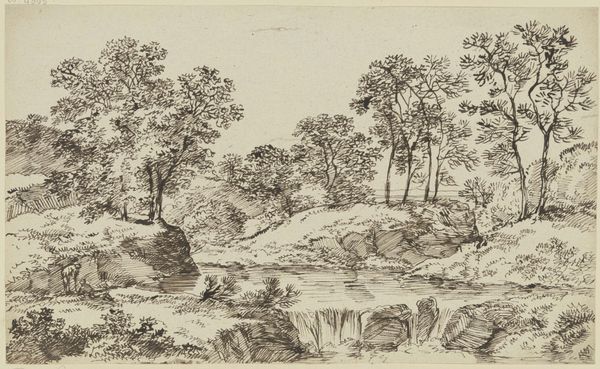
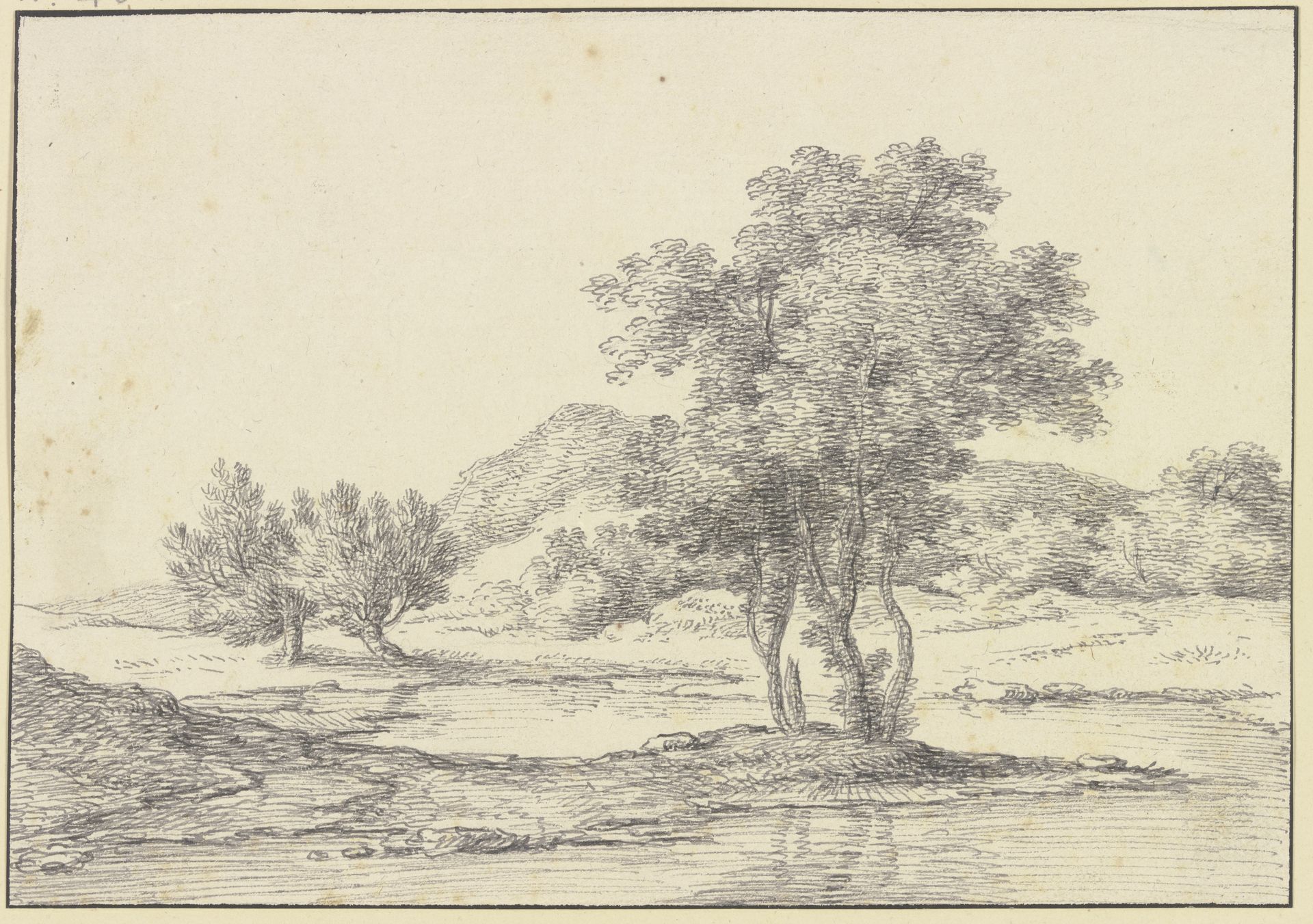
Ferdinand Kobell made this drawing, Baumgruppe am Wasser, with pen and ink, giving us a glimpse into his world. Think about the labor involved; gathering materials, mixing ink, and then the practiced hand carefully building up tone with tiny, precise lines. The paper itself, probably handmade from rags, would have been a valuable commodity. Kobell uses these humble materials to create a scene of quiet beauty, trees reflected in water, hills in the distance. But it’s not just about the view. Look at the textures he creates – the rough bark of the trees, the gentle ripples on the water’s surface. It’s a testament to the artist’s skill that he can evoke such detail with such simple means. Drawings like this were often studies for larger paintings or prints, part of a wider system of artistic production. They remind us that even seemingly simple artworks are the result of skilled labor, careful observation, and a deep understanding of materials. This invites us to appreciate not just the image, but the making of it.
Baumgruppe am Wasser, links zwei Weidenbäume, im Hintergrund Berge


Artwork details
- Medium
- drawing, etching, ink, graphite, frottage
- Location
- Städel Museum
- Copyright
- Public Domain
Tags
drawing
etching
landscape
ink
15_18th-century
graphite
sketchbook drawing
frottage
Comments
No comments
About this artwork
Ferdinand Kobell made this drawing, Baumgruppe am Wasser, with pen and ink, giving us a glimpse into his world. Think about the labor involved; gathering materials, mixing ink, and then the practiced hand carefully building up tone with tiny, precise lines. The paper itself, probably handmade from rags, would have been a valuable commodity. Kobell uses these humble materials to create a scene of quiet beauty, trees reflected in water, hills in the distance. But it’s not just about the view. Look at the textures he creates – the rough bark of the trees, the gentle ripples on the water’s surface. It’s a testament to the artist’s skill that he can evoke such detail with such simple means. Drawings like this were often studies for larger paintings or prints, part of a wider system of artistic production. They remind us that even seemingly simple artworks are the result of skilled labor, careful observation, and a deep understanding of materials. This invites us to appreciate not just the image, but the making of it.
Comments
No comments