About this artwork
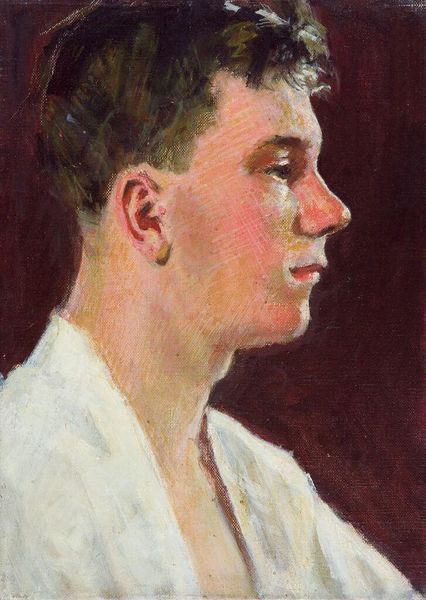
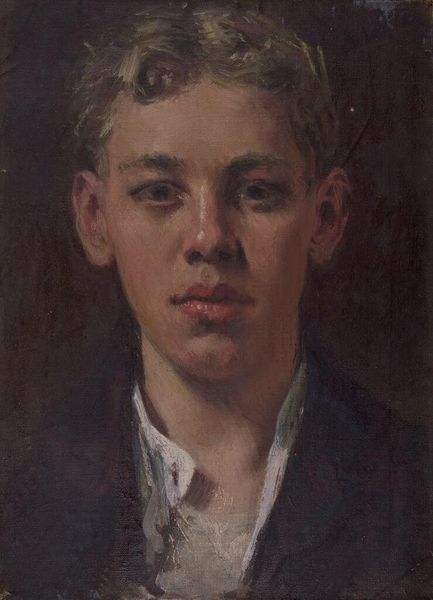
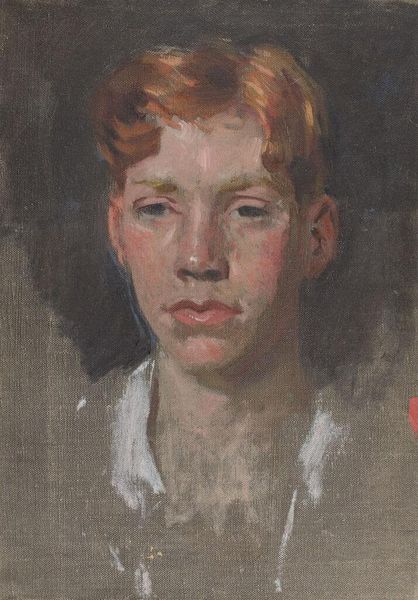
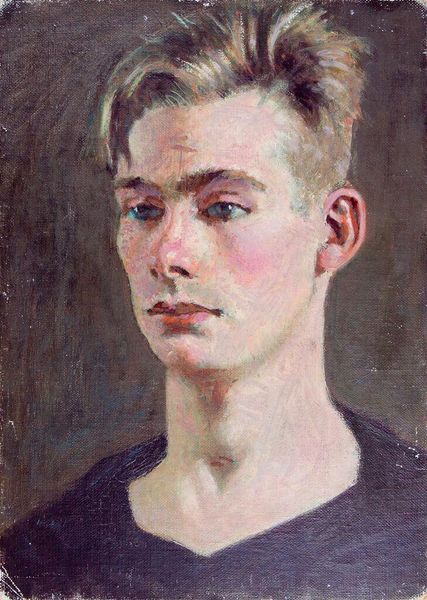
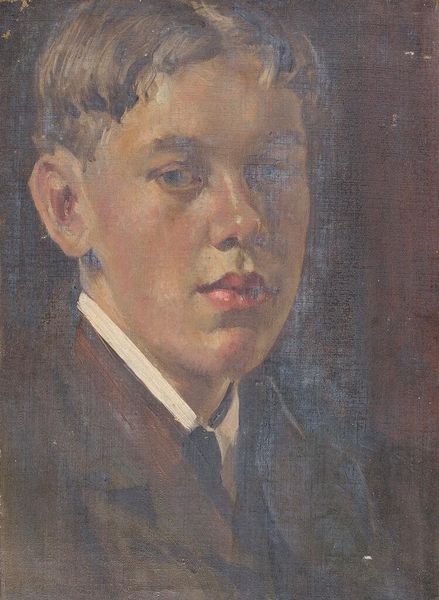
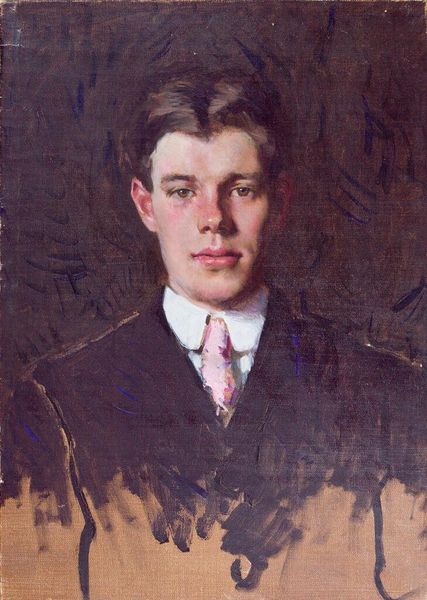
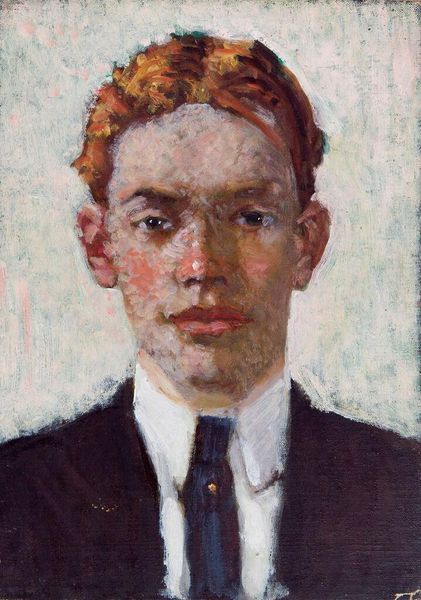
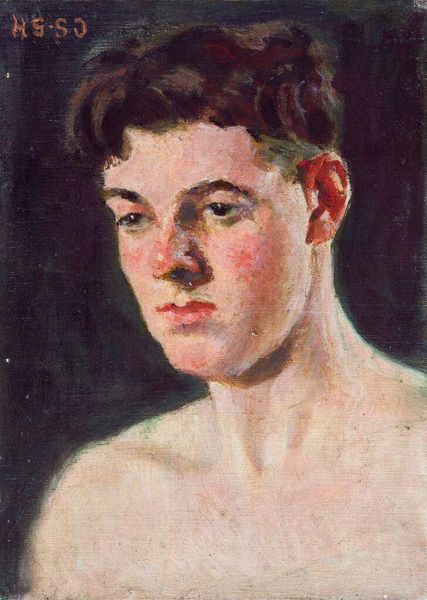
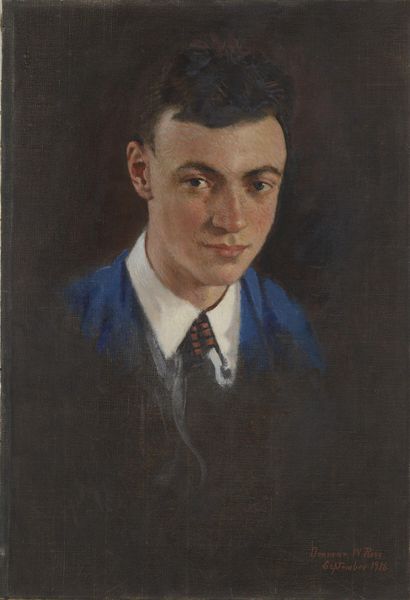
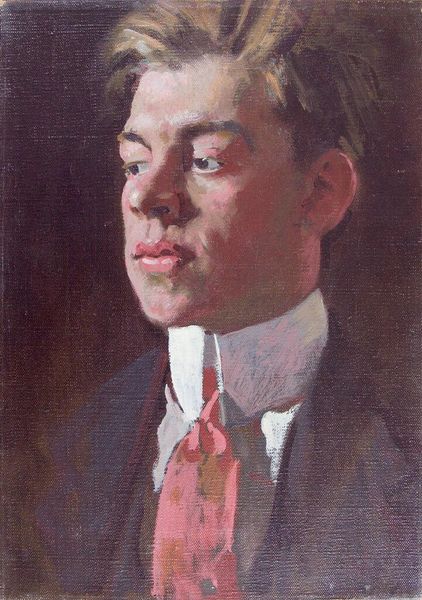
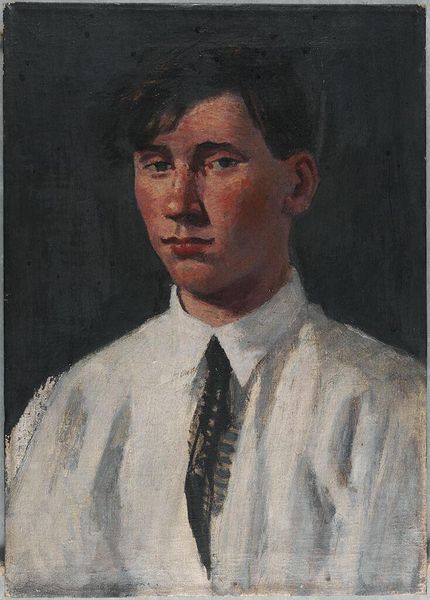
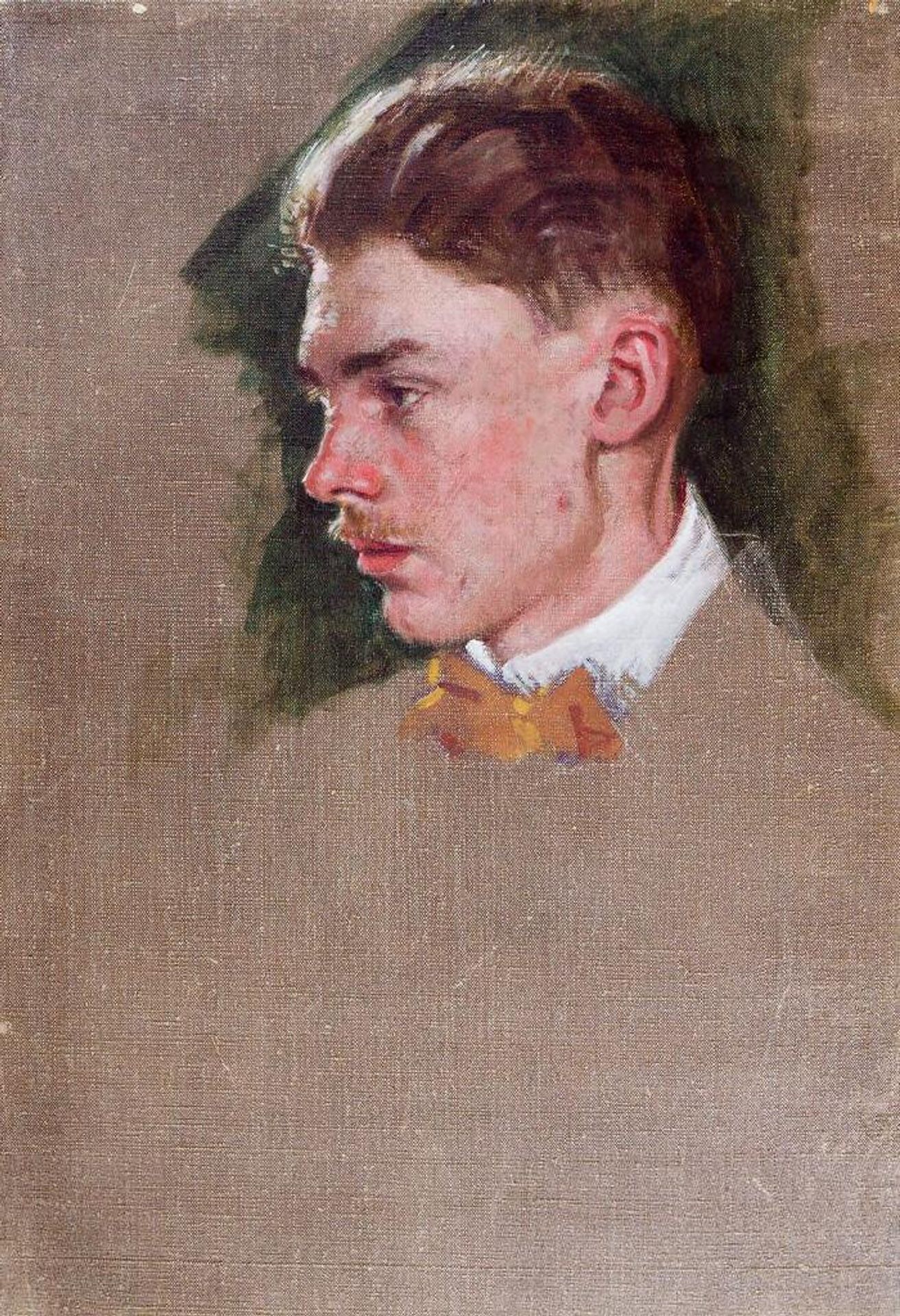
Curator: This is Denman Waldo Ross's painting, "Carl Peter Teigen," believed to have been completed sometime between 1897 and 1936. Editor: It’s quite a somber portrait, I think, despite the lively brushstrokes in the face and that bright bowtie. There is a looming shadow behind the sitter's head. Curator: Yes, the shadow could be interpreted as the weight of societal expectations or perhaps even the artist's own internal struggles projected onto the subject. It also looks a bit like a halo to me. Editor: Or, perhaps, it’s a comment on performativity. The shadow and neutral tones around Teigen suggest a constructed identity, like he's playing a role within specific social constraints. I wonder what Teigen was like outside of this staged setting. Curator: His gaze is intense. The use of light and shadow certainly imbues the figure with a sense of depth and, perhaps, hidden meaning. Editor: Ultimately, these are powerful reminders that portraits are not just representations, but subjective interpretations of identity and the social worlds it inhabits.
Carl Peter Teigen (c. 1897-1936)
19th-20th century

Artwork details
- Dimensions
- 57.8 x 40 cm (22 3/4 x 15 3/4 in.)
- Location
- Harvard Art Museums
- Copyright
- CC0 1.0
Comments
Share your thoughts
About this artwork
Curator: This is Denman Waldo Ross's painting, "Carl Peter Teigen," believed to have been completed sometime between 1897 and 1936. Editor: It’s quite a somber portrait, I think, despite the lively brushstrokes in the face and that bright bowtie. There is a looming shadow behind the sitter's head. Curator: Yes, the shadow could be interpreted as the weight of societal expectations or perhaps even the artist's own internal struggles projected onto the subject. It also looks a bit like a halo to me. Editor: Or, perhaps, it’s a comment on performativity. The shadow and neutral tones around Teigen suggest a constructed identity, like he's playing a role within specific social constraints. I wonder what Teigen was like outside of this staged setting. Curator: His gaze is intense. The use of light and shadow certainly imbues the figure with a sense of depth and, perhaps, hidden meaning. Editor: Ultimately, these are powerful reminders that portraits are not just representations, but subjective interpretations of identity and the social worlds it inhabits.
Comments
Share your thoughts