About this artwork
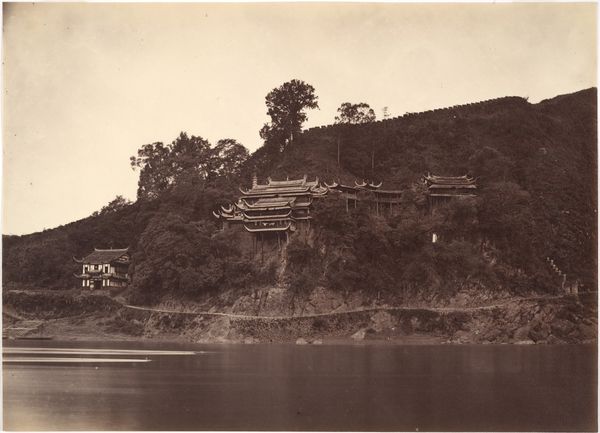
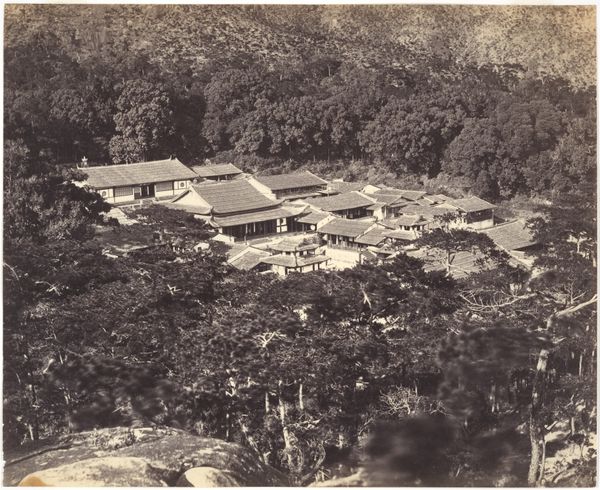
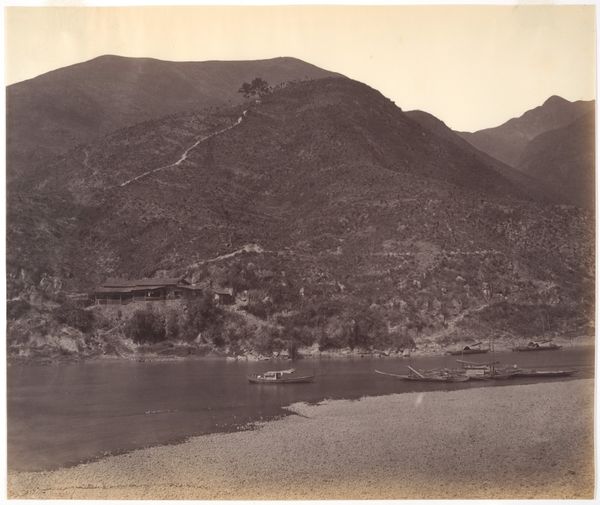
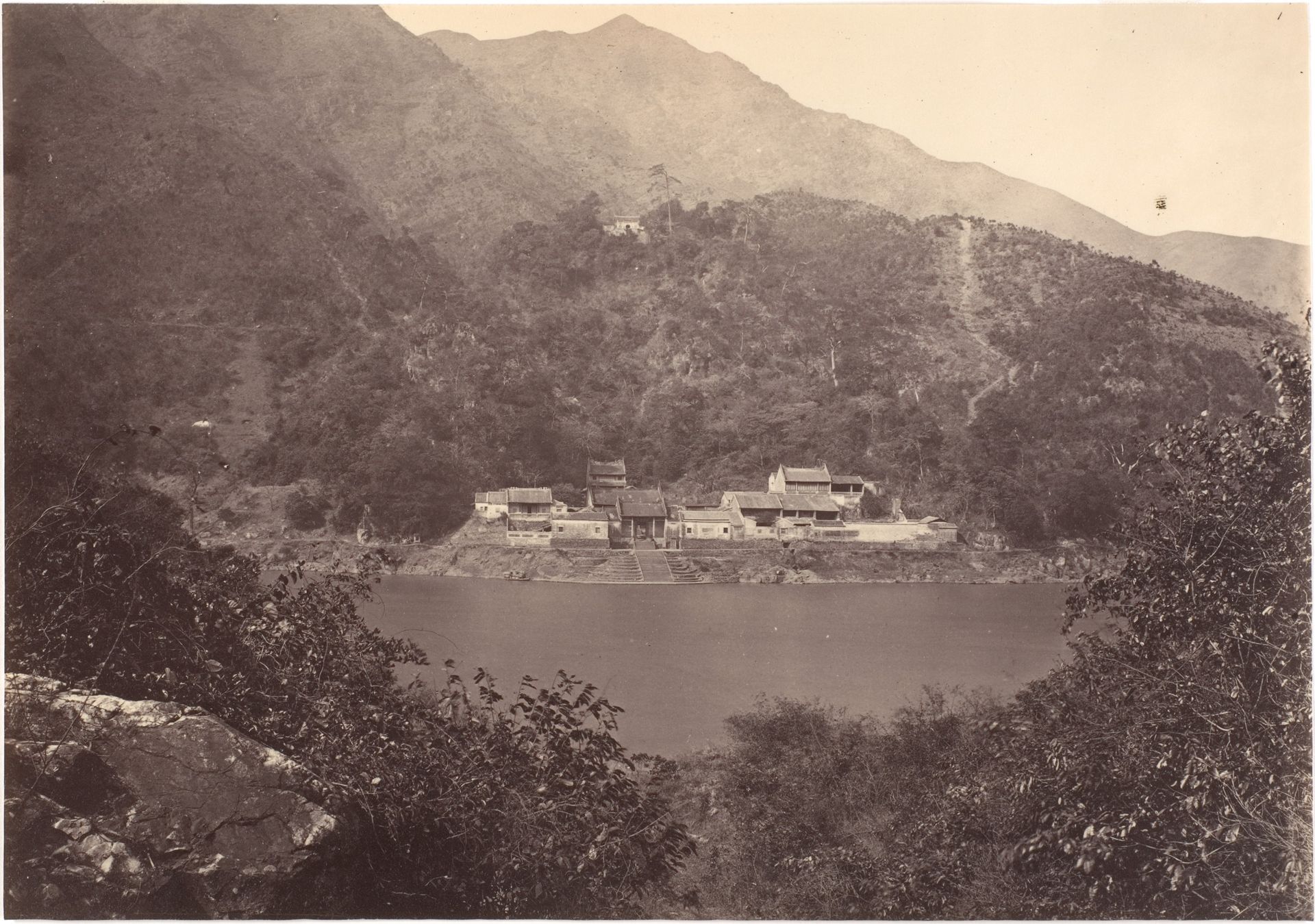
This albumen print by John Thomson captures the Tai-Laity Mountain, North River, near Canton. The temple complex is a potent symbol of spiritual harmony, nestled between the reflective waters and the towering mountain, a vision echoing ancient Chinese landscape paintings. Consider how temples, like the one depicted here, often appear in art across cultures, serving as focal points for contemplation and reverence. The steps leading up to the temple remind me of the ziggurats of Mesopotamia, where each level was believed to bring one closer to the divine. The symbolism of mountains, too, is universal, representing challenges and spiritual ascent. Think of Mount Olympus in Greek mythology, the home of the gods, or Mount Sinai, where Moses received the Ten Commandments. These symbols—mountains, water, and temples—tap into our collective subconscious, triggering a deep-seated longing for transcendence and connection to something greater than ourselves. Notice how the temple invites a psychological journey. These recurring motifs remind us that cultural memory is not linear but cyclical, constantly resurfacing and adapting.
Tai-Laity Montain, North River, Canton 1869


Artwork details
- Medium
- tempera, photography
- Dimensions
- Image: 6 5/8 × 9 7/16 in. (16.9 × 24 cm)
- Location
- Metropolitan Museum of Art, New York, NY
- Copyright
- Public Domain
Tags
tempera
asian-art
landscape
river
house
nature
outdoor photography
photography
Comments
No comments
About this artwork
This albumen print by John Thomson captures the Tai-Laity Mountain, North River, near Canton. The temple complex is a potent symbol of spiritual harmony, nestled between the reflective waters and the towering mountain, a vision echoing ancient Chinese landscape paintings. Consider how temples, like the one depicted here, often appear in art across cultures, serving as focal points for contemplation and reverence. The steps leading up to the temple remind me of the ziggurats of Mesopotamia, where each level was believed to bring one closer to the divine. The symbolism of mountains, too, is universal, representing challenges and spiritual ascent. Think of Mount Olympus in Greek mythology, the home of the gods, or Mount Sinai, where Moses received the Ten Commandments. These symbols—mountains, water, and temples—tap into our collective subconscious, triggering a deep-seated longing for transcendence and connection to something greater than ourselves. Notice how the temple invites a psychological journey. These recurring motifs remind us that cultural memory is not linear but cyclical, constantly resurfacing and adapting.
Comments
No comments