About this artwork
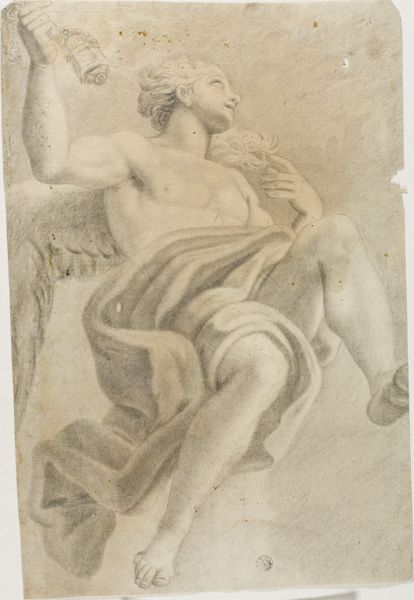
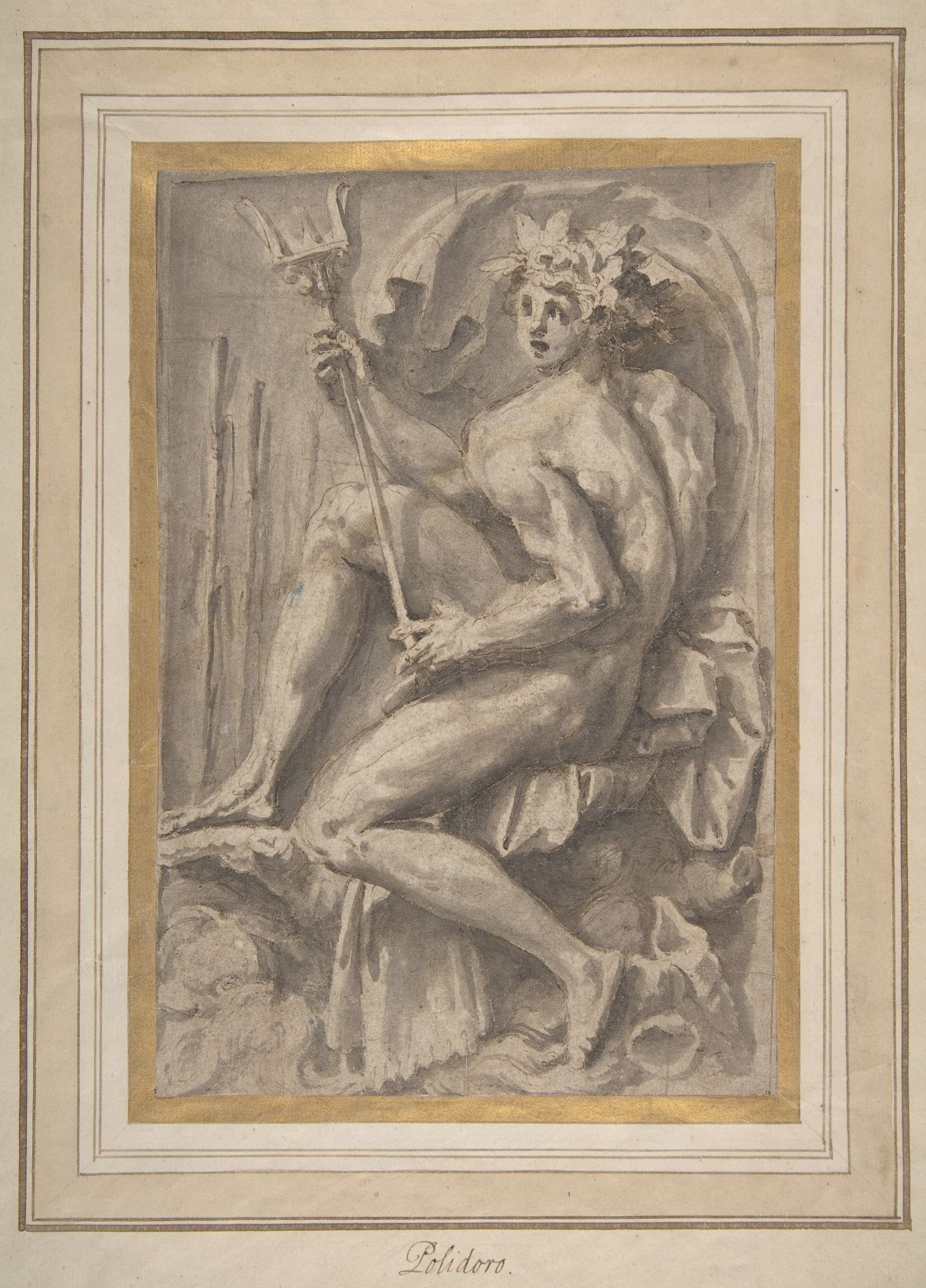
Editor: This is Perino del Vaga's "Seated Triton," created around 1545 to 1547, a charcoal drawing currently housed at the Met. The figure looks like he's part of a stage set; it feels very theatrical and considered, but the monochrome tones keep it quite solemn. How do you interpret the visual symbolism here? Curator: Well, look at Triton's pose – this isn't merely a figure sitting; it’s a carefully constructed image referencing classical sculpture. The Renaissance loved to resurrect classical imagery! But more than that, let’s examine what Triton signifies: a deity bridging the human and aquatic realms, signaling the psychological depths and flows within us. Consider the trident itself - what associations does that evoke? Editor: It’s a scepter, a sign of power… Also a weapon. I guess dominion over the seas? Curator: Exactly! It points towards control, and perhaps, the anxieties related to wielding such control. Note also his leafy crown: nature tamed, or a wild aspect barely contained? In del Vaga's time, such iconography served not just as decoration but also triggered recognition of established cultural values. Does this layering impact how you now perceive the artwork? Editor: It makes me see beyond just a drawing. The layers of meaning in those objects create something more significant. It is a great reminder of Triton as more than just a mythological figure. It touches upon Renaissance ideology. Curator: Precisely! The piece resonates even now because these symbols tap into deep currents within our collective psyche. We connect with Triton through those recognizable elements, even generations later. Editor: I see now that studying the symbols opens a wider understanding, and perhaps, appreciation for historical context.
Seated Triton
1545 - 1547

Perino del Vaga (Pietro Buonaccorsi)
1501 - 1547
The Metropolitan Museum of Art
Metropolitan Museum of Art, New York, NYArtwork details
- Medium
- drawing, print, charcoal
- Dimensions
- 8 5/8 x 4 1/4in. (21.9 x 10.8cm)
- Location
- Metropolitan Museum of Art, New York, NY
- Copyright
- Public Domain
Tags
Comments
Share your thoughts
About this artwork
Editor: This is Perino del Vaga's "Seated Triton," created around 1545 to 1547, a charcoal drawing currently housed at the Met. The figure looks like he's part of a stage set; it feels very theatrical and considered, but the monochrome tones keep it quite solemn. How do you interpret the visual symbolism here? Curator: Well, look at Triton's pose – this isn't merely a figure sitting; it’s a carefully constructed image referencing classical sculpture. The Renaissance loved to resurrect classical imagery! But more than that, let’s examine what Triton signifies: a deity bridging the human and aquatic realms, signaling the psychological depths and flows within us. Consider the trident itself - what associations does that evoke? Editor: It’s a scepter, a sign of power… Also a weapon. I guess dominion over the seas? Curator: Exactly! It points towards control, and perhaps, the anxieties related to wielding such control. Note also his leafy crown: nature tamed, or a wild aspect barely contained? In del Vaga's time, such iconography served not just as decoration but also triggered recognition of established cultural values. Does this layering impact how you now perceive the artwork? Editor: It makes me see beyond just a drawing. The layers of meaning in those objects create something more significant. It is a great reminder of Triton as more than just a mythological figure. It touches upon Renaissance ideology. Curator: Precisely! The piece resonates even now because these symbols tap into deep currents within our collective psyche. We connect with Triton through those recognizable elements, even generations later. Editor: I see now that studying the symbols opens a wider understanding, and perhaps, appreciation for historical context.
Comments
Share your thoughts