
Curatorial notes
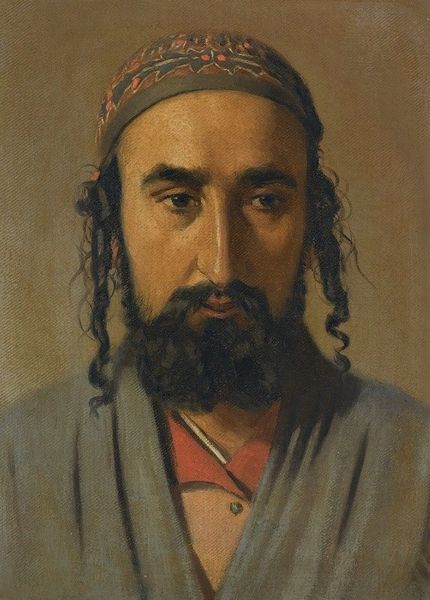
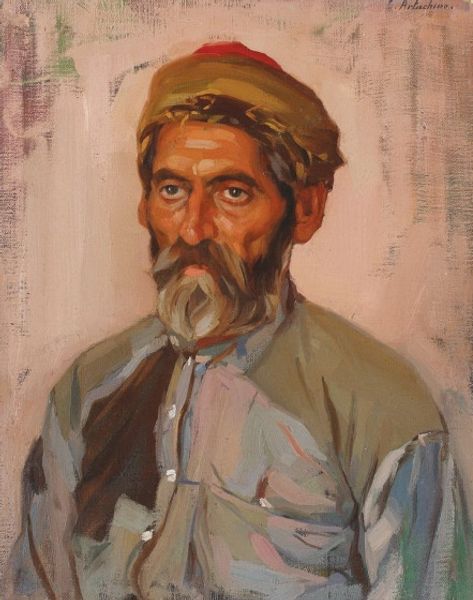
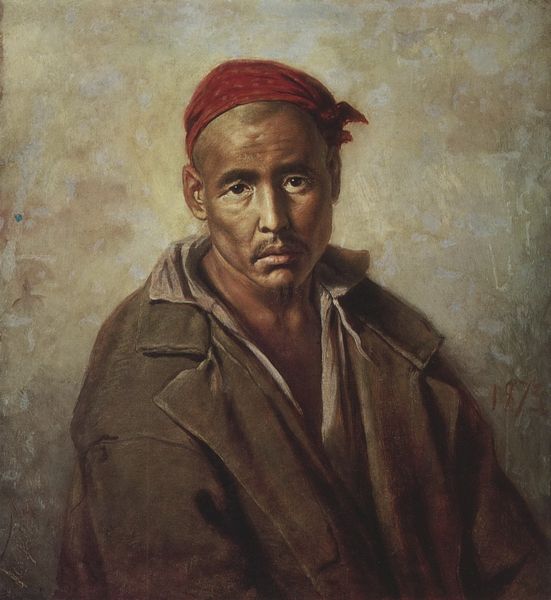
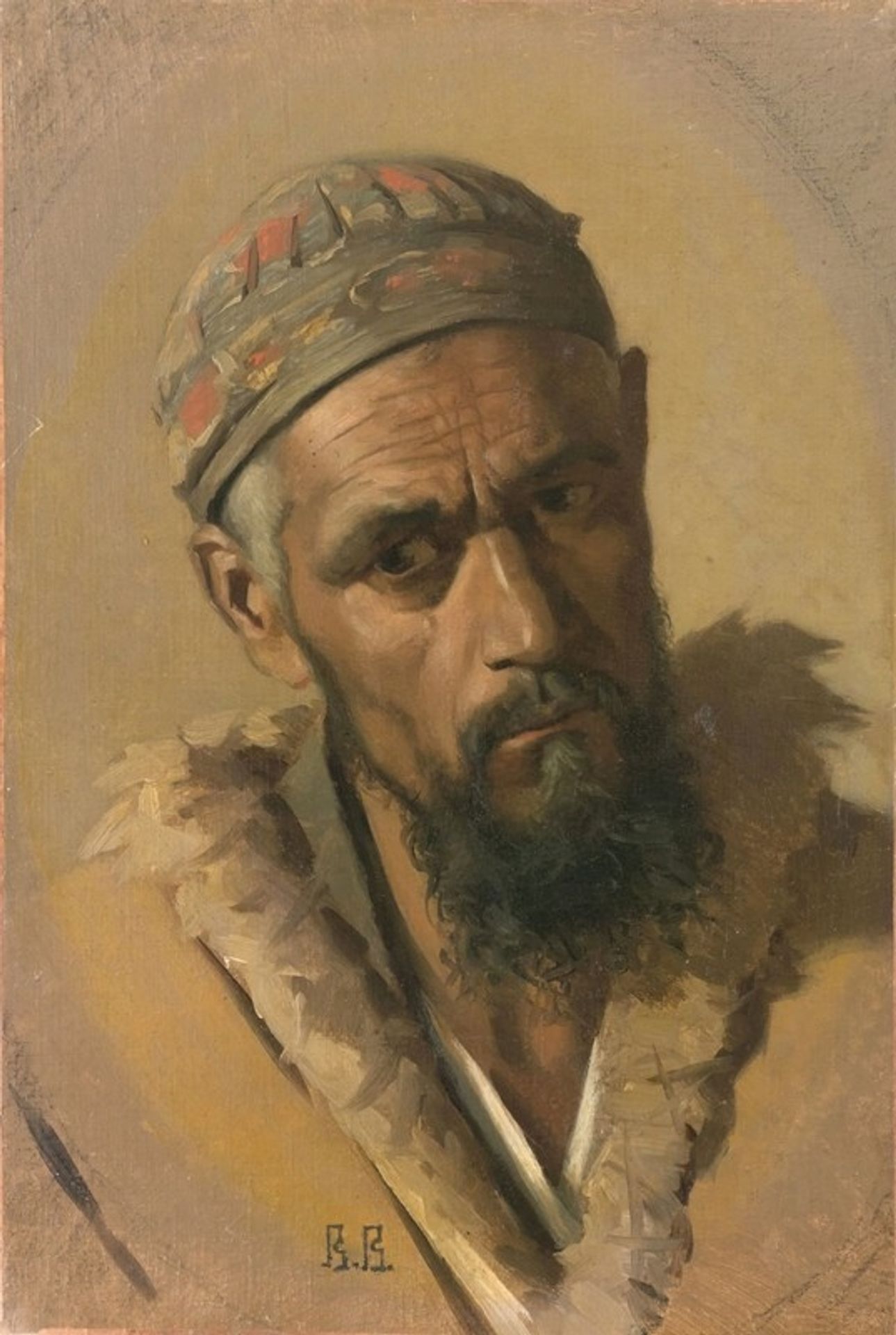
Editor: This is "Lully," an oil painting by Vasily Vereshchagin, created between 1867 and 1868. There’s a real intensity in his gaze that makes me feel a little uneasy. What's your interpretation of this piece? Curator: Well, considering Vereshchagin’s known for his unflinching depictions of war and its effects, I see this portrait through a socio-political lens. It’s titled "Lully," which potentially points to a cultural identifier rather than a name. He appears as a local individual encountered during the artist’s travels, perhaps in Central Asia. What details in the portrayal hint at something beyond a simple portrait? Editor: I notice the man's worn features and simple clothing suggest a hard life. But he also wears a decorative cap, implying cultural identity. Is the way he's presented reflective of a larger artistic trend at the time? Curator: Exactly. Realism and Romanticism were clashing and converging, creating tension in art's portrayal of marginalized communities. Do you see a tension between romantic idealization and stark representation of the sitter’s possible hardship in this portrait? What is being "said" about Lully through how he is rendered? Editor: I think there is that tension. On the one hand, his features seem quite harsh, yet the soft brushstrokes seem to elevate his spirit. This artwork provides a valuable snapshot into how cultures intersected, influenced by art during a period of political turbulence. Curator: Absolutely. Vereshchagin invites viewers to consider the complex socio-political realities shaping identities and individual narratives. What have you found surprising about the artist's message? Editor: Initially, I only saw a stern portrait. Now, I realize the work is more of a reflection of the socio-political dynamics between Russia and Central Asia. Curator: Indeed, by carefully considering social context, the political undertones and commentary that may be found even in the smallest details become quite evident.