About this artwork
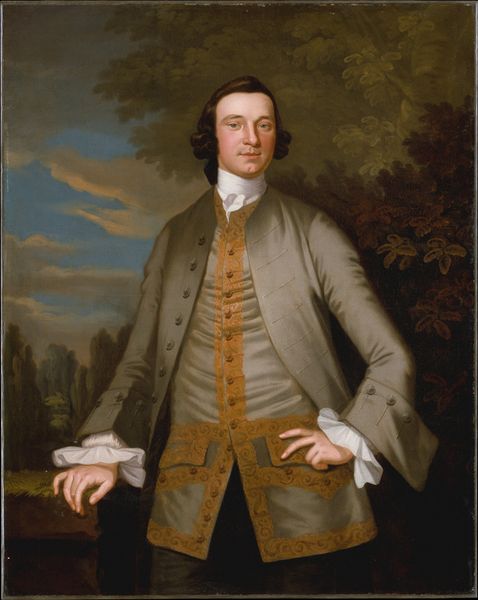
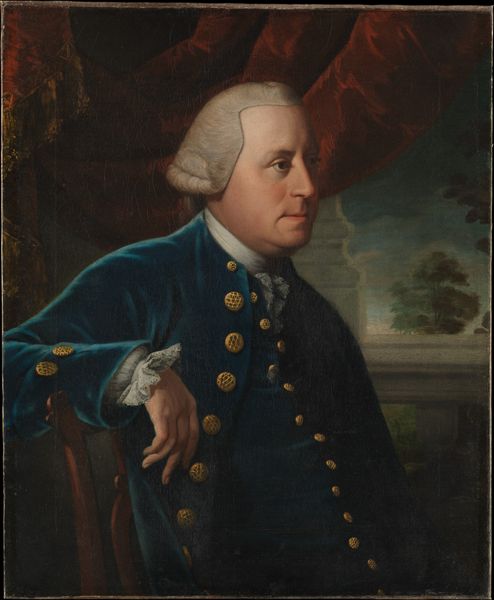
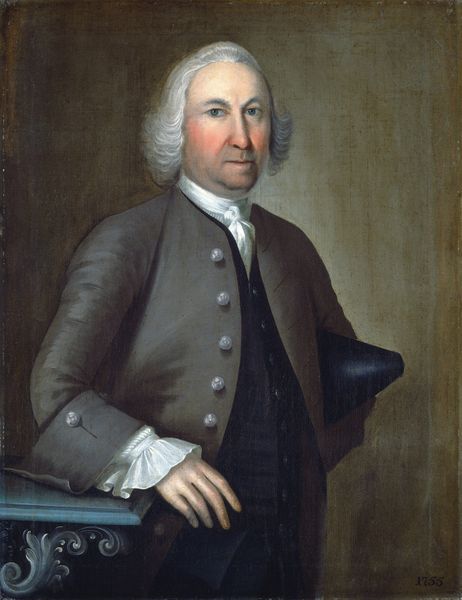
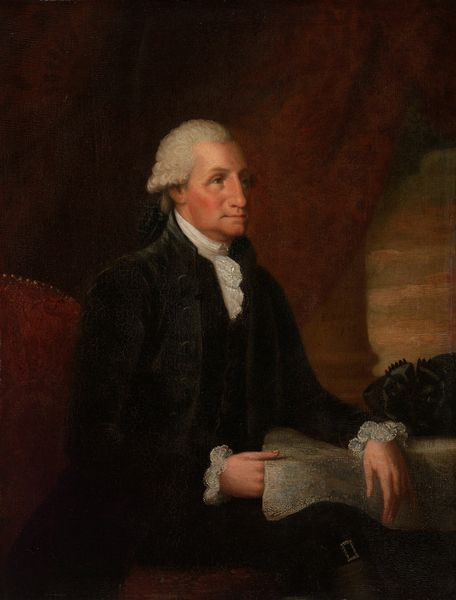
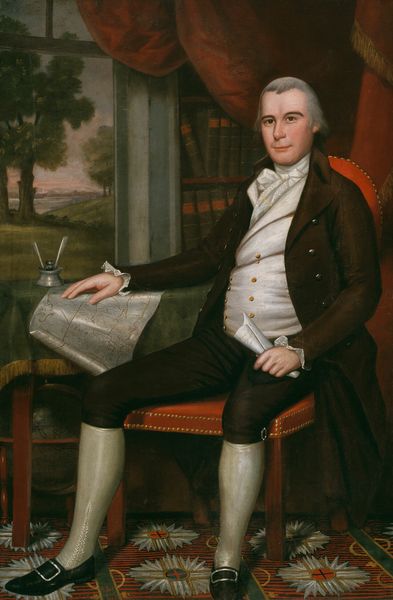
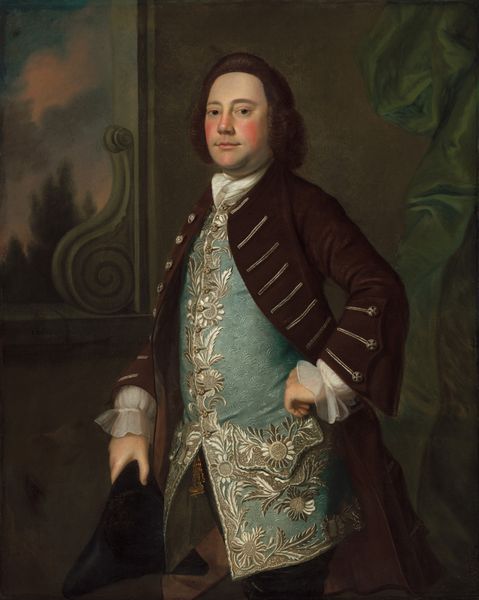
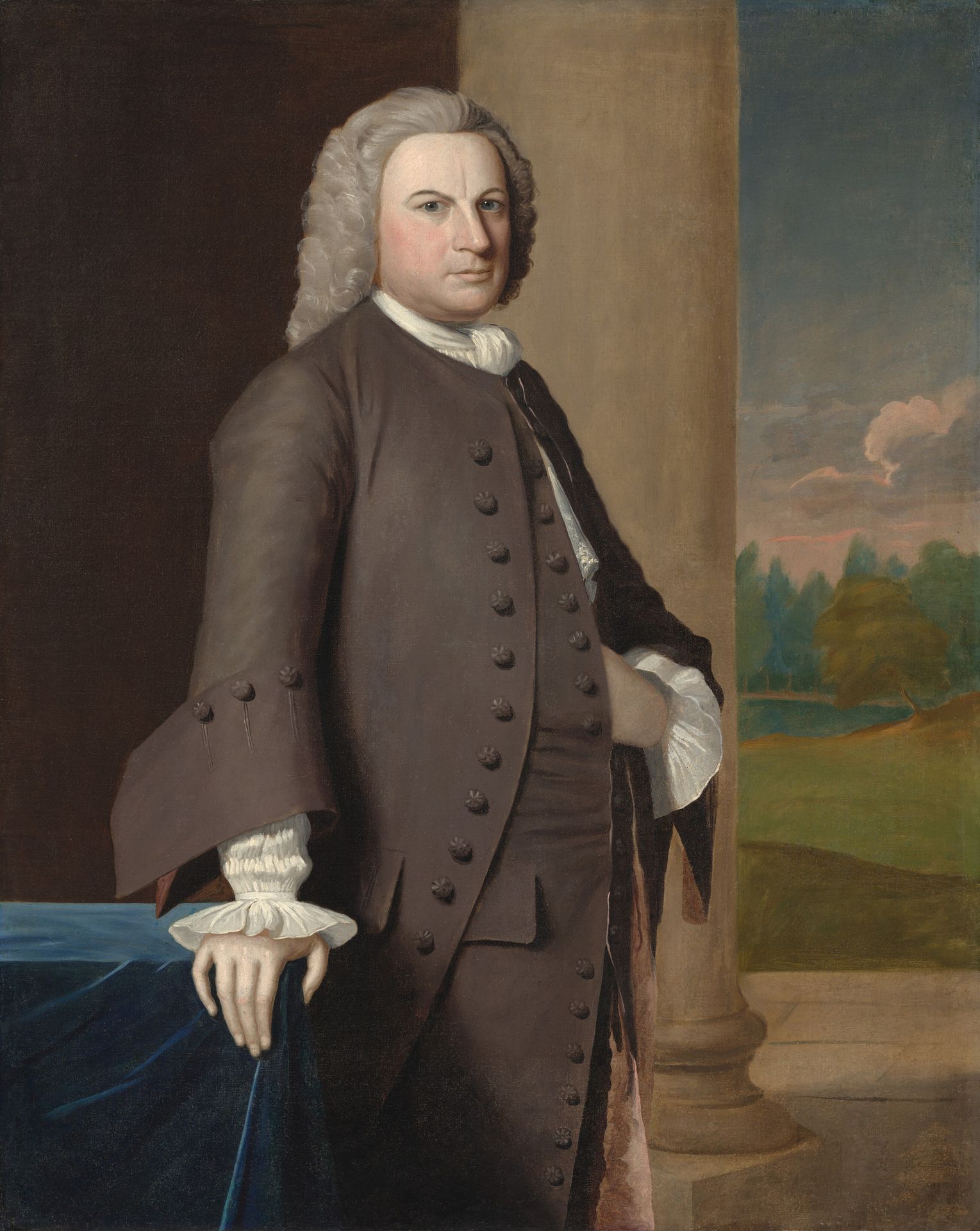
Robert Feke painted "Simon Pease" in the mid-18th century, a time when portraiture served to affirm social standing and wealth. Feke, an Anglo-American artist, here depicts Pease, who was a prominent figure in colonial society. Through this image, Pease is immortalized but also situated within a very particular set of social and political hierarchies. The carefully rendered details of his clothing and the classical architecture in the background emphasize Pease's status and education, aligning him with ideals of gentility. This portrait must also be understood in the context of colonial America's reliance on enslaved labor. Wealthy merchants like Pease directly benefited from the exploitation of enslaved people. While seemingly a straightforward representation, the portrait also suggests the complexities of identity in a colonial context. The formal pose is softened by the pastoral landscape. In that pastoral scene, what are the terms of our inclusion, or exclusion, in the landscape?


Artwork details
- Medium
- oil-paint
- Dimensions
- painted surface: 127.32 × 101.92 cm (50 1/8 × 40 1/8 in.) overall: 128.27 × 102.55 cm (50 1/2 × 40 3/8 in.) framed: 144.78 × 119.38 × 5.08 cm (57 × 47 × 2 in.)
- Copyright
- National Gallery of Art: CC0 1.0
Tags
Comments
Share your thoughts
About this artwork
Robert Feke painted "Simon Pease" in the mid-18th century, a time when portraiture served to affirm social standing and wealth. Feke, an Anglo-American artist, here depicts Pease, who was a prominent figure in colonial society. Through this image, Pease is immortalized but also situated within a very particular set of social and political hierarchies. The carefully rendered details of his clothing and the classical architecture in the background emphasize Pease's status and education, aligning him with ideals of gentility. This portrait must also be understood in the context of colonial America's reliance on enslaved labor. Wealthy merchants like Pease directly benefited from the exploitation of enslaved people. While seemingly a straightforward representation, the portrait also suggests the complexities of identity in a colonial context. The formal pose is softened by the pastoral landscape. In that pastoral scene, what are the terms of our inclusion, or exclusion, in the landscape?
Comments
Share your thoughts