About this artwork
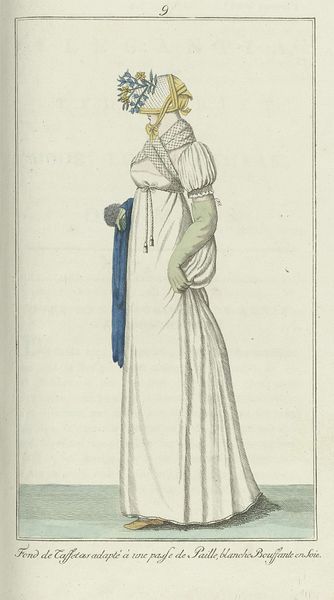
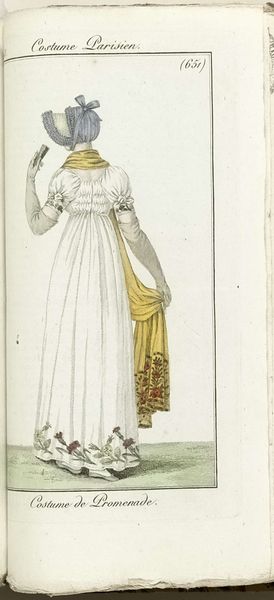
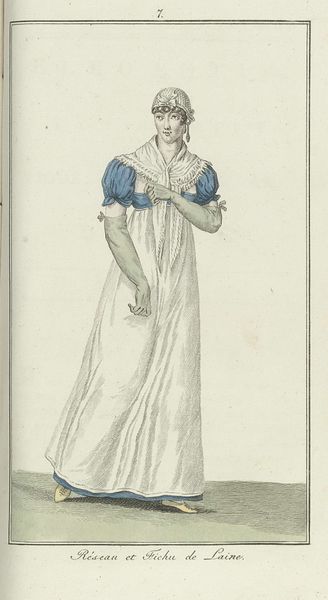
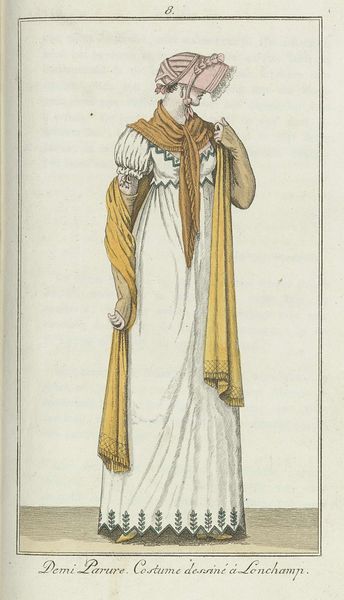
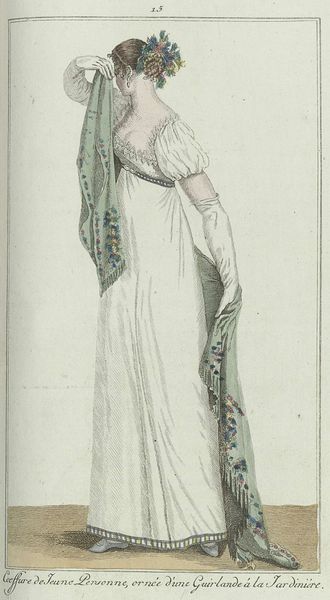
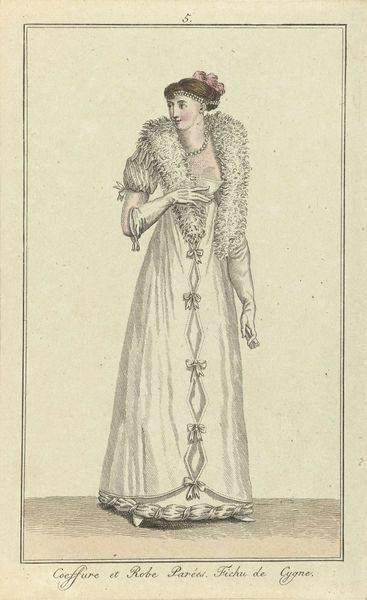
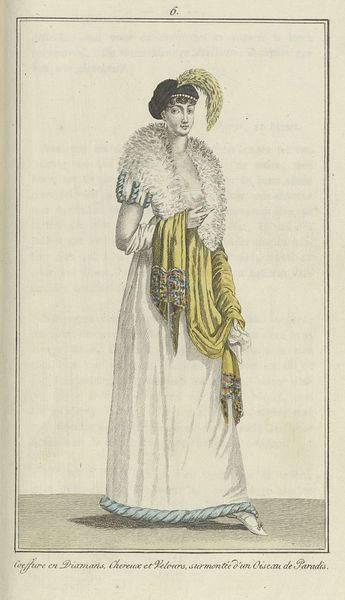
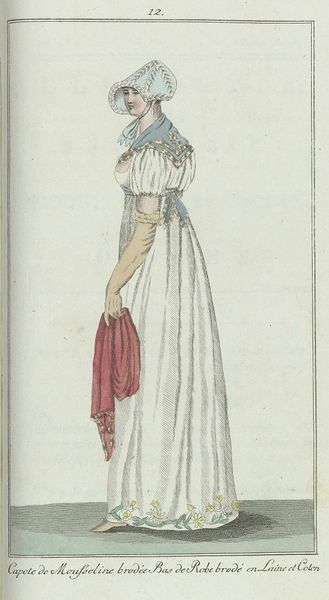
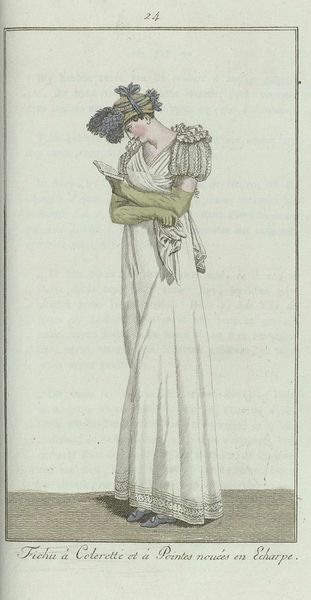
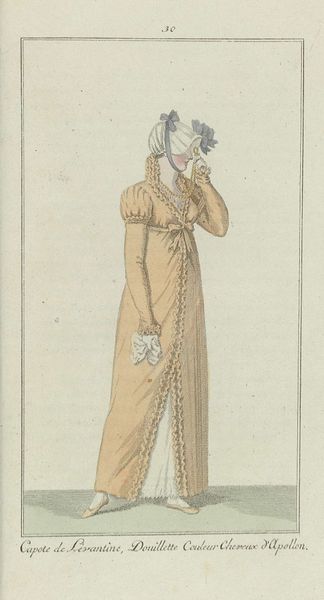
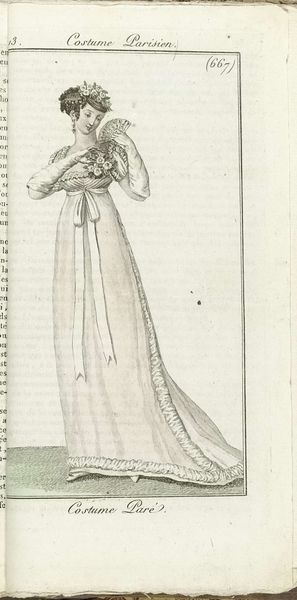
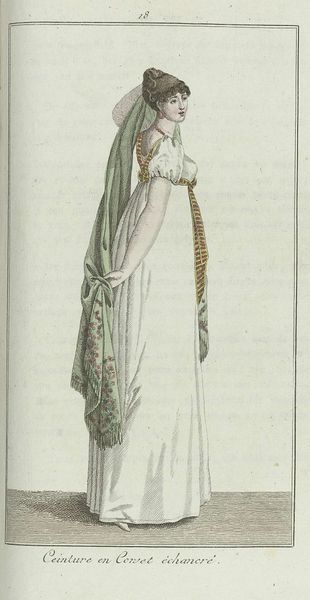
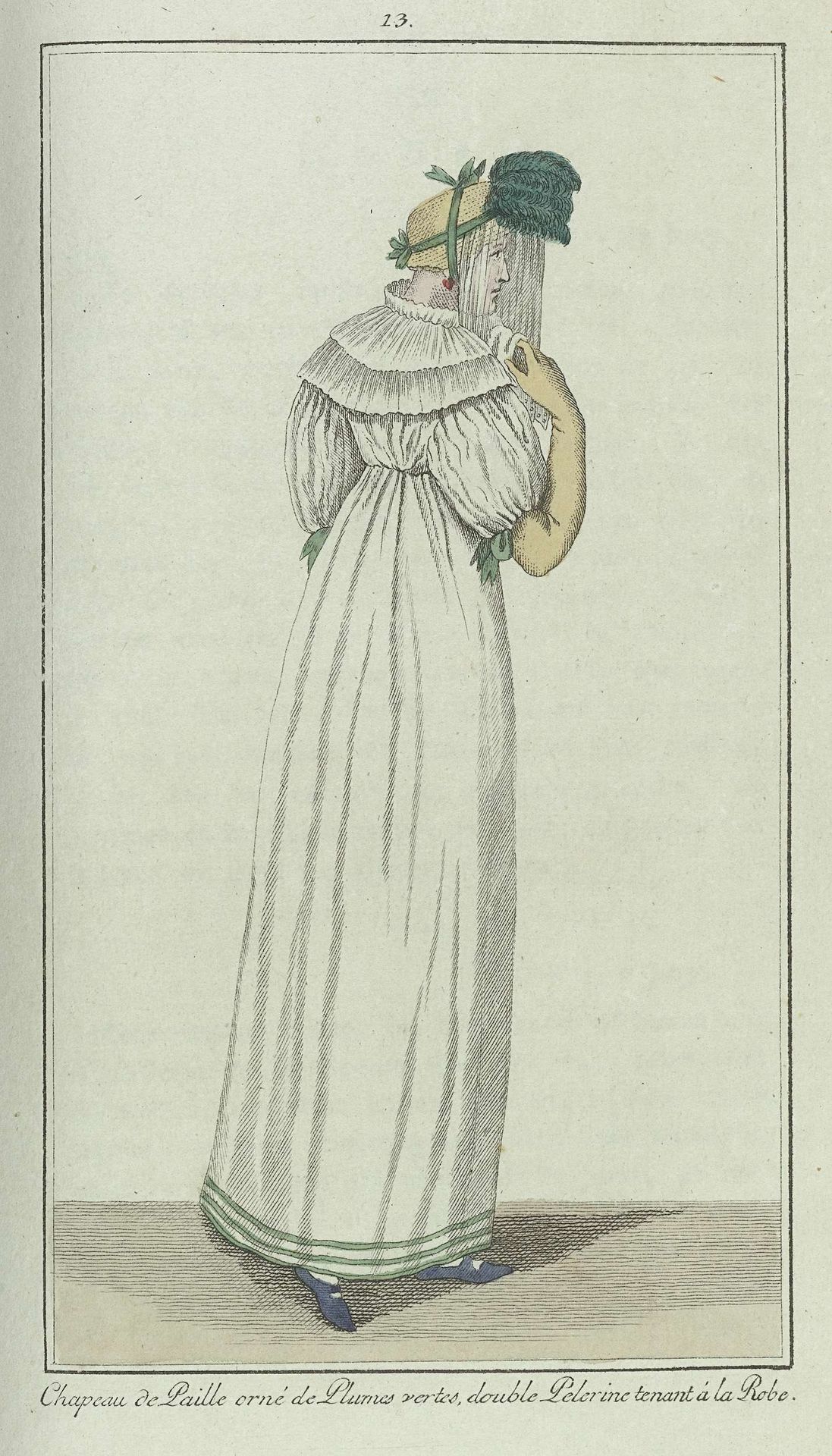
This fashion plate, titled "Elegantia, of tijdschrift van mode, luxe en smaak voor dames," was made anonymously in June 1807 using etching and possibly some engraving. The composition centres around a slender female figure, emphasizing the verticality of her dress. The light, almost translucent fabric contrasts with the darker hat, drawing our attention to the silhouette and form. Structurally, the plate employs a delicate balance. The vertical lines of the dress and the cascade of pleats and ruffles create a sense of lightness and movement, a visual rhythm that speaks to the era's aesthetic values. The figure's attire, with its high waistline, embodies the Neoclassical ideals of simplicity and grace, challenging the excesses of previous fashion trends. The anonymous artist uses color sparingly but effectively. The subtle use of green complements the primary white tone, highlighting the naturalistic elements of the design, such as the leaves. This reflects a broader cultural interest in naturalism, influencing everything from clothing to interior design. The artwork, though seemingly simple, reveals a complex interplay of line, form, and color.
Elegantia, of tijdschrift van mode, luxe en smaak voor dames, Juni 1807, No. 13: Chapeau de Paille... 1807

Anonymous
@anonymousLocation
RijksmuseumArtwork details
- Medium
- drawing, print, ink
- Dimensions
- height 222 mm, width 125 mm
- Location
- Rijksmuseum
- Copyright
- Rijks Museum: Open Domain
Tags
portrait
drawing
historical fashion
ink
romanticism
watercolour illustration
fashion sketch
dress
Comments
No comments
About this artwork
This fashion plate, titled "Elegantia, of tijdschrift van mode, luxe en smaak voor dames," was made anonymously in June 1807 using etching and possibly some engraving. The composition centres around a slender female figure, emphasizing the verticality of her dress. The light, almost translucent fabric contrasts with the darker hat, drawing our attention to the silhouette and form. Structurally, the plate employs a delicate balance. The vertical lines of the dress and the cascade of pleats and ruffles create a sense of lightness and movement, a visual rhythm that speaks to the era's aesthetic values. The figure's attire, with its high waistline, embodies the Neoclassical ideals of simplicity and grace, challenging the excesses of previous fashion trends. The anonymous artist uses color sparingly but effectively. The subtle use of green complements the primary white tone, highlighting the naturalistic elements of the design, such as the leaves. This reflects a broader cultural interest in naturalism, influencing everything from clothing to interior design. The artwork, though seemingly simple, reveals a complex interplay of line, form, and color.
Comments
No comments