About this artwork
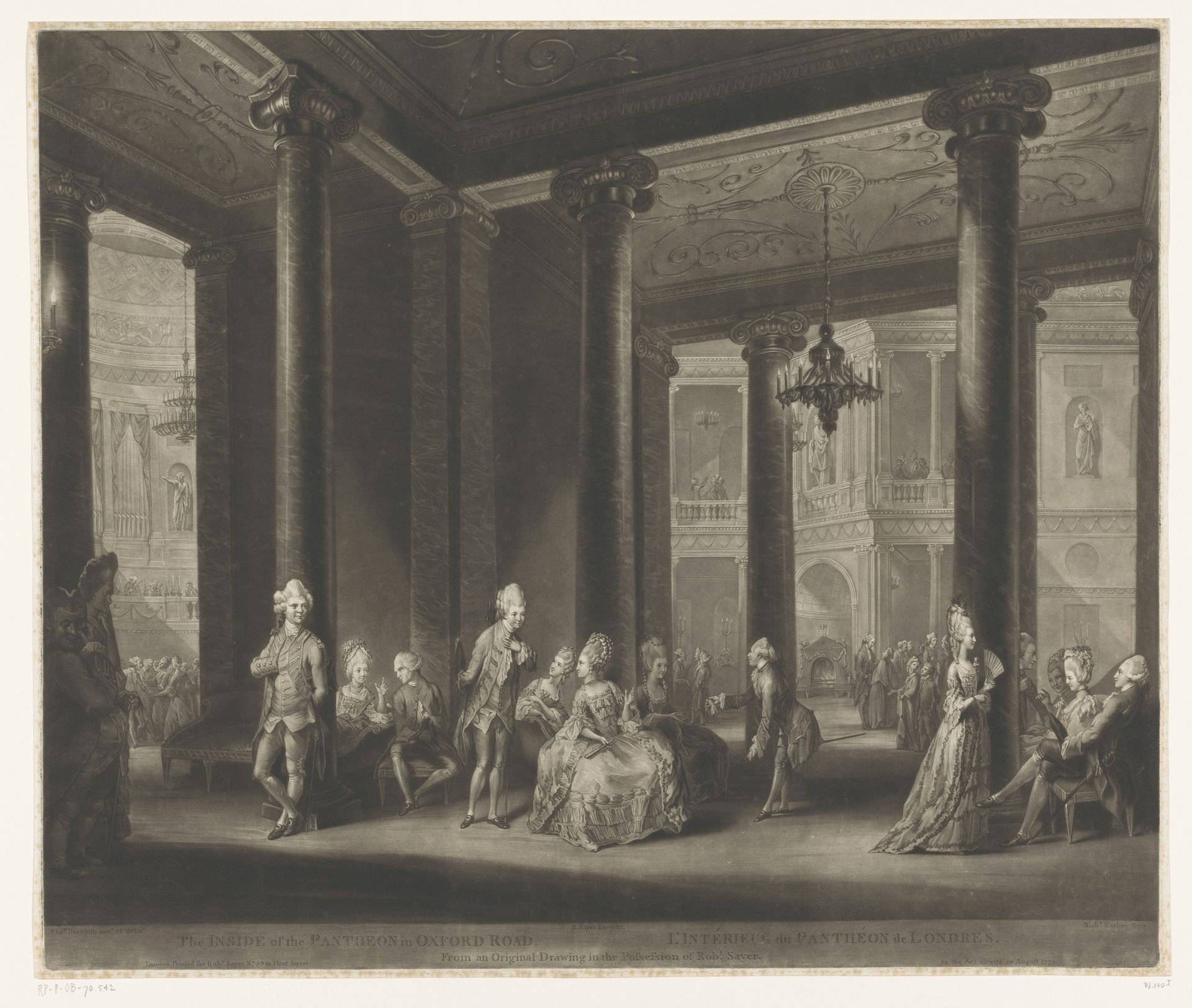
Richard Earlom’s depiction of the Pantheon on Oxford Street in London was achieved through meticulous mezzotint techniques. Mezzotint is an intaglio printmaking process that relies on building tone through thousands of tiny dots. The plate would first be roughened, creating a burr that would hold ink, and then smoothed in areas to produce lighter tones. It's a labor-intensive method, requiring immense skill to control the tonal range. The inherent qualities of mezzotint lend themselves well to capturing the grandeur of the Pantheon's architecture and the texture of the clothing. The light, seemingly emanating from the chandelier, creates a sense of depth. Earlom's print is not just a picture, it's a testament to skilled craftsmanship. It bridges the gap between fine art and the labor-intensive processes that underpinned printmaking during this period. Recognizing the work and skill involved expands our appreciation, challenging traditional distinctions between art and craft.
Interieur van het Pantheon op Oxford Street in Londen
1772 - 1778

Richard Earlom
1743 - 1822Location
RijksmuseumArtwork details
- Dimensions
- height 468 mm, width 560 mm
- Location
- Rijksmuseum
- Copyright
- Rijks Museum: Open Domain
Comments
Share your thoughts
About this artwork
Richard Earlom’s depiction of the Pantheon on Oxford Street in London was achieved through meticulous mezzotint techniques. Mezzotint is an intaglio printmaking process that relies on building tone through thousands of tiny dots. The plate would first be roughened, creating a burr that would hold ink, and then smoothed in areas to produce lighter tones. It's a labor-intensive method, requiring immense skill to control the tonal range. The inherent qualities of mezzotint lend themselves well to capturing the grandeur of the Pantheon's architecture and the texture of the clothing. The light, seemingly emanating from the chandelier, creates a sense of depth. Earlom's print is not just a picture, it's a testament to skilled craftsmanship. It bridges the gap between fine art and the labor-intensive processes that underpinned printmaking during this period. Recognizing the work and skill involved expands our appreciation, challenging traditional distinctions between art and craft.
Comments
Share your thoughts