About this artwork
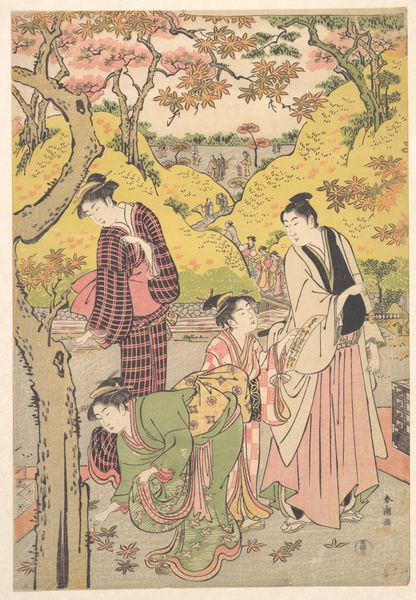
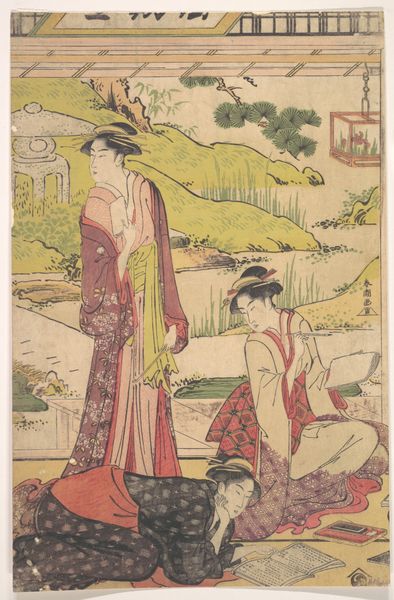
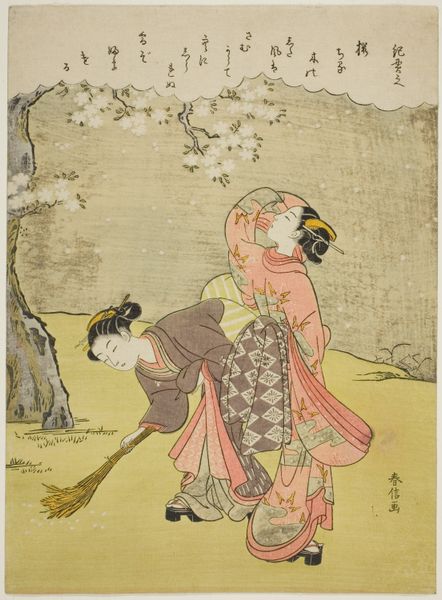
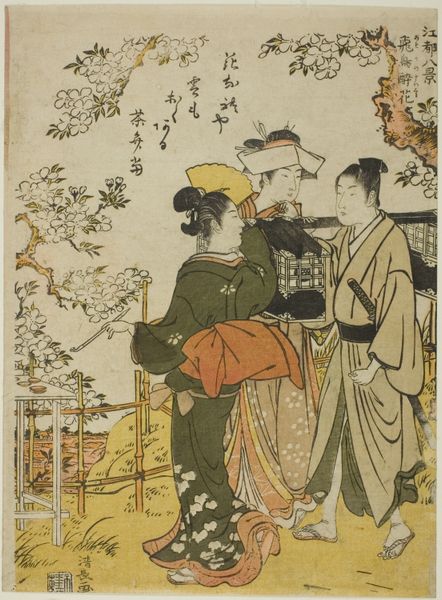
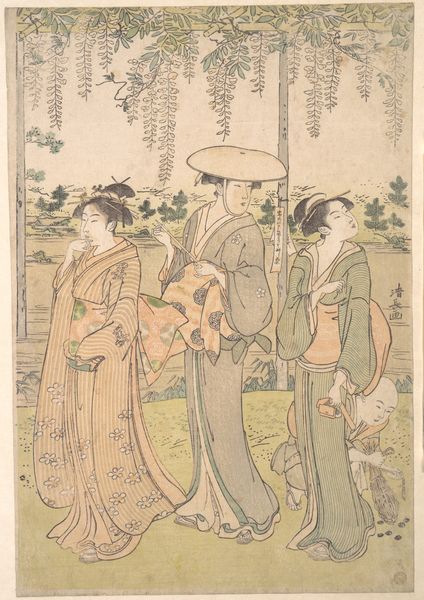
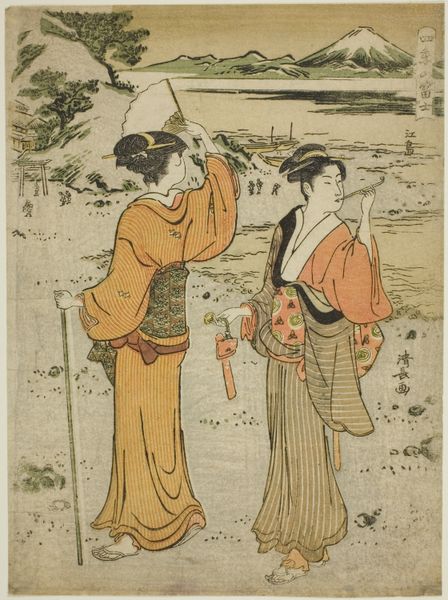
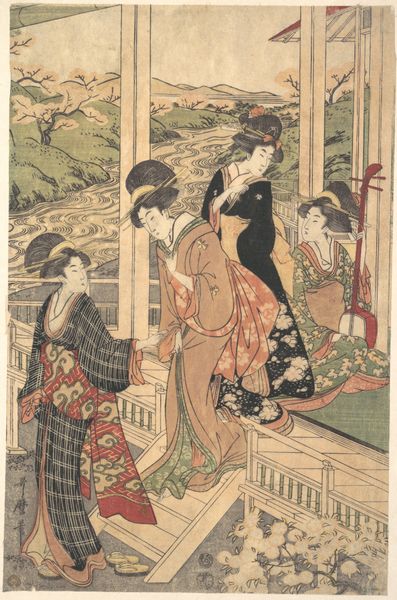
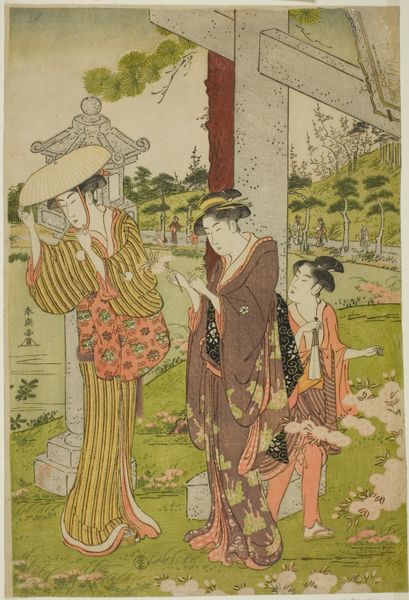
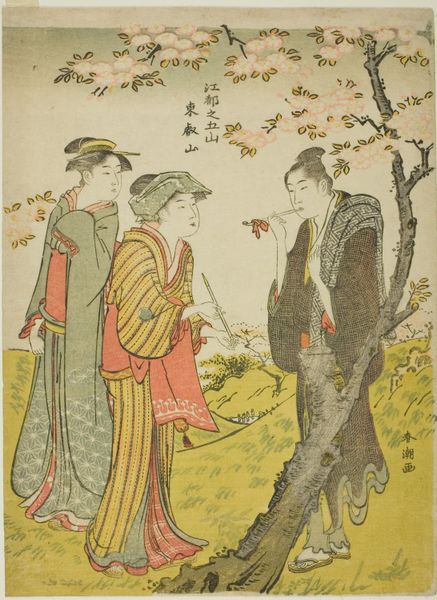
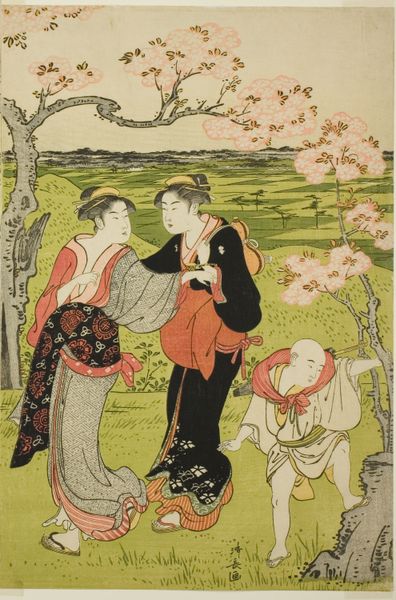
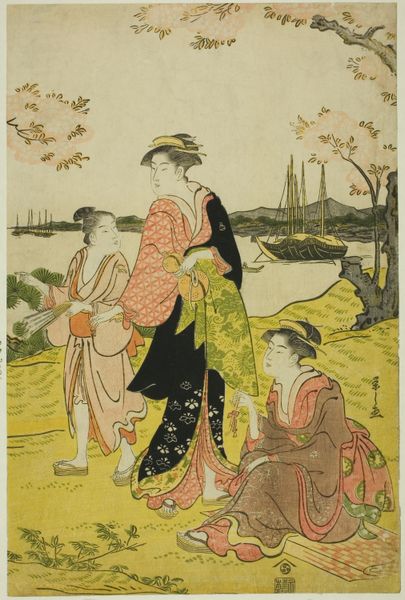
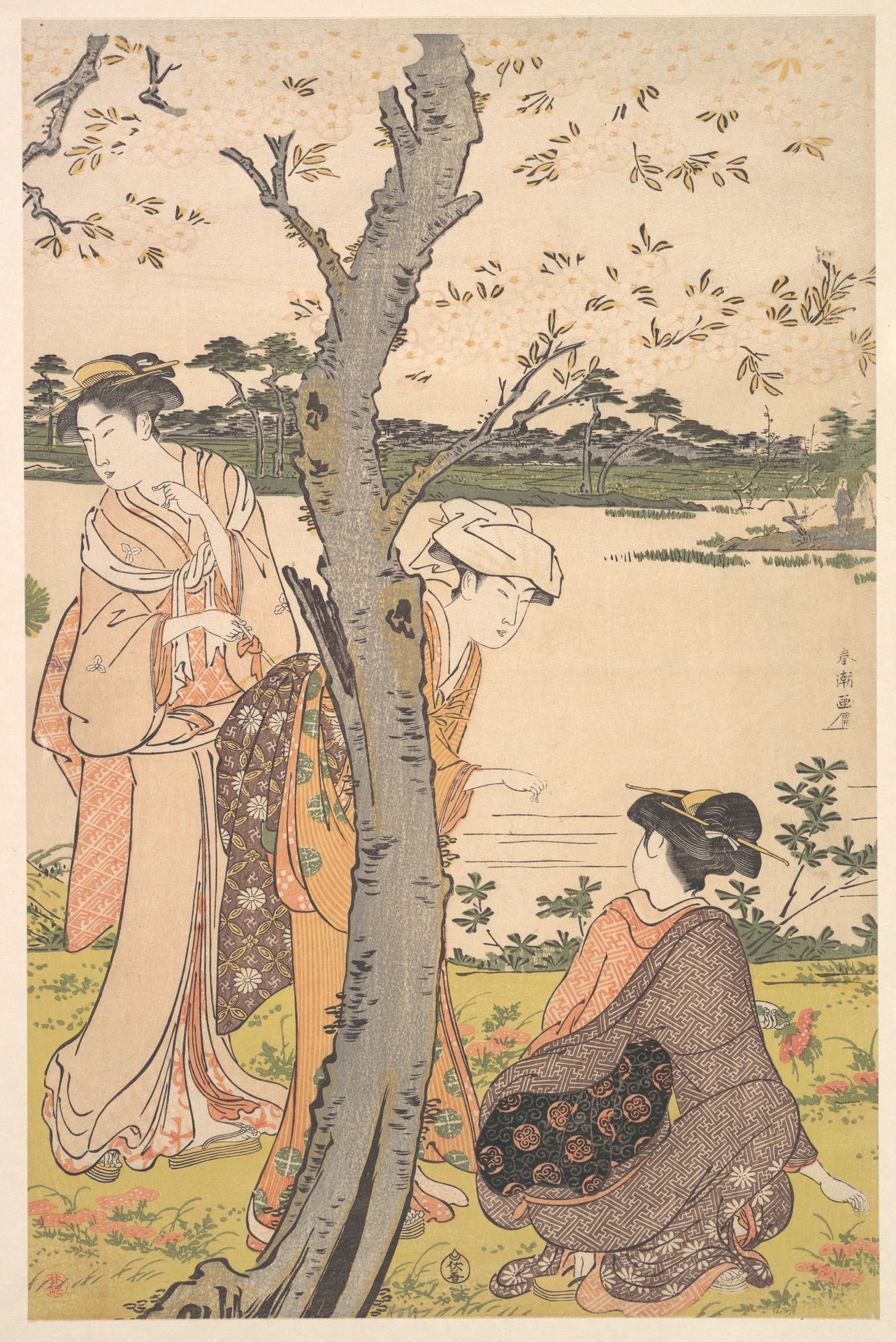
Katsukawa Shunchō made this woodblock print called Gathering Young Flowers sometime in the late 1700s. The women depicted are likely courtesans enjoying a spring day in a pleasure district of Edo-period Japan. Woodblock prints were a popular and relatively inexpensive art form in Japan, and they reflect the interests and values of the merchant class. Prints of beautiful women, or bijinga, became a highly conventionalized genre within ukiyo-e. Artists like Shunchō had to balance the need to innovate with market pressure to produce familiar types. Courtesans were celebrities in their day. The cultural historian can look into the ways these images may have both reflected and shaped attitudes towards women, beauty, and social class. Careful study of related prints and textual sources can help us interpret the social dynamics captured in this seemingly simple image.
Gathering Young Flowers 1780 - 1795


Artwork details
- Dimensions
- 15 1/8 × 9 7/8 in. (38.4 × 25.1 cm)
- Location
- Metropolitan Museum of Art, New York, NY
- Copyright
- Public Domain
Comments
No comments
About this artwork
Katsukawa Shunchō made this woodblock print called Gathering Young Flowers sometime in the late 1700s. The women depicted are likely courtesans enjoying a spring day in a pleasure district of Edo-period Japan. Woodblock prints were a popular and relatively inexpensive art form in Japan, and they reflect the interests and values of the merchant class. Prints of beautiful women, or bijinga, became a highly conventionalized genre within ukiyo-e. Artists like Shunchō had to balance the need to innovate with market pressure to produce familiar types. Courtesans were celebrities in their day. The cultural historian can look into the ways these images may have both reflected and shaped attitudes towards women, beauty, and social class. Careful study of related prints and textual sources can help us interpret the social dynamics captured in this seemingly simple image.
Comments
No comments