1935 - 1942
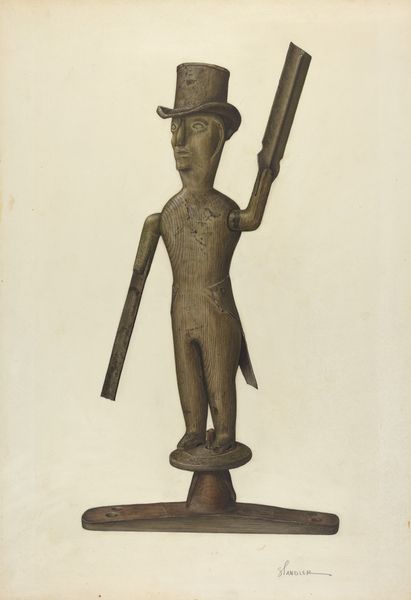
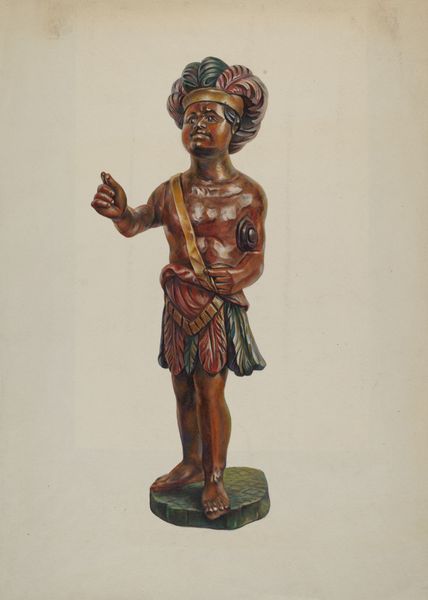
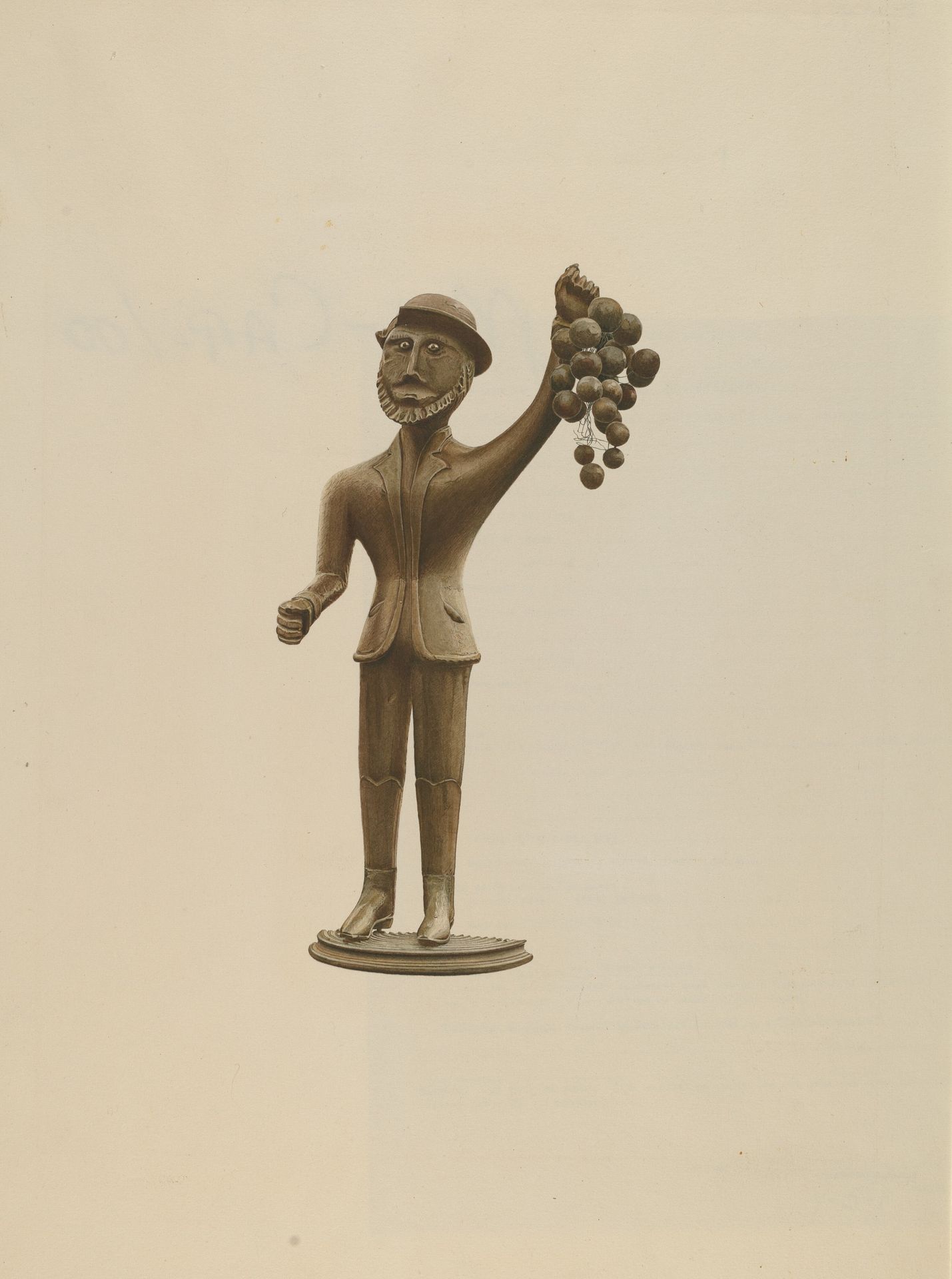
Tavern Sign Figure


Listen to curator's interpretation
Curatorial notes
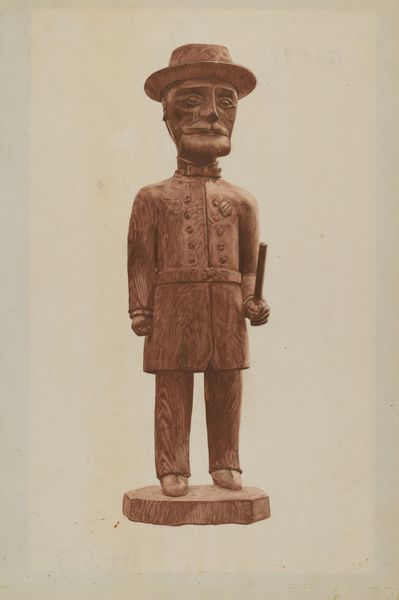
Curator: Here we have Karl Hentz’s “Tavern Sign Figure,” a pencil drawing from between 1935 and 1942. Editor: Oh, this is… curious! It looks like a sepia-toned photograph, almost, of a carved wooden figure. There's something quite charmingly archaic about it, wouldn't you say? Like it could have been ripped from the pages of an old fairytale book. Curator: That's perceptive. Hentz seemed interested in evoking the feel of folk art. Look at how he renders the figure—very simplified, almost like a child's toy, but with surprisingly sophisticated shading for depth. The grapes are also important, of course, suggesting merriment and celebration appropriate to a tavern. Editor: Yes, the composition is a lovely study of contrasting forms! The geometric simplicity of the figure itself set against the luscious curves of the grapes! Curator: What I find fascinating is the implied history here. Was this based on an actual tavern sign? Or just imagined? Editor: Perhaps it's both. A figment of memory refined. I also find it charming how the artist embraces imperfections and leaves visible pencil marks which contribute to its unique character! It brings forth its handmade authenticity. Curator: Absolutely! These intentional "mistakes" add to its rustic appeal, underscoring a connection to handcrafted traditions. But beyond the formal elements, I sense something more personal here. There's a quiet joy radiating from this humble little figure, almost as if Hentz were celebrating the simple pleasures in life amidst darker times. Editor: Ah, yes! Like an affirmation—a silent cheer from one lonely heart to another. Curator: Ultimately, “Tavern Sign Figure” becomes a delightful reminder that sometimes the most profound statements are whispered, not shouted. Editor: I agree. It serves as a poignant testament of the enduring power art holds when immortalizing the simplest expressions of joy, proving them more precious than grand pronouncements.