1948
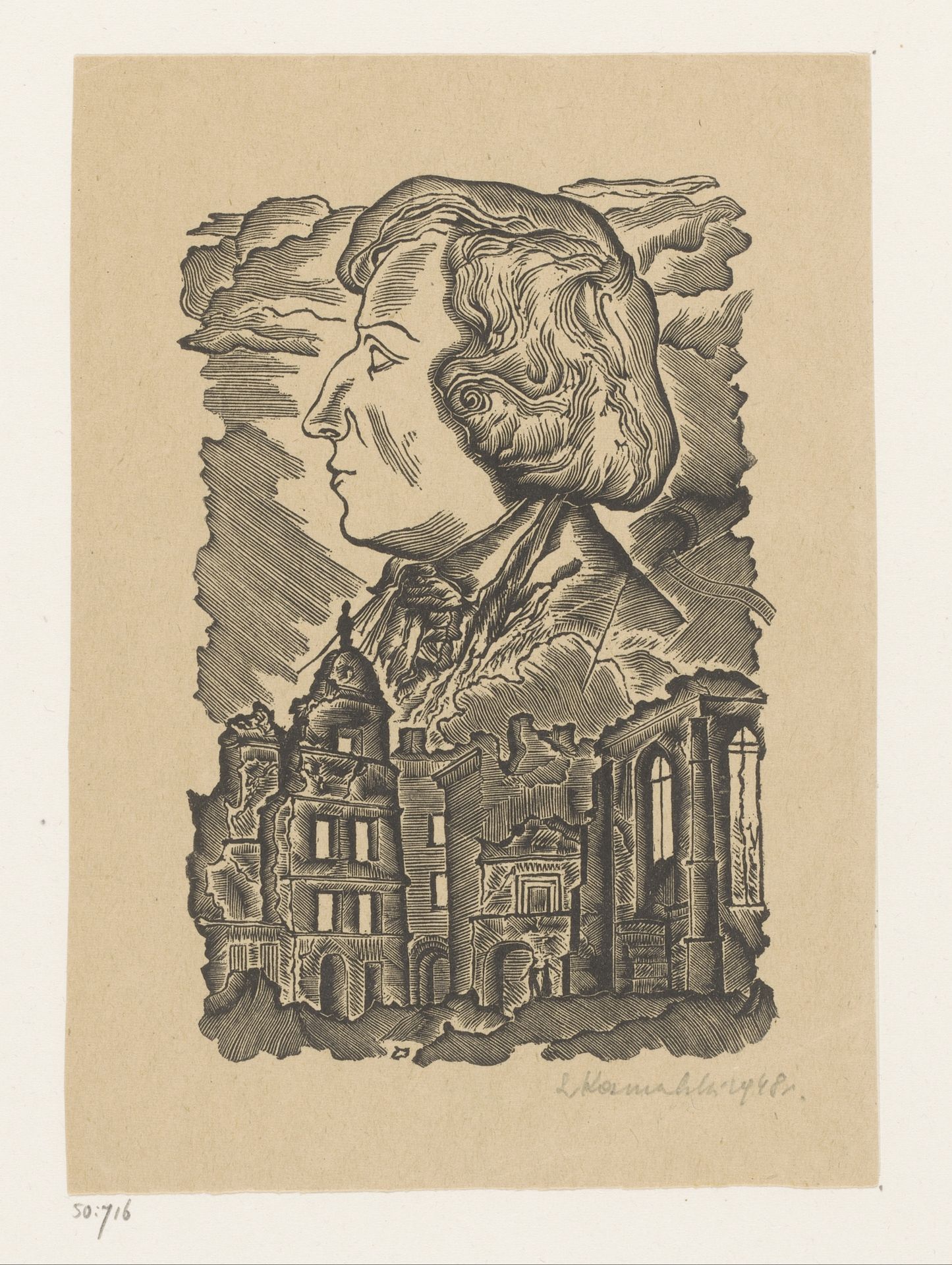
Portret van Frédéric Chopin boven een verwoeste stad

Listen to curator's interpretation
Curatorial notes
Editor: This woodcut print from 1948, titled "Portret van Frédéderic Chopin boven een verwoeste stad" by Leon Kosmulski, presents such a stark contrast between the romantic figure and the ruins below. What strikes you most about the artist's choices here? Curator: The juxtaposition of Chopin, a symbol of refined culture, with a war-torn cityscape screams of materiality's brutal intrusion on cultural life. Woodcut as a medium itself speaks volumes; the rough, carved lines mirror the violence inflicted upon the city. Consider the labor involved in producing such a print shortly after the war – the scarcity of resources, the artist’s own potential displacement. Editor: So, you're focusing on how the physical making of the art connects to its meaning. It makes me think about the materials the artist chose to work with in that context. Curator: Precisely! The choice isn't arbitrary. The "low" medium of woodcut, historically associated with popular prints and dissemination, democratizes Chopin's legacy but also grounds him in a reality of scarcity and resilience. Is Kosmulski perhaps highlighting how art itself is remade from the remnants of destruction, its beauty forged through trauma? Think of the buildings - reduced to their basic materiality, vulnerable and exposed. Editor: It's powerful to consider the social implications behind seemingly simple choices, like the printing material, and how it can reflect a nation's or a people’s reality. I'd only looked at it formally at first. Curator: By focusing on materiality, we escape the trap of aesthetic contemplation and face the hard realities encoded within art objects, no matter how beautiful. Ultimately, art is always implicated in the material conditions of its creation and consumption. Editor: Thanks for broadening my view. I will definitely be viewing other pieces with a more material eye going forward.