About this artwork
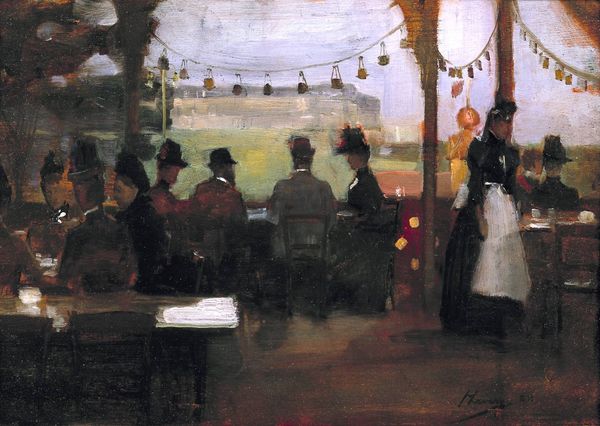
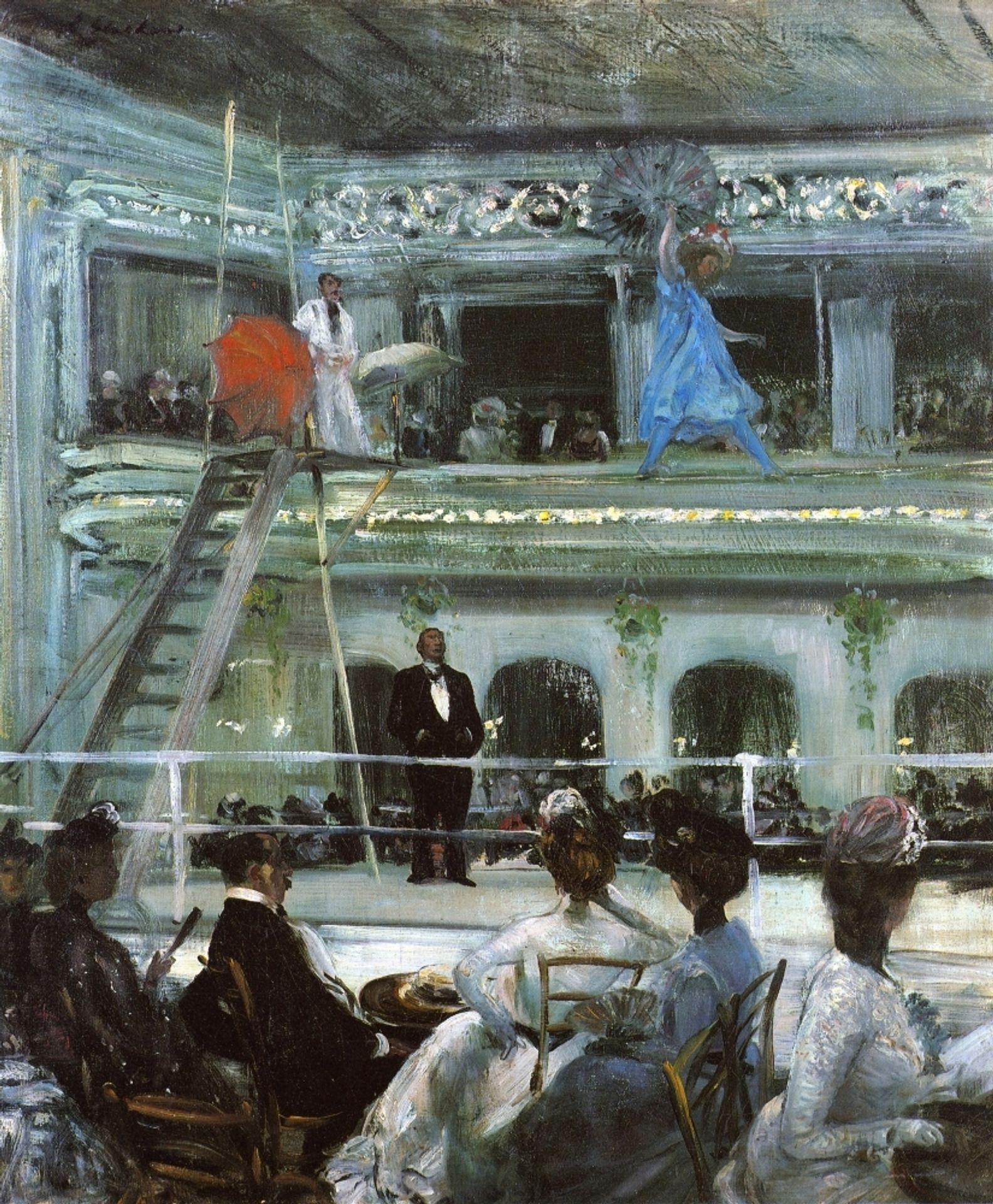
William James Glackens painted Hammerstein's Roof Garden with oil on canvas, and it’s now here at the Whitney. The first thing you notice is the way he builds the image with these quick, gestural marks. It's all about process, you can see the artist figuring it out as he goes. Look closely, and you'll see how the paint is applied – thin in some areas, thicker in others, almost like a watercolor in places. The texture is so alive, you can almost feel the energy of the crowd and the performer in her blue dress. Glackens doesn't try to hide his brushstrokes; they're part of the story. See that little red umbrella up on the left? It's like a tiny explosion of color, pulling your eye around the canvas. It’s these details that make the whole thing sing. You know, Glackens reminds me a bit of Manet, that same interest in modern life and a willingness to leave things unresolved. He invites us to join in the act of seeing, to bring our own experiences to the painting and complete it in our own minds.
Hammerstein's Roof Garden
1901

William James Glackens
1870 - 1938
Whitney Museum of American Art
Whitney Museum of American Art, New York City, NY, USArtwork details
- Dimensions
- 76.2 x 63.5 cm
- Location
- Whitney Museum of American Art, New York City, NY, US
- Copyright
- Public domain
Comments
Share your thoughts
About this artwork
William James Glackens painted Hammerstein's Roof Garden with oil on canvas, and it’s now here at the Whitney. The first thing you notice is the way he builds the image with these quick, gestural marks. It's all about process, you can see the artist figuring it out as he goes. Look closely, and you'll see how the paint is applied – thin in some areas, thicker in others, almost like a watercolor in places. The texture is so alive, you can almost feel the energy of the crowd and the performer in her blue dress. Glackens doesn't try to hide his brushstrokes; they're part of the story. See that little red umbrella up on the left? It's like a tiny explosion of color, pulling your eye around the canvas. It’s these details that make the whole thing sing. You know, Glackens reminds me a bit of Manet, that same interest in modern life and a willingness to leave things unresolved. He invites us to join in the act of seeing, to bring our own experiences to the painting and complete it in our own minds.
Comments
Share your thoughts