carving, fresco
#
carving
#
narrative-art
#
sculpture
#
holy-places
#
figuration
#
historic architecture
#
fresco
#
11_renaissance
#
traditional architecture
#
history-painting
#
italian-renaissance
#
historical building
Copyright: Public domain
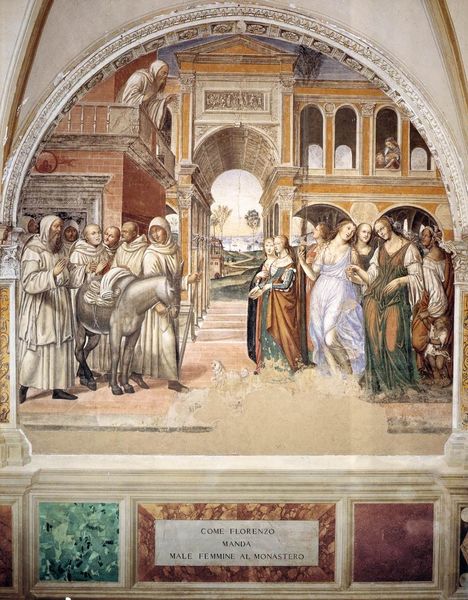
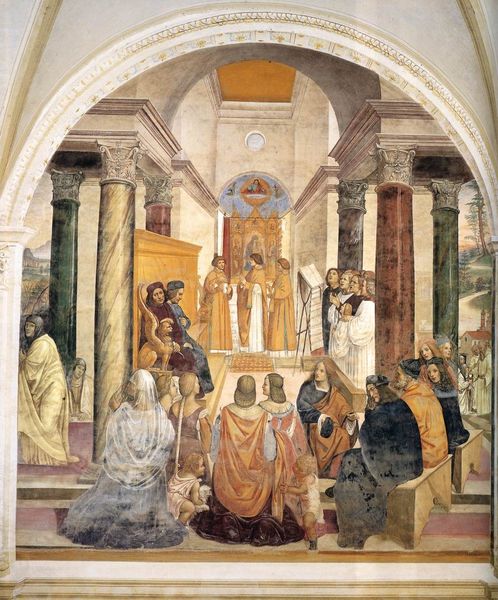
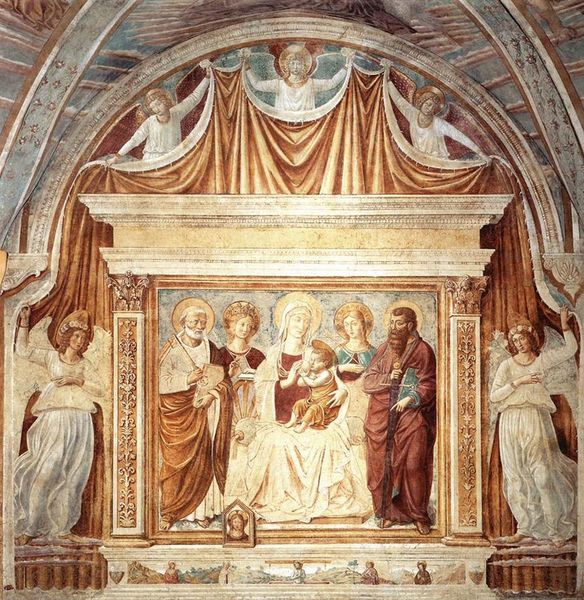
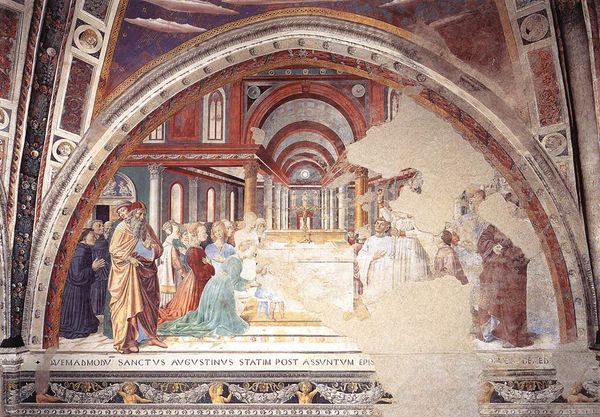
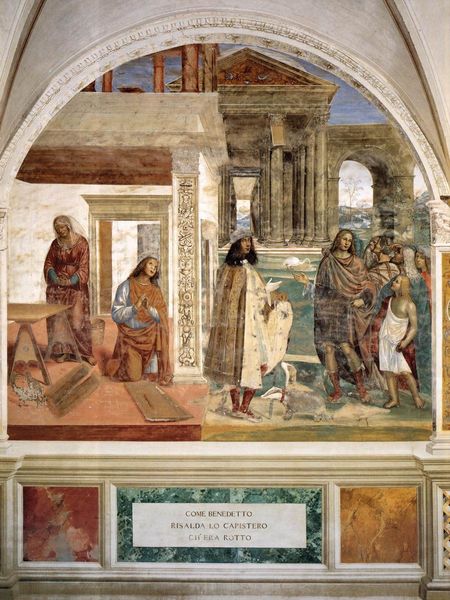
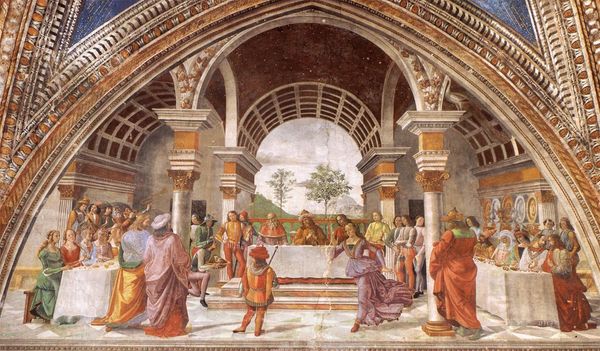
Il Sodoma’s fresco, “Life of St. Benedict, Scene 6. A Priest Shares His Easter Meal with Benedict,” employs traditional fresco techniques – pigment applied to wet plaster. This was a deliberate choice, embedding the story into the very walls of the monastery for which it was made. Look closely and you’ll see the artist’s hand in the detailed brushwork and the layering of colors to create depth and texture. Fresco demanded speed and precision, requiring a collaborative effort to prepare the walls and mix pigments. The entire work becomes an exercise in the skilled application of labor, with the artist sharing creative tasks with assistants. In this way, even a religious scene gains a social dimension – reminding us that art is always a product of collective effort and material circumstance.
Comments
No comments
Be the first to comment and join the conversation on the ultimate creative platform.
 Collect
 React
React Comment
More like this