About this artwork
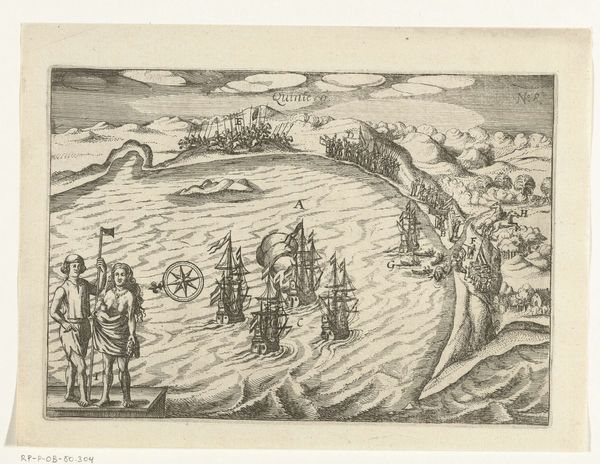
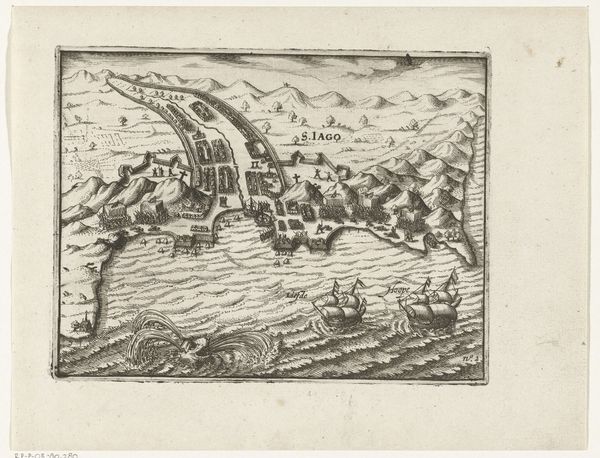
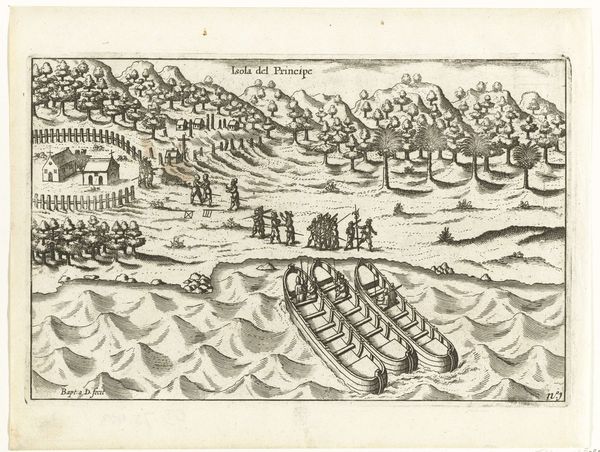
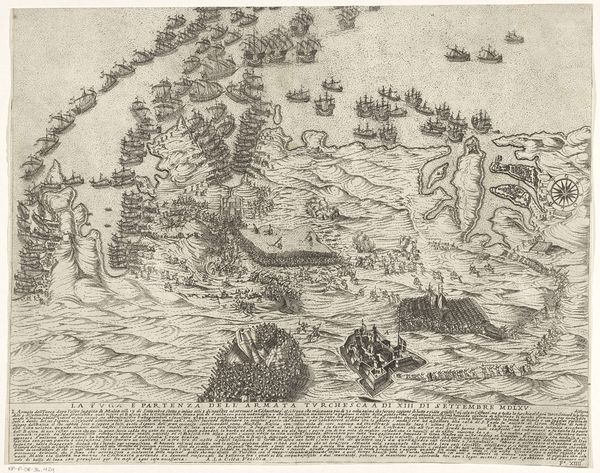
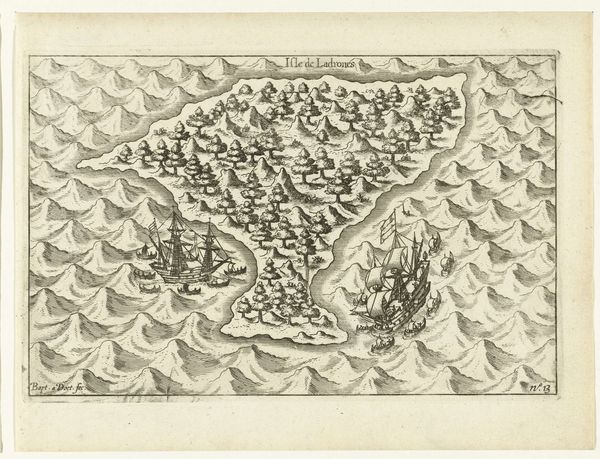
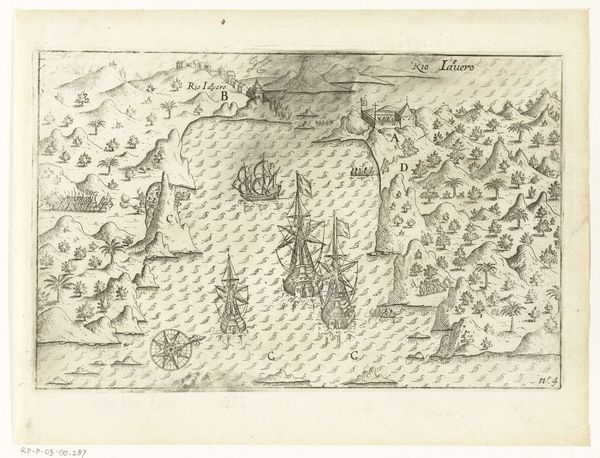
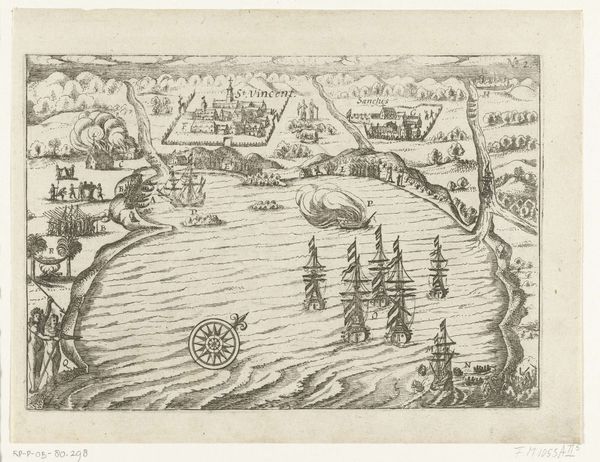
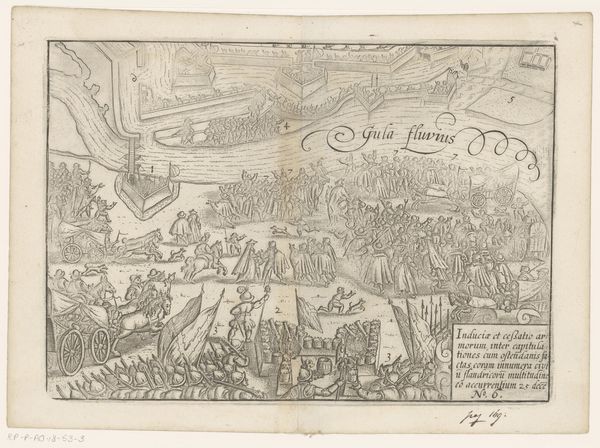
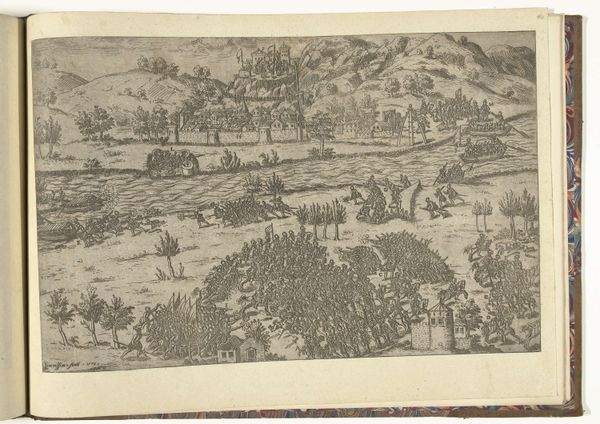
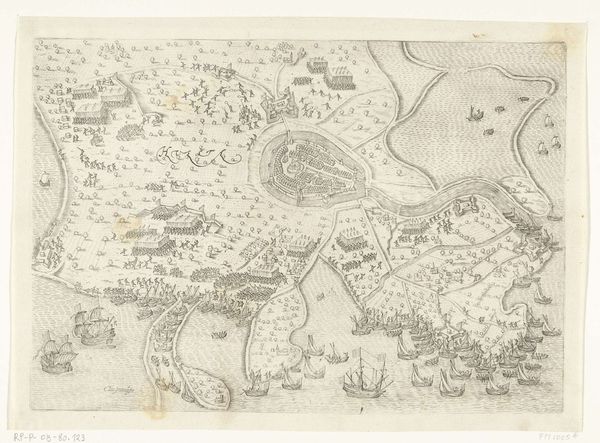
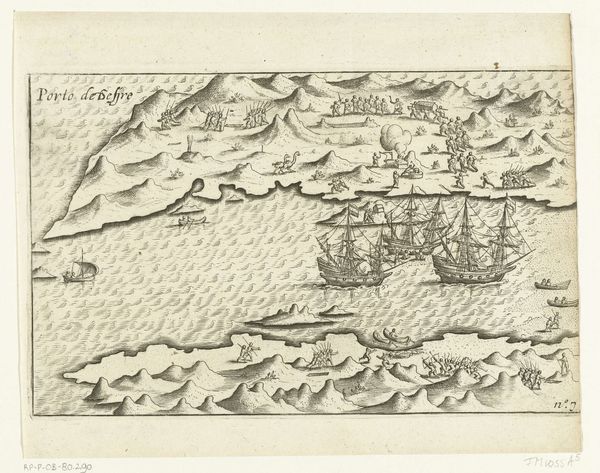
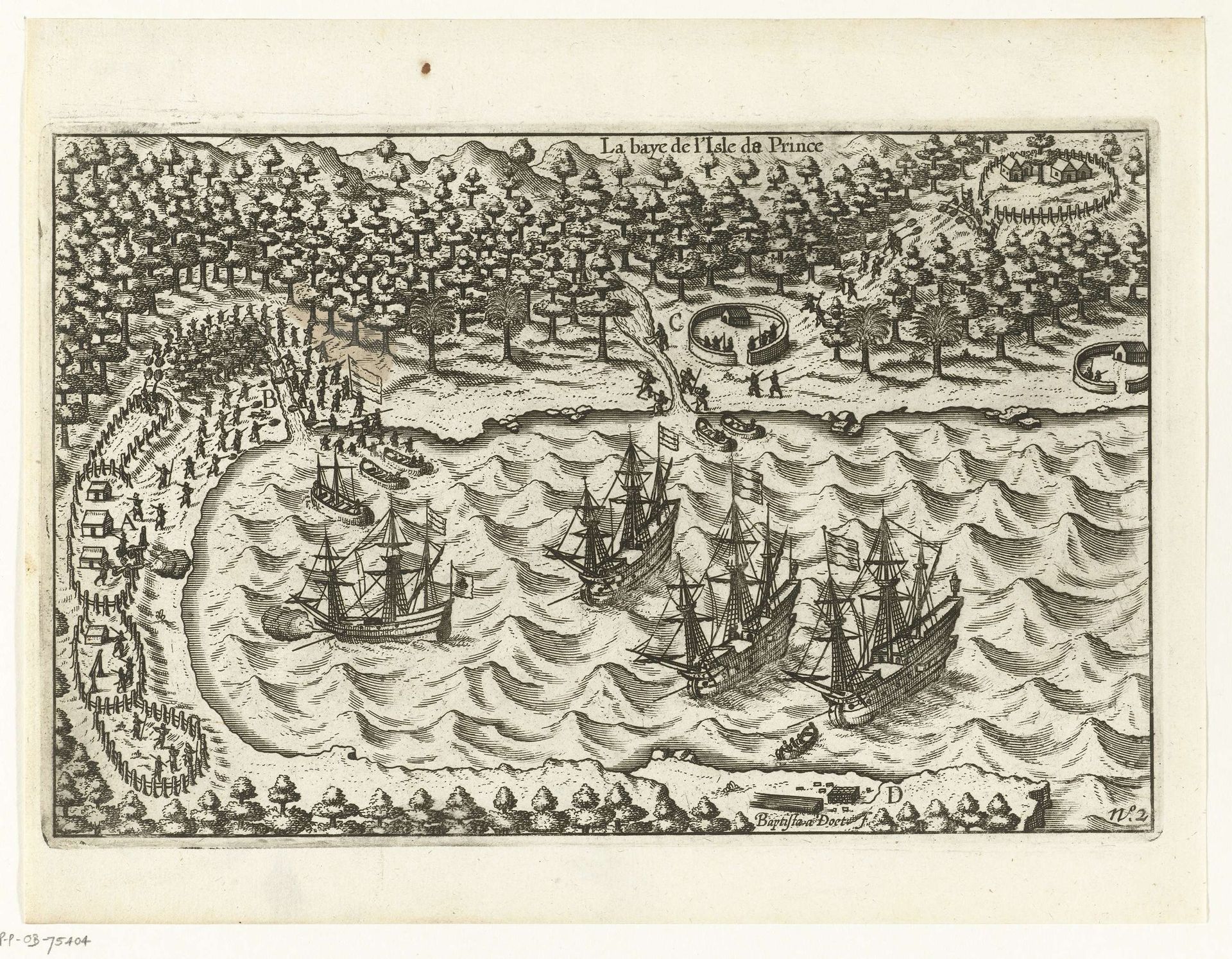
Baptista van Doetechum made this print titled, "Beschieting van Portugezen op Principe, 1598" using engraving. This is an intaglio printmaking technique where the design is incised onto a metal plate, usually copper or zinc. The artist would have used a tool called a burin to cut lines into the plate's surface, creating grooves that hold ink. After inking the plate, the surface is wiped clean, leaving ink only in the incised lines. Damp paper is then placed on the plate, and both are run through a high-pressure printing press. The pressure forces the paper into the inked grooves, transferring the image onto the paper. In this print, the precise, deliberate marks of the burin lend a documentary feel, reflecting the era’s focus on exploration and conquest. The image, far from a neutral record, is shaped by the labor of its making and the politics of its time. It reminds us that all images, no matter how seemingly objective, are made with a point of view.
Beschieting van Portugezen op Principe, 1598
1601 - 1646

Baptista van Doetechum
1611Location
RijksmuseumArtwork details
- Medium
- print, engraving
- Dimensions
- height 145 mm, width 225 mm
- Location
- Rijksmuseum
- Copyright
- Rijks Museum: Open Domain
Tags
pen drawing
old engraving style
landscape
ancient-mediterranean
history-painting
engraving
Comments
Be the first to share your thoughts about this work.
About this artwork
Baptista van Doetechum made this print titled, "Beschieting van Portugezen op Principe, 1598" using engraving. This is an intaglio printmaking technique where the design is incised onto a metal plate, usually copper or zinc. The artist would have used a tool called a burin to cut lines into the plate's surface, creating grooves that hold ink. After inking the plate, the surface is wiped clean, leaving ink only in the incised lines. Damp paper is then placed on the plate, and both are run through a high-pressure printing press. The pressure forces the paper into the inked grooves, transferring the image onto the paper. In this print, the precise, deliberate marks of the burin lend a documentary feel, reflecting the era’s focus on exploration and conquest. The image, far from a neutral record, is shaped by the labor of its making and the politics of its time. It reminds us that all images, no matter how seemingly objective, are made with a point of view.
Comments
Be the first to share your thoughts about this work.