
Curatorial notes
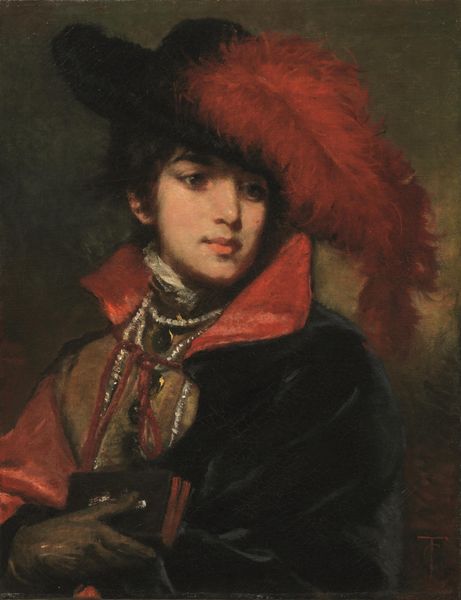
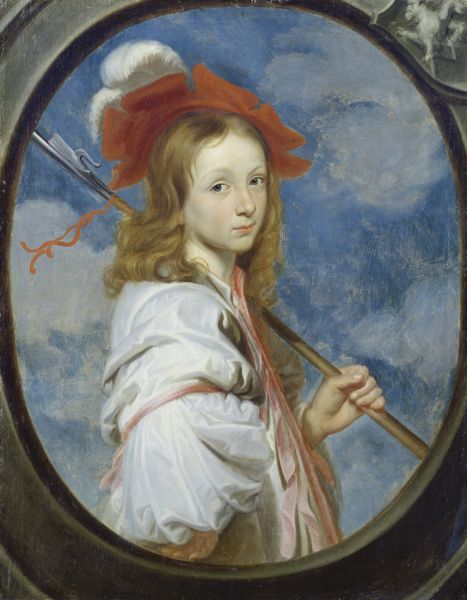
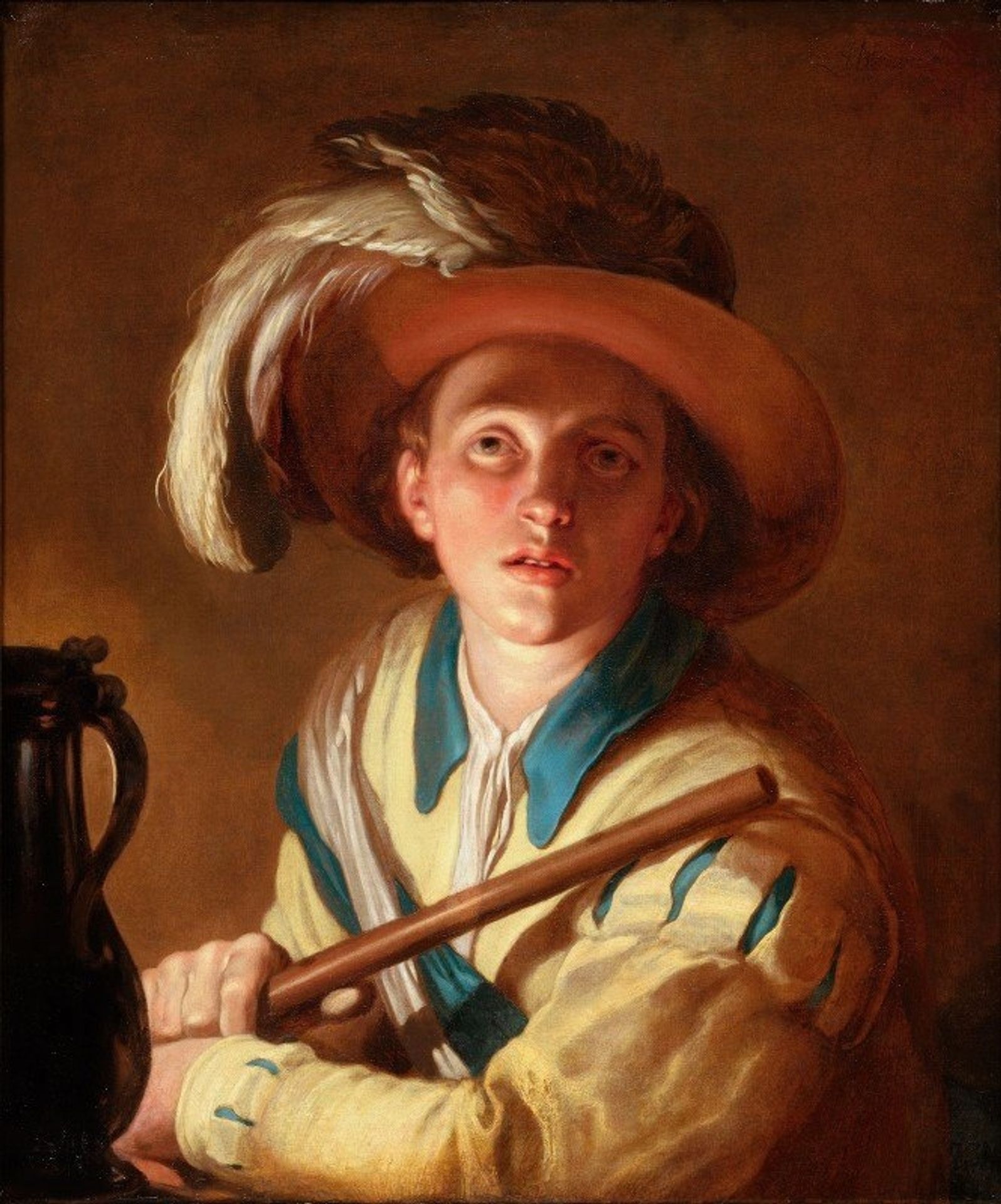
Editor: This is "The Flute Player" by Abraham Bloemaert, painted in 1621, using oil. There’s a kind of casual elegance to it. What strikes you most when you look at it? Curator: What interests me is the overt display of materials and the construction of identity through them. Consider the act of painting itself: the layering of oil paints, a costly medium at the time, used to depict the subject's clothing. The choice of such a theatrical hat, for instance – it speaks volumes about constructing an image. Editor: Right, the hat *is* pretty attention-grabbing! The feathery plumes especially. So, are you saying the artist is using these materials to comment on societal performance? Curator: Precisely. And beyond the painting itself, let's consider the wooden flute. It isn't just a musical instrument; it's an object produced and consumed, embodying labor and status. Who made the flute? Who could afford to learn to play? Editor: I hadn’t thought about it that way, focusing on the labour and economics behind the image. Curator: Bloemaert is showcasing the materials that allow this scene, this very performance, to exist. He almost lays bare the means of artistic and social production. Editor: It's fascinating to think about it in terms of material production and consumption, giving the piece a totally new layer of significance! Curator: Indeed. Shifting the focus from mere aesthetics allows us to engage more deeply with the social fabric of the time.