![[John Everett Millais] by John and Charles Watkins](https://d2w8kbdekdi1gv.cloudfront.net/eyJidWNrZXQiOiAiYXJ0ZXJhLWltYWdlcy1idWNrZXQiLCAia2V5IjogImFydHdvcmtzLzFkMzRmMWRkLWVlYjUtNDliMi05YTViLTkxMTE5NDQxMDczZi8xZDM0ZjFkZC1lZWI1LTQ5YjItOWE1Yi05MTExOTQ0MTA3M2ZfZnVsbC5qcGciLCAiZWRpdHMiOiB7InJlc2l6ZSI6IHsid2lkdGgiOiAxOTIwLCAiaGVpZ2h0IjogMTkyMCwgImZpdCI6ICJpbnNpZGUifX19)
About this artwork
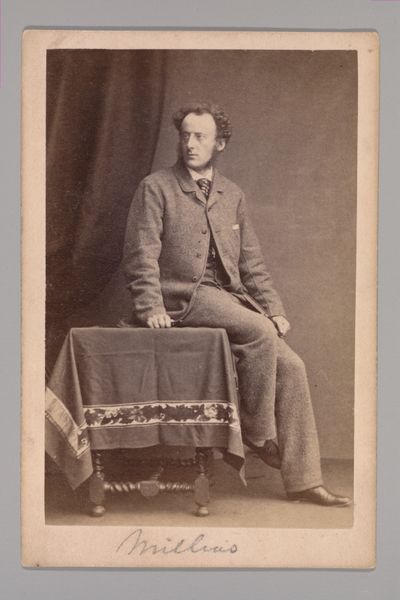
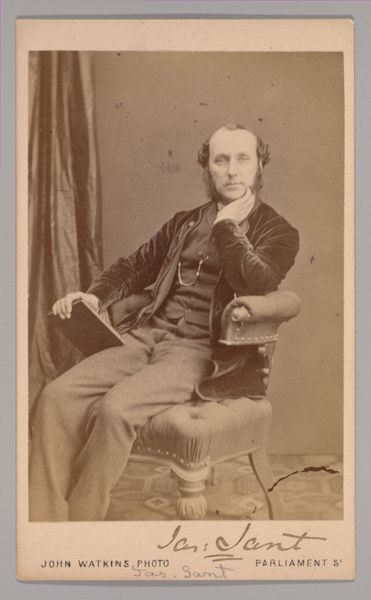
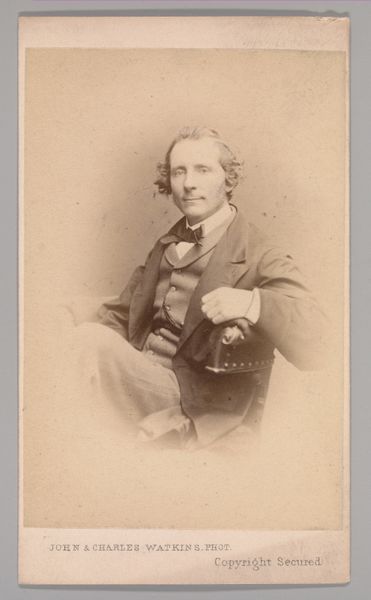
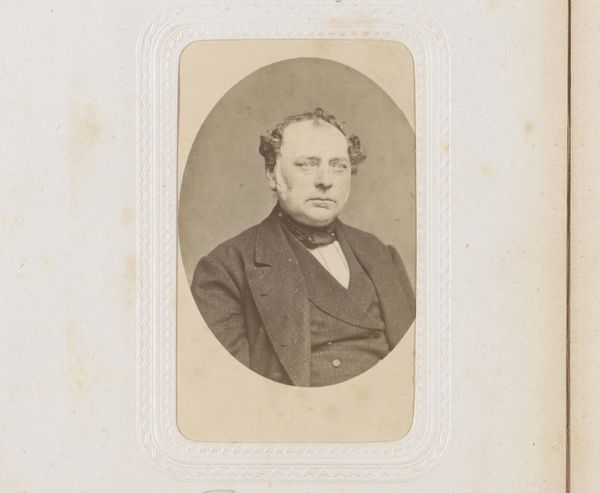
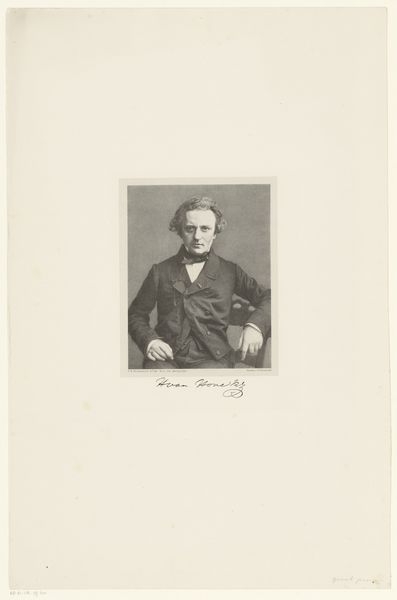
This photographic portrait of John Everett Millais was made by John and Charles Watkins using the wet collodion process. An interesting intersection of science, art, and commerce, this technique allowed for the relatively quick and inexpensive production of images on glass plates, which were then printed onto paper. In the mid-19th century, photography was rapidly changing visual culture, and the Watkins brothers were among the leading practitioners in London. They specialized in portraits of prominent individuals like Millais, who himself was a celebrated painter associated with the Pre-Raphaelite Brotherhood. What's compelling here is that the photograph is not just a straightforward record but a carefully composed image. The lighting, pose, and even the retouching, all contribute to a deliberate construction of Millais' persona. Photography, while seemingly objective, was always mediated by the photographer's choices and the prevailing aesthetics of the time. It's a reminder that all images, no matter how seemingly immediate, are made, not simply taken.
[John Everett Millais] 1860s

John and Charles Watkins
1840 - 1875
The Metropolitan Museum of Art
Metropolitan Museum of Art, New York, NYArtwork details
- Medium
- photography, gelatin-silver-print
- Dimensions
- Approx. 10.2 x 6.3 cm (4 x 2 1/2 in.)
- Location
- Metropolitan Museum of Art, New York, NY
- Copyright
- Public Domain
Tags
portrait
print photography
photography
historical photography
gelatin-silver-print
Comments
No comments
About this artwork
This photographic portrait of John Everett Millais was made by John and Charles Watkins using the wet collodion process. An interesting intersection of science, art, and commerce, this technique allowed for the relatively quick and inexpensive production of images on glass plates, which were then printed onto paper. In the mid-19th century, photography was rapidly changing visual culture, and the Watkins brothers were among the leading practitioners in London. They specialized in portraits of prominent individuals like Millais, who himself was a celebrated painter associated with the Pre-Raphaelite Brotherhood. What's compelling here is that the photograph is not just a straightforward record but a carefully composed image. The lighting, pose, and even the retouching, all contribute to a deliberate construction of Millais' persona. Photography, while seemingly objective, was always mediated by the photographer's choices and the prevailing aesthetics of the time. It's a reminder that all images, no matter how seemingly immediate, are made, not simply taken.
Comments
No comments