About this artwork
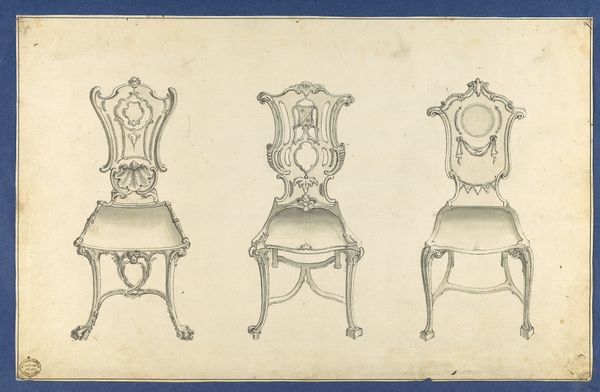
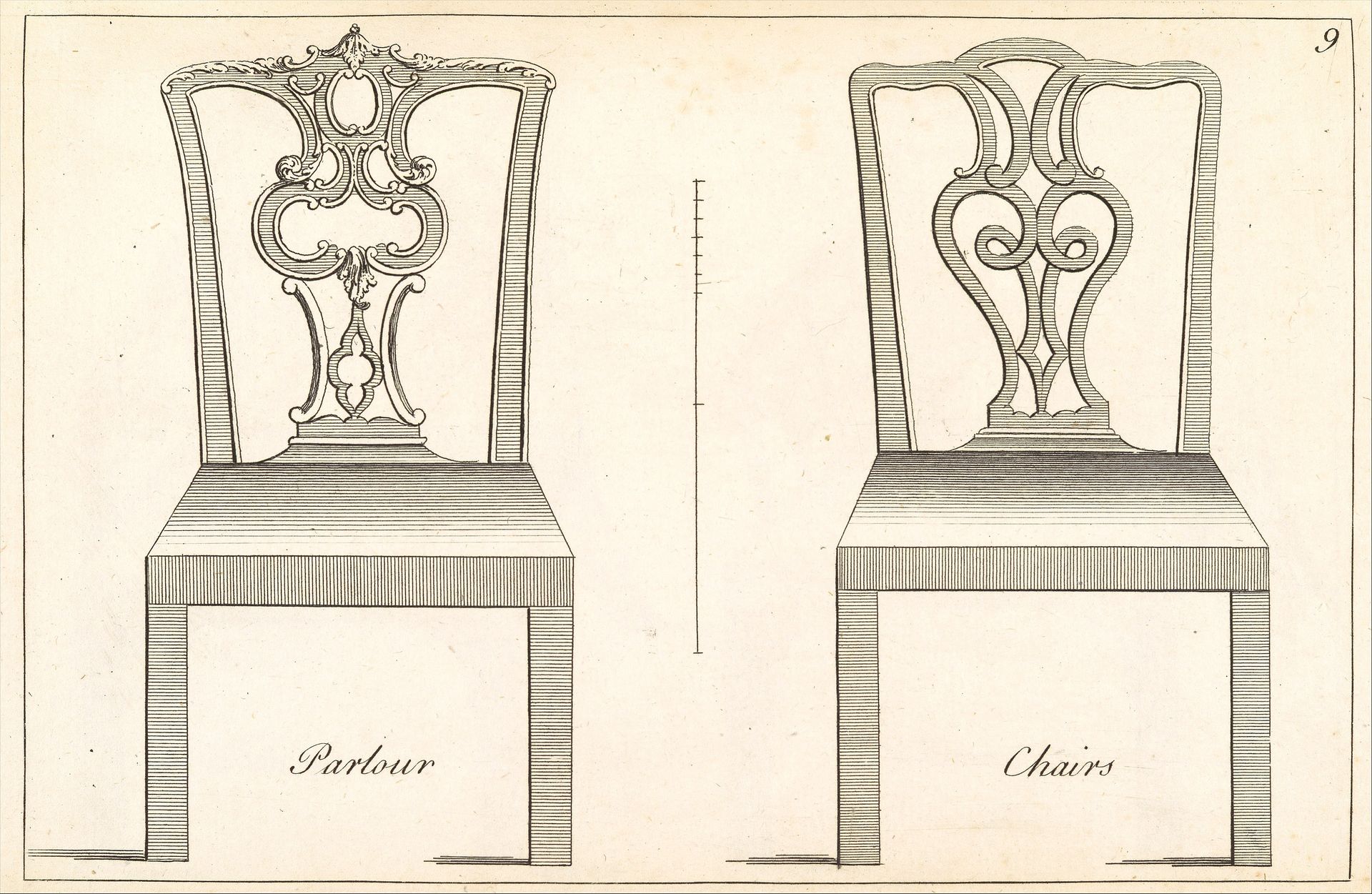
This print from Robert Manwaring’s book, made in England around 1765, presents designs for fashionable chairs. These were the decades when London emerged as a global capital, and its influence on taste extended from clothing to furniture. Manwaring’s book was designed to guide provincial artisans in producing furniture to meet the London standard. Notice the Rococo details of the chair backs. This style, imported from France, was a marker of elite taste. Yet, by offering such designs in print, Manwaring also democratized access to high style, providing a model for upwardly mobile consumers. This image, therefore, points to complex shifts in 18th-century society, where consumerism blurred traditional status markers. Examining design books like this one alongside trade directories, probate inventories, and other records of material life allows us to understand the social forces shaping artistic production. Ultimately, art’s meaning is contingent on its historical and institutional context.
The Cabinet and Chair-Maker's Real Friend and Companion, or, the Whole System of Chair-Making Made plain and easy
1765


Artwork details
- Medium
- drawing, graphic-art, print, engraving
- Dimensions
- Book: 9 1/4 × 5 15/16 × 13/16 in. (23.5 × 15.1 × 2 cm) Sheet: 5 1/2 x 9 1/16 in. (14 x 23 cm)
- Location
- Metropolitan Museum of Art, New York, NY
- Copyright
- Public Domain
Tags
drawing
graphic-art
book
furniture
decorative-art
engraving
rococo
Comments
Be the first to share your thoughts about this work.
About this artwork
This print from Robert Manwaring’s book, made in England around 1765, presents designs for fashionable chairs. These were the decades when London emerged as a global capital, and its influence on taste extended from clothing to furniture. Manwaring’s book was designed to guide provincial artisans in producing furniture to meet the London standard. Notice the Rococo details of the chair backs. This style, imported from France, was a marker of elite taste. Yet, by offering such designs in print, Manwaring also democratized access to high style, providing a model for upwardly mobile consumers. This image, therefore, points to complex shifts in 18th-century society, where consumerism blurred traditional status markers. Examining design books like this one alongside trade directories, probate inventories, and other records of material life allows us to understand the social forces shaping artistic production. Ultimately, art’s meaning is contingent on its historical and institutional context.
Comments
Be the first to share your thoughts about this work.