About this artwork
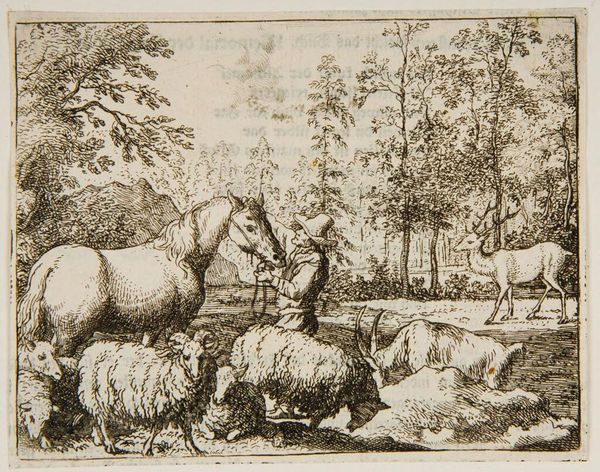
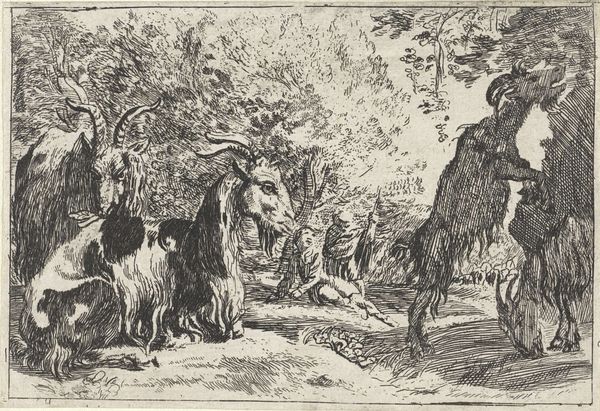
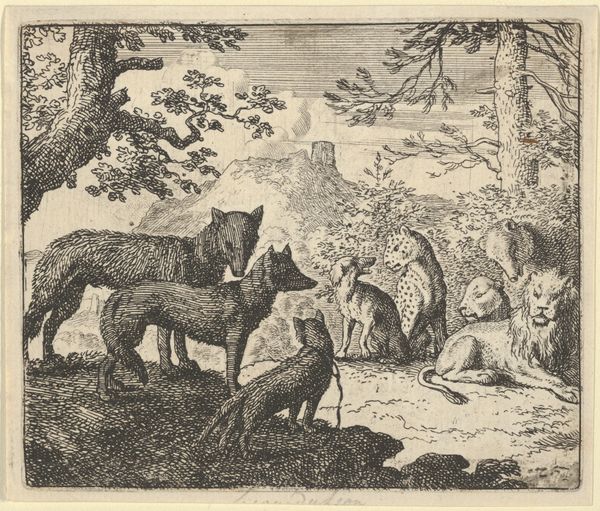
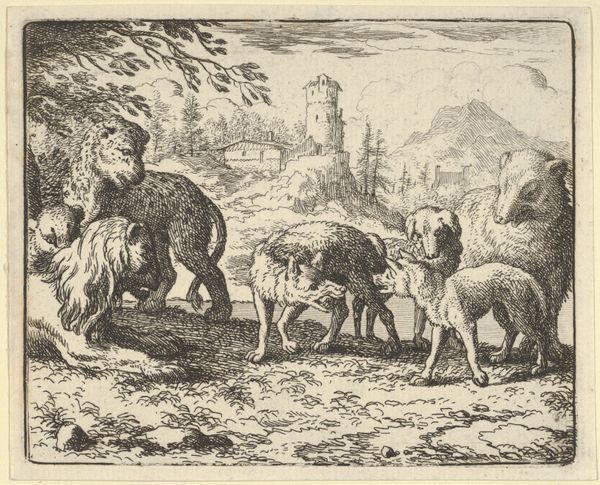
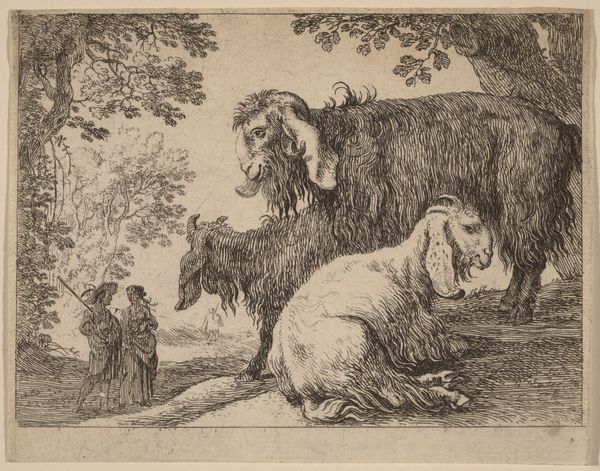
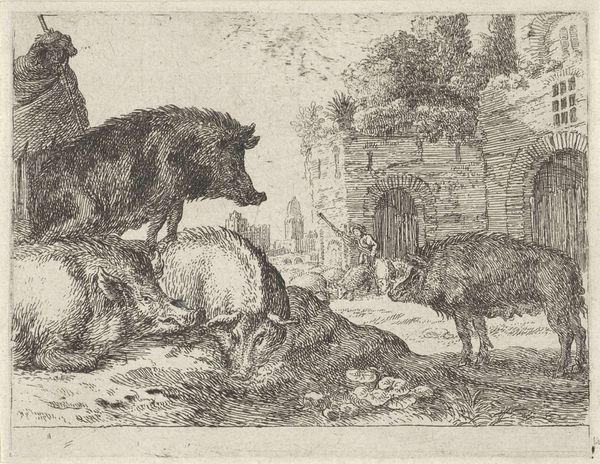
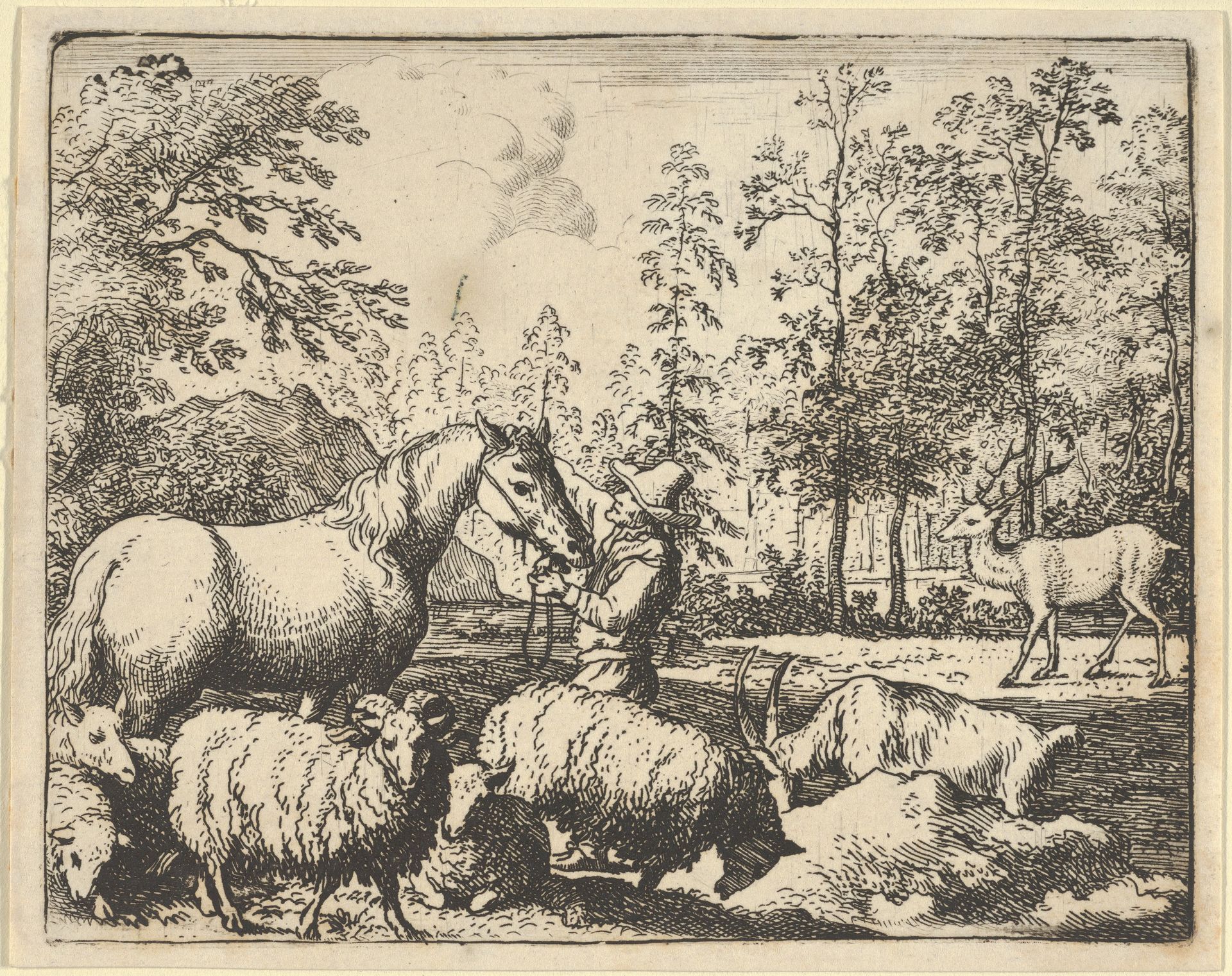
Allart van Everdingen created this etching, "The Story of the Horse Who Wants Revenge on the Stag," sometime in the mid-17th century. The image comes from Hendrick van Alcmar's Renard The Fox. It depicts a horse, some sheep, a goat, and a stag, all overseen by a man in a hat. It was made in the Netherlands, a place and time of booming trade and a rising merchant class, which made art more accessible. The story of Renard the Fox, with its satirical look at society, was very popular. Van Everdingen's etching, as part of this narrative, hints at the social dynamics of the time. The horse's desire for revenge speaks to themes of justice and power. The presence of domesticated animals alongside the wild stag also suggests ideas about social order and the natural world. To really understand this work, it helps to look into the history of Dutch art, the role of animals in fables, and the social critiques present in the Renard the Fox stories. Art is always shaped by the world around it, and understanding that world helps us understand the art.
The Story of the Horse Who Wants Revenge on the Stag from Hendrick van Alcmar's Renard The Fox
1650 - 1675

Allart van Everdingen
1621 - 1675
The Metropolitan Museum of Art
Metropolitan Museum of Art, New York, NYArtwork details
- Medium
- drawing, print, engraving
- Dimensions
- Plate: 3 5/8 × 4 5/8 in. (9.2 × 11.7 cm) Sheet: 3 7/8 × 4 13/16 in. (9.8 × 12.3 cm)
- Location
- Metropolitan Museum of Art, New York, NY
- Copyright
- Public Domain
Tags
Comments
Share your thoughts
About this artwork
Allart van Everdingen created this etching, "The Story of the Horse Who Wants Revenge on the Stag," sometime in the mid-17th century. The image comes from Hendrick van Alcmar's Renard The Fox. It depicts a horse, some sheep, a goat, and a stag, all overseen by a man in a hat. It was made in the Netherlands, a place and time of booming trade and a rising merchant class, which made art more accessible. The story of Renard the Fox, with its satirical look at society, was very popular. Van Everdingen's etching, as part of this narrative, hints at the social dynamics of the time. The horse's desire for revenge speaks to themes of justice and power. The presence of domesticated animals alongside the wild stag also suggests ideas about social order and the natural world. To really understand this work, it helps to look into the history of Dutch art, the role of animals in fables, and the social critiques present in the Renard the Fox stories. Art is always shaped by the world around it, and understanding that world helps us understand the art.
Comments
Share your thoughts