![[Artillery Camp, City Point, Virginia] by Andrew Joseph Russell](https://d2w8kbdekdi1gv.cloudfront.net/eyJidWNrZXQiOiAiYXJ0ZXJhLWltYWdlcy1idWNrZXQiLCAia2V5IjogImFydHdvcmtzLzFjZjNlNGE5LWJlYjEtNDQ5NS1iY2JhLTYwNzJjOTFkYjAyZC8xY2YzZTRhOS1iZWIxLTQ0OTUtYmNiYS02MDcyYzkxZGIwMmRfZnVsbC5qcGciLCAiZWRpdHMiOiB7InJlc2l6ZSI6IHsid2lkdGgiOiAxOTIwLCAiaGVpZ2h0IjogMTkyMCwgImZpdCI6ICJpbnNpZGUifX19)
About this artwork
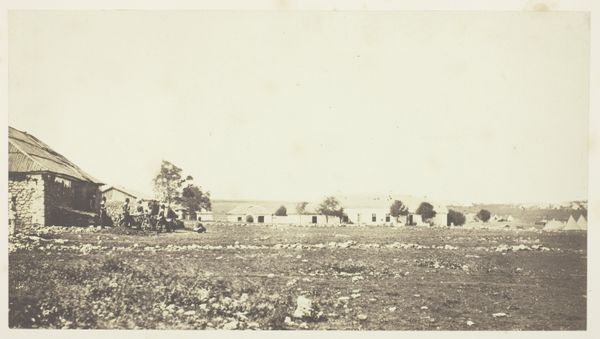
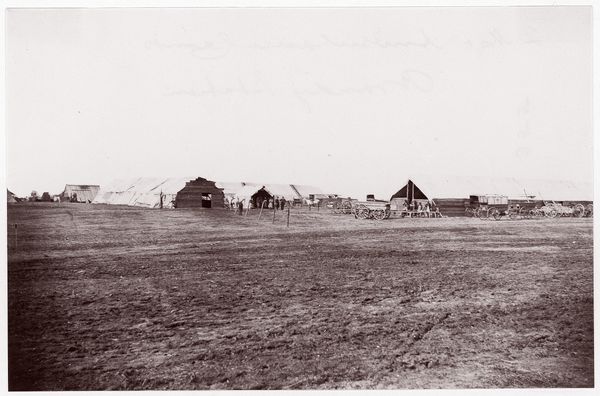
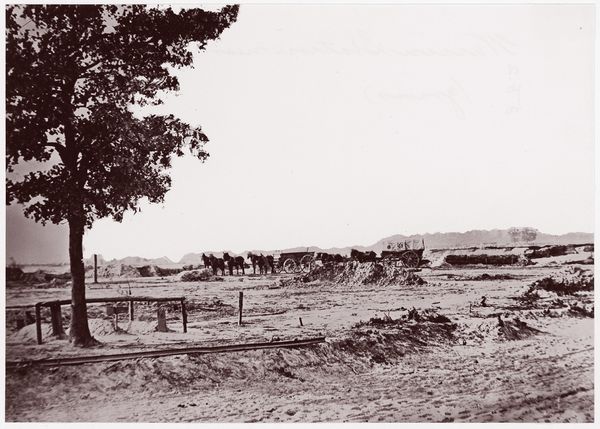
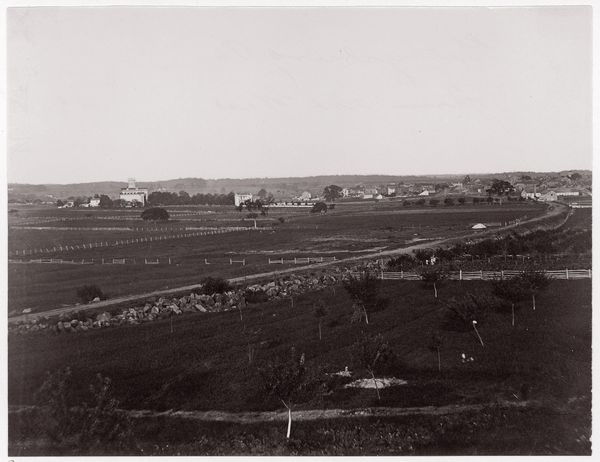
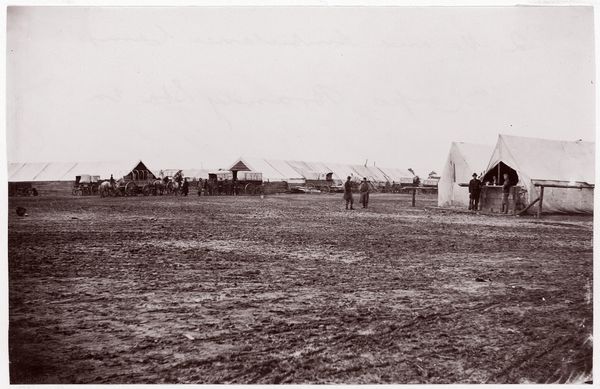
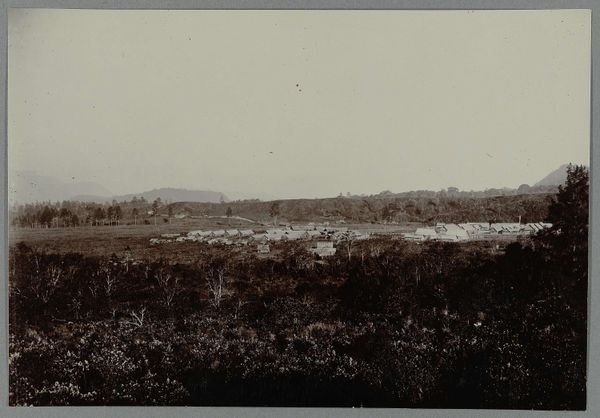
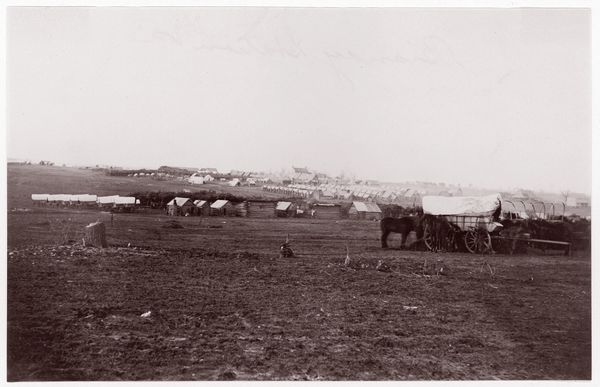
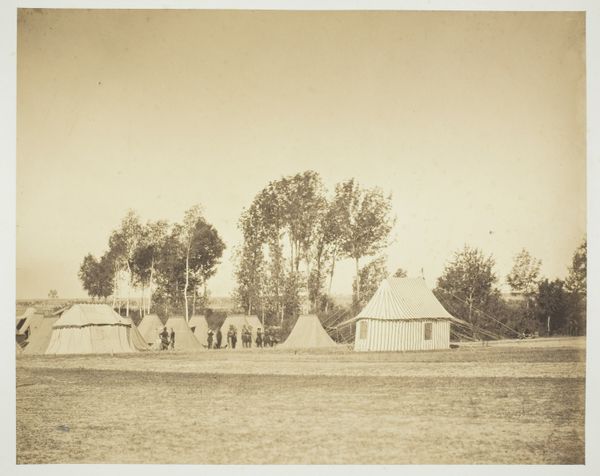
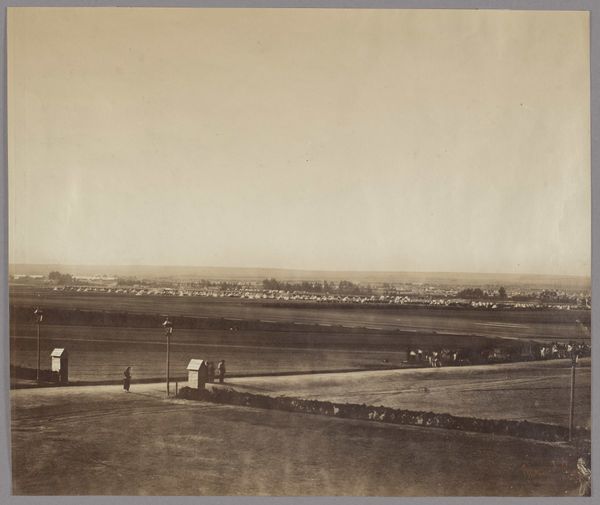
Andrew Joseph Russell created this albumen silver print, titled "Artillery Camp, City Point, Virginia," sometime during his tenure as a Civil War photographer. Russell's photograph captures the stark reality of war, yet it also subtly hints at the complex social dynamics at play. City Point, Virginia, served as a crucial supply depot and headquarters for the Union Army during the final years of the Civil War. While the photograph ostensibly depicts military order and readiness, it also evokes the absence and the looming violence that defined the lives of soldiers. Consider the unacknowledged labor of enslaved African Americans, who were often forced to construct these very camps. The photograph offers no direct representation of these individuals, yet their presence is undeniably interwoven into the scene's historical context. In its own way, the photograph invites us to reflect on who is visible in the historical record and whose contributions remain unseen.
[Artillery Camp, City Point, Virginia]
1865

Andrew Joseph Russell
1830 - 1902
The Metropolitan Museum of Art
Metropolitan Museum of Art, New York, NYArtwork details
- Medium
- photography, gelatin-silver-print
- Dimensions
- 9.6 x 9.9 cm (3 3/4 x 3 7/8 in. )
- Location
- Metropolitan Museum of Art, New York, NY
- Copyright
- Public Domain
Tags
Comments
Share your thoughts
About this artwork
Andrew Joseph Russell created this albumen silver print, titled "Artillery Camp, City Point, Virginia," sometime during his tenure as a Civil War photographer. Russell's photograph captures the stark reality of war, yet it also subtly hints at the complex social dynamics at play. City Point, Virginia, served as a crucial supply depot and headquarters for the Union Army during the final years of the Civil War. While the photograph ostensibly depicts military order and readiness, it also evokes the absence and the looming violence that defined the lives of soldiers. Consider the unacknowledged labor of enslaved African Americans, who were often forced to construct these very camps. The photograph offers no direct representation of these individuals, yet their presence is undeniably interwoven into the scene's historical context. In its own way, the photograph invites us to reflect on who is visible in the historical record and whose contributions remain unseen.
Comments
Share your thoughts