About this artwork
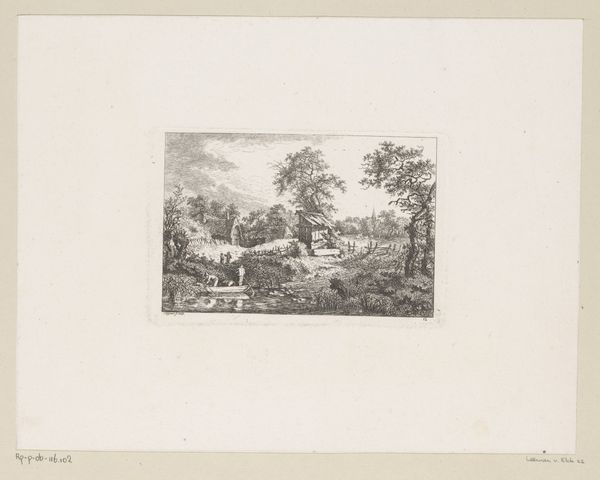
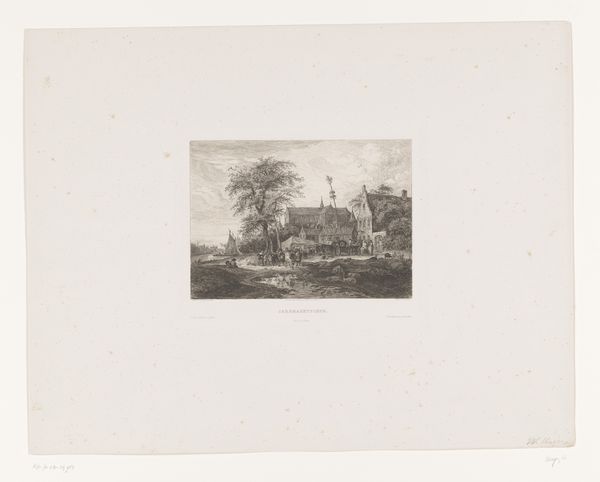
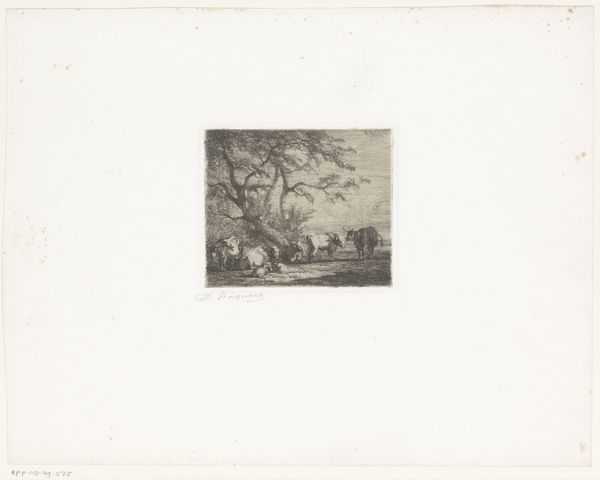
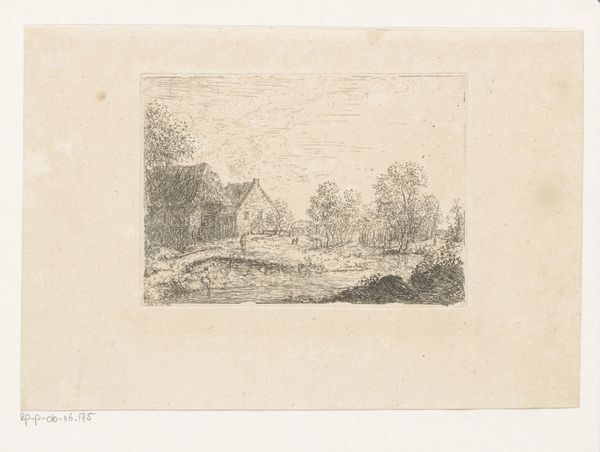
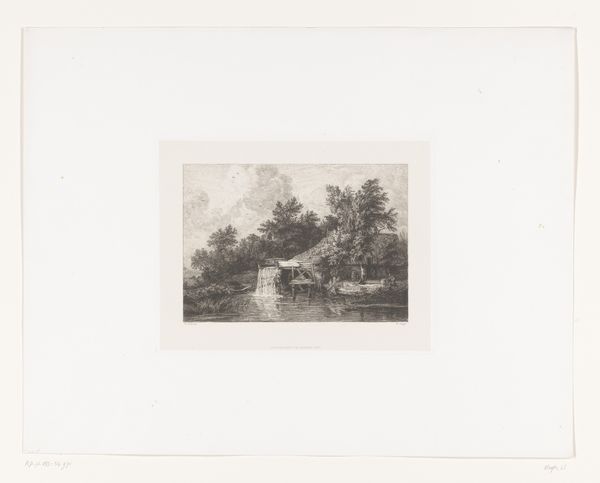
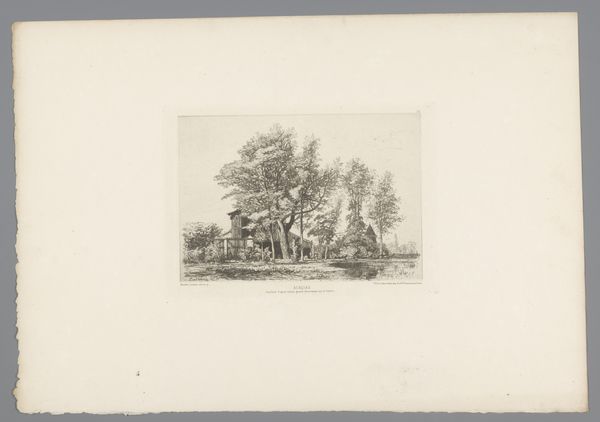
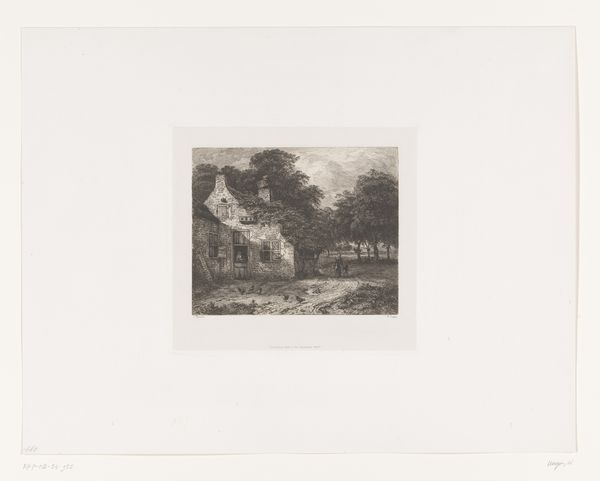
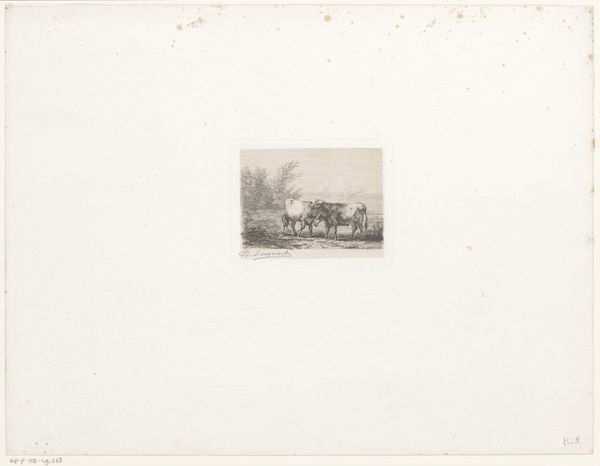
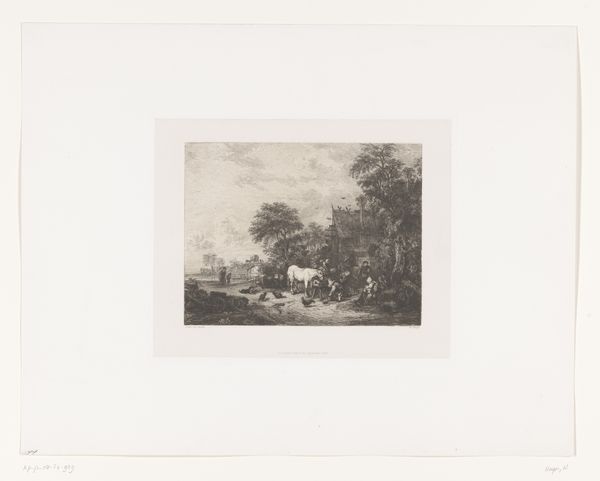
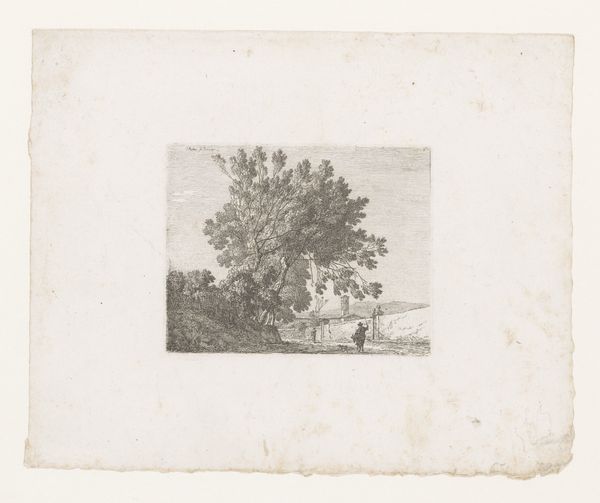
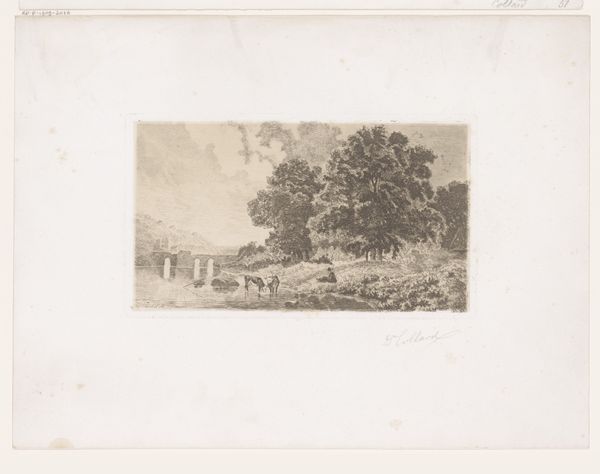
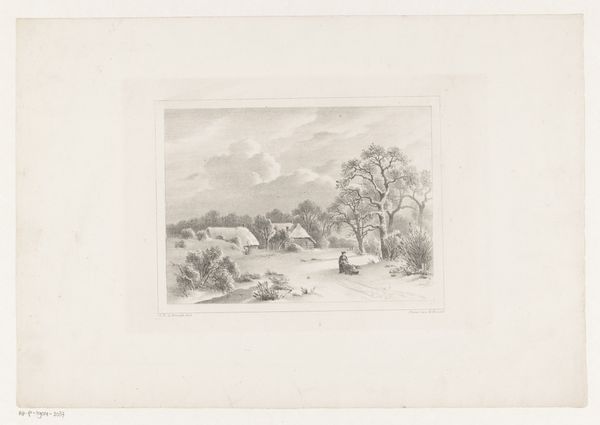
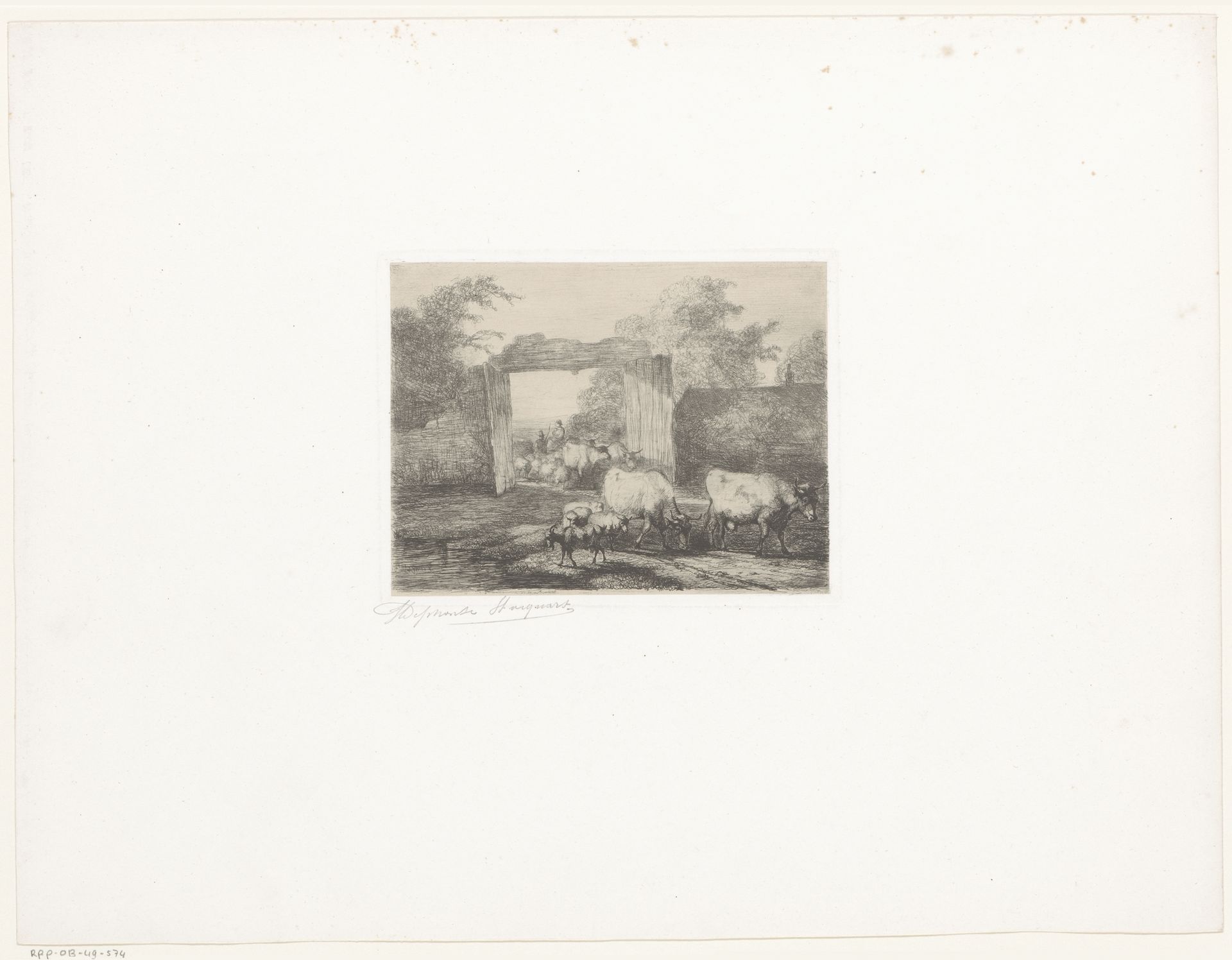
Ildephonse Stocquart created this print, depicting cattle being herded through a gate, using etching. It gives us a glimpse into 19th-century rural life and touches on themes of labor, nature, and the relationship between humans and animals. Though seemingly simple, this image prompts reflection on class and gender roles within agricultural communities, offering a look into a world where labor was deeply entwined with survival. These scenes often romanticized rural life, yet they also masked the harsh realities faced by those dependent on agricultural work. Consider how this portrayal differs from our contemporary understanding and experiences of agriculture. Does it uphold an idealized vision, or does it hint at the complex dynamics inherent in these historical contexts? As you reflect on this image, consider how it prompts us to examine our own perspectives and assumptions.
Kudde vee wordt door een poort naar binnen gedreven 1829 - 1889

Artwork details
- Medium
- print, etching
- Dimensions
- height 105 mm, width 136 mm
- Copyright
- Rijks Museum: Open Domain
Tags
etching
old engraving style
landscape
genre-painting
realism
Comments
No comments
About this artwork
Ildephonse Stocquart created this print, depicting cattle being herded through a gate, using etching. It gives us a glimpse into 19th-century rural life and touches on themes of labor, nature, and the relationship between humans and animals. Though seemingly simple, this image prompts reflection on class and gender roles within agricultural communities, offering a look into a world where labor was deeply entwined with survival. These scenes often romanticized rural life, yet they also masked the harsh realities faced by those dependent on agricultural work. Consider how this portrayal differs from our contemporary understanding and experiences of agriculture. Does it uphold an idealized vision, or does it hint at the complex dynamics inherent in these historical contexts? As you reflect on this image, consider how it prompts us to examine our own perspectives and assumptions.
Comments
No comments