About this artwork
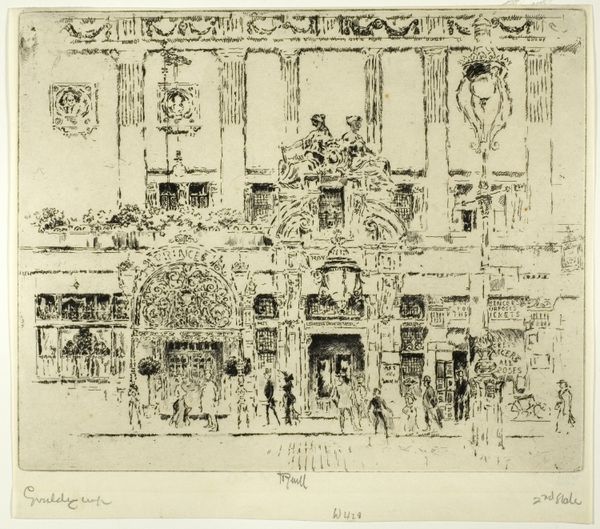
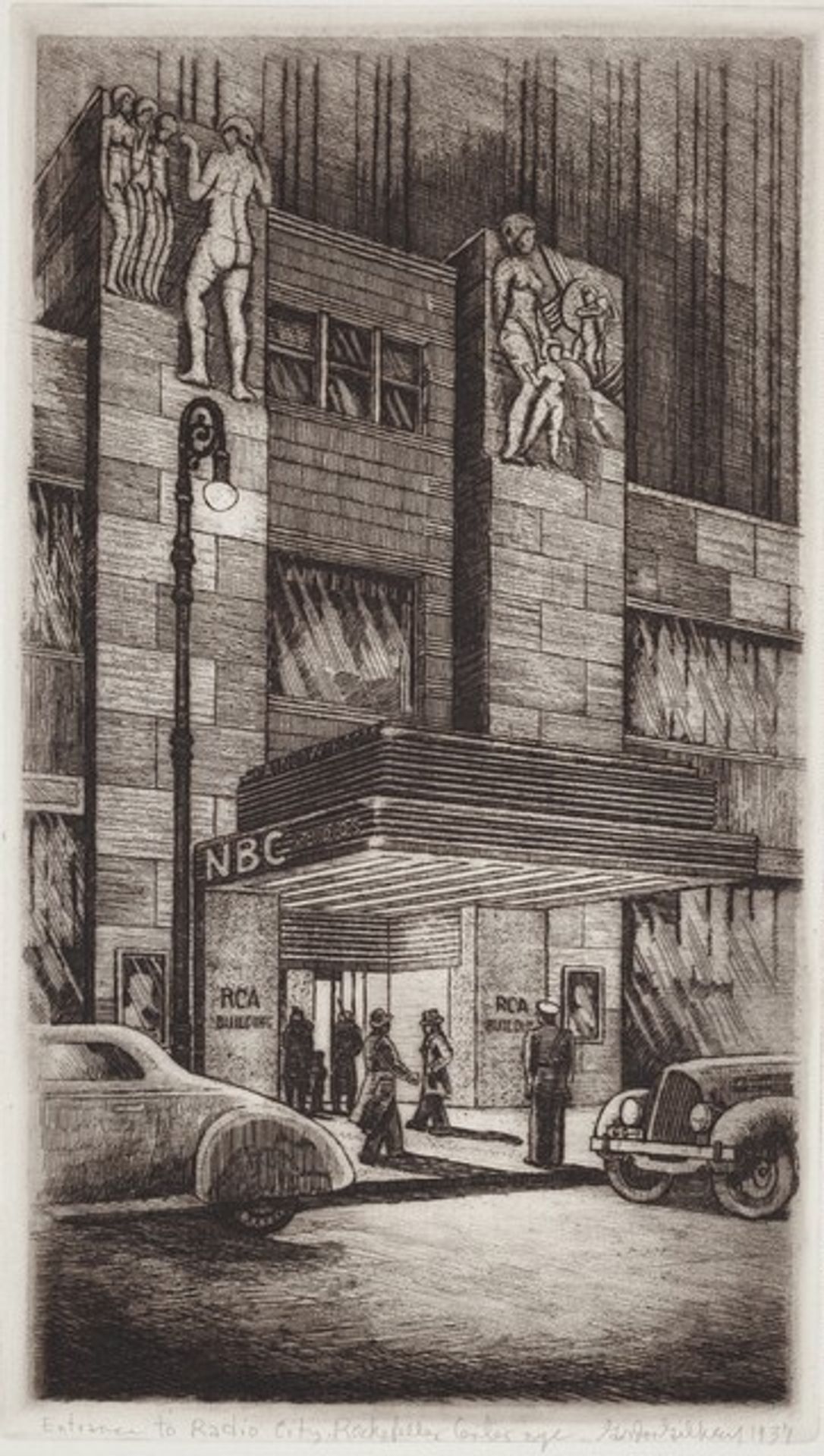
Gordon Waverly Gilkey made this print of the Entrance to Radio City in Rockefeller Center using etching techniques. The dense, interwoven lines create a striking composition. The artist focuses on the building's facade, emphasizing its monumental scale and the architectural details. Gilkey uses cross-hatching to construct the building's textured surfaces, imbuing it with a tactile quality despite the flatness of the print. The contrast between light and shadow further accentuates the building's depth. Figures are rendered with minimal detail, they blend into the architectural framework. This suggests a critique of modern urban life. The structuralist approach can reveal how Gilkey employs specific visual elements to create meaning. He may have used an architectural icon to explore themes of modernity, industrialization, and the individual’s place within a larger social structure. The print becomes an interesting commentary on art, architecture, and society.
Entrance to Radio City, Rockefeller Center, New York
1937


Artwork details
- Medium
- print, etching
- Dimensions
- plate: 323 x 185 mm sheet: 397 x 280 mm
- Copyright
- National Gallery of Art: CC0 1.0
Tags
Comments
Share your thoughts
About this artwork
Gordon Waverly Gilkey made this print of the Entrance to Radio City in Rockefeller Center using etching techniques. The dense, interwoven lines create a striking composition. The artist focuses on the building's facade, emphasizing its monumental scale and the architectural details. Gilkey uses cross-hatching to construct the building's textured surfaces, imbuing it with a tactile quality despite the flatness of the print. The contrast between light and shadow further accentuates the building's depth. Figures are rendered with minimal detail, they blend into the architectural framework. This suggests a critique of modern urban life. The structuralist approach can reveal how Gilkey employs specific visual elements to create meaning. He may have used an architectural icon to explore themes of modernity, industrialization, and the individual’s place within a larger social structure. The print becomes an interesting commentary on art, architecture, and society.
Comments
Share your thoughts