About this artwork
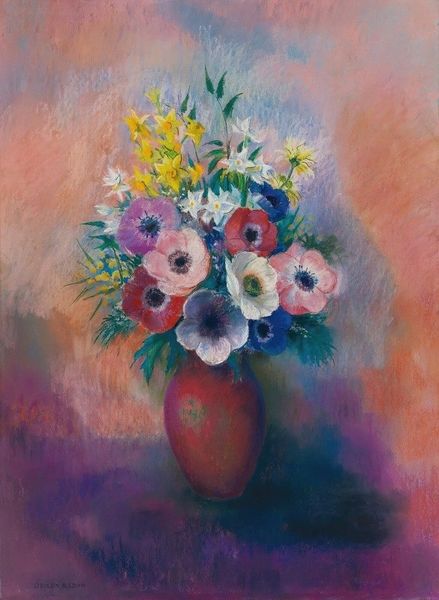
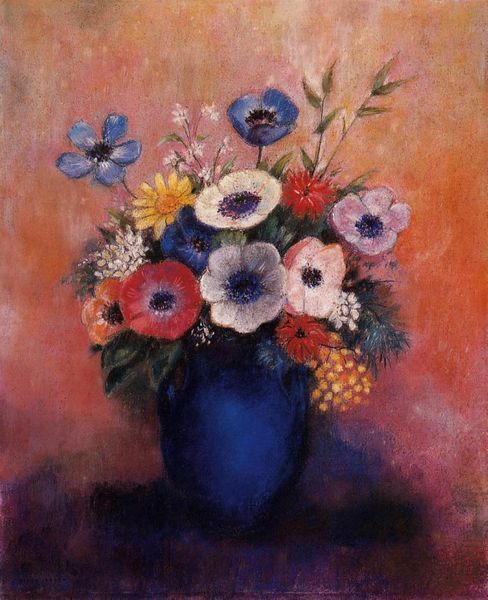
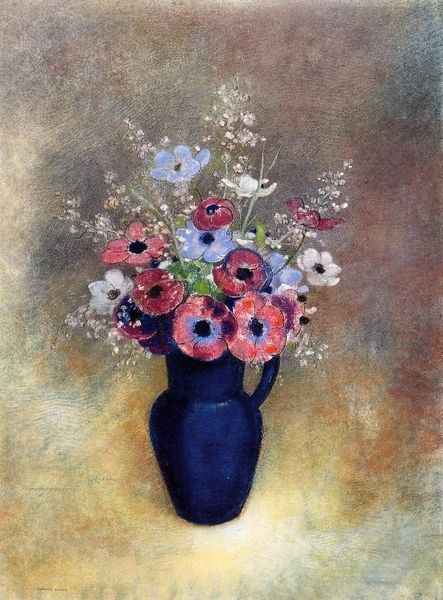
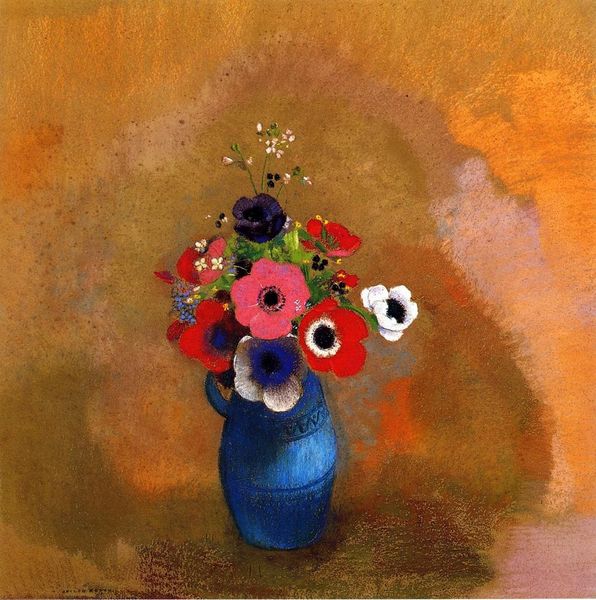
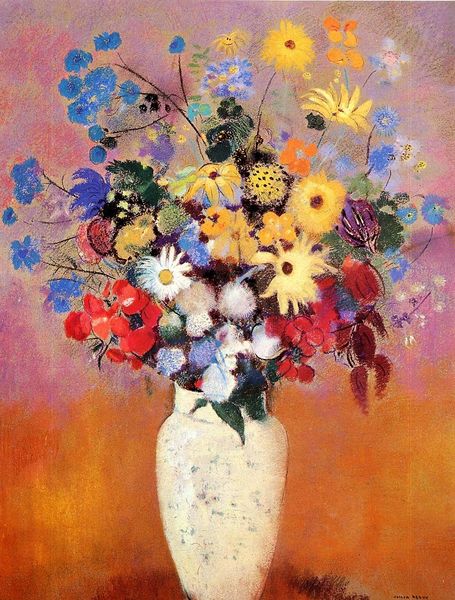
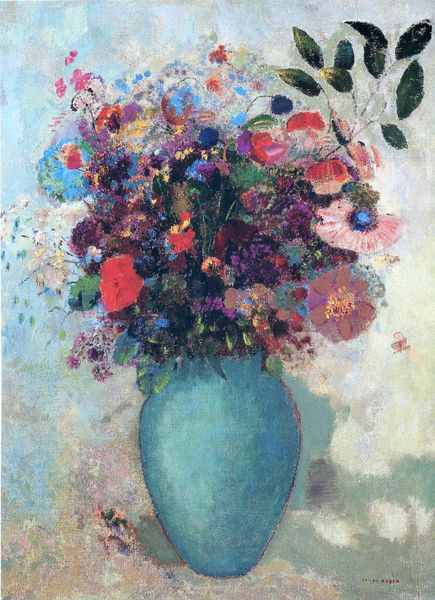
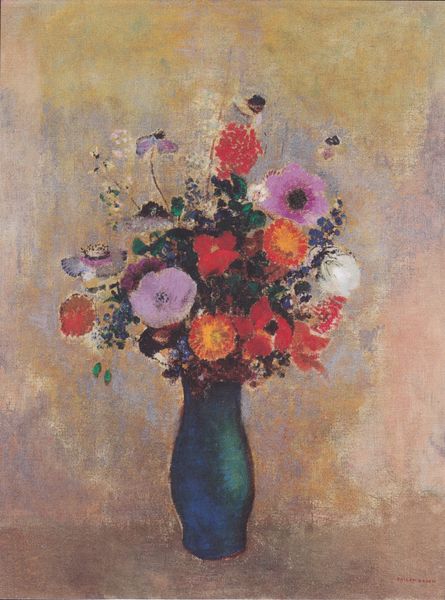
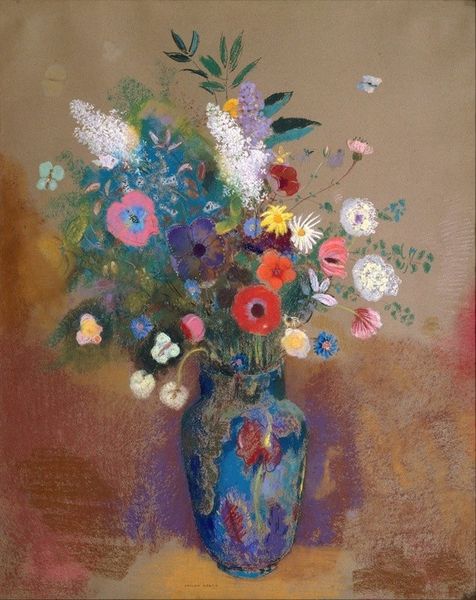
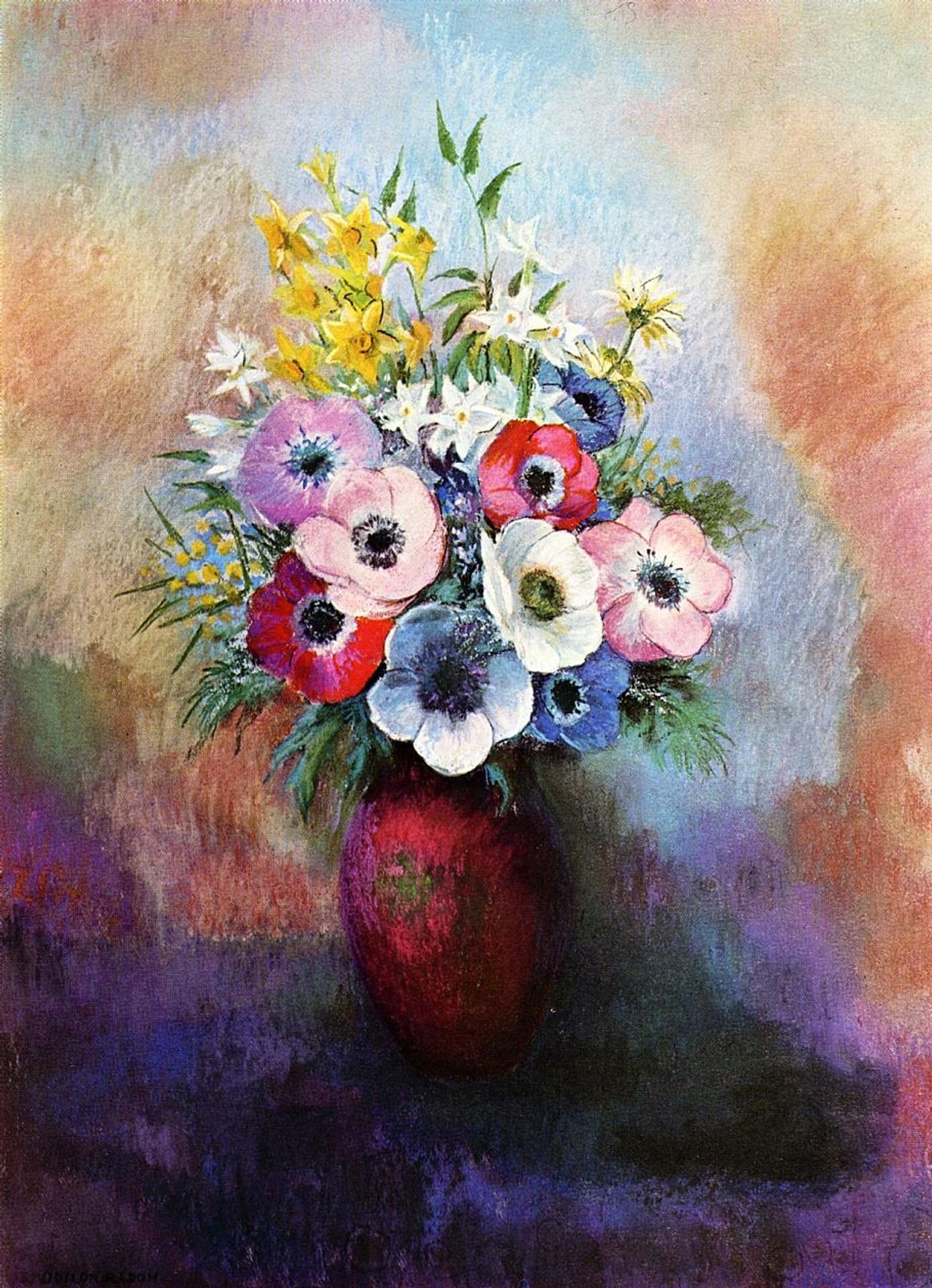
Odilon Redon painted this still life with oil on canvas featuring a vibrant bouquet of anemones, flowers historically linked with sorrow and death. In ancient Greece, the anemone sprung from Aphrodite's tears as she mourned Adonis's death; its fleeting bloom echoed life's fragility. Notice how the vivid colors – reds, blues, and whites – contrast sharply with the somber symbolism. This juxtaposition is a powerful element that engages our collective memory. Consider Botticelli’s "Venus and Mars," where flowers emerge as symbols of love's ephemeral nature, a visual echo across time. Redon’s choice to paint anemones, therefore, delves into a shared, subconscious understanding of beauty intertwined with transience. The anemone, with its multiple layers of meaning, becomes a lens through which we perceive beauty, loss, and the cyclical nature of existence.

Artwork details
- Medium
- painting, watercolor
- Copyright
- Public domain
Tags
Comments
Share your thoughts
About this artwork
Odilon Redon painted this still life with oil on canvas featuring a vibrant bouquet of anemones, flowers historically linked with sorrow and death. In ancient Greece, the anemone sprung from Aphrodite's tears as she mourned Adonis's death; its fleeting bloom echoed life's fragility. Notice how the vivid colors – reds, blues, and whites – contrast sharply with the somber symbolism. This juxtaposition is a powerful element that engages our collective memory. Consider Botticelli’s "Venus and Mars," where flowers emerge as symbols of love's ephemeral nature, a visual echo across time. Redon’s choice to paint anemones, therefore, delves into a shared, subconscious understanding of beauty intertwined with transience. The anemone, with its multiple layers of meaning, becomes a lens through which we perceive beauty, loss, and the cyclical nature of existence.
Comments
Share your thoughts