c. mid 19th century
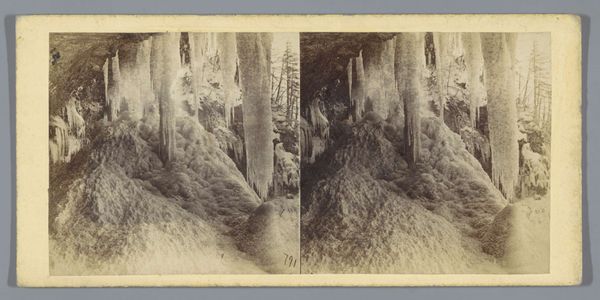
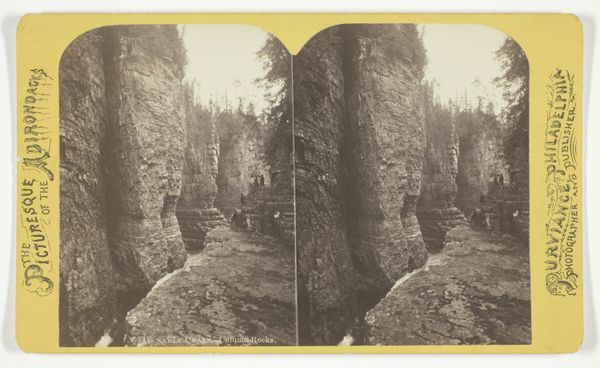
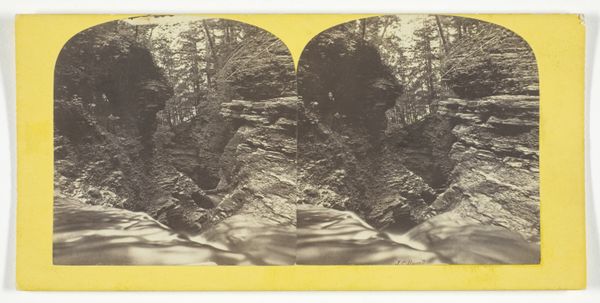
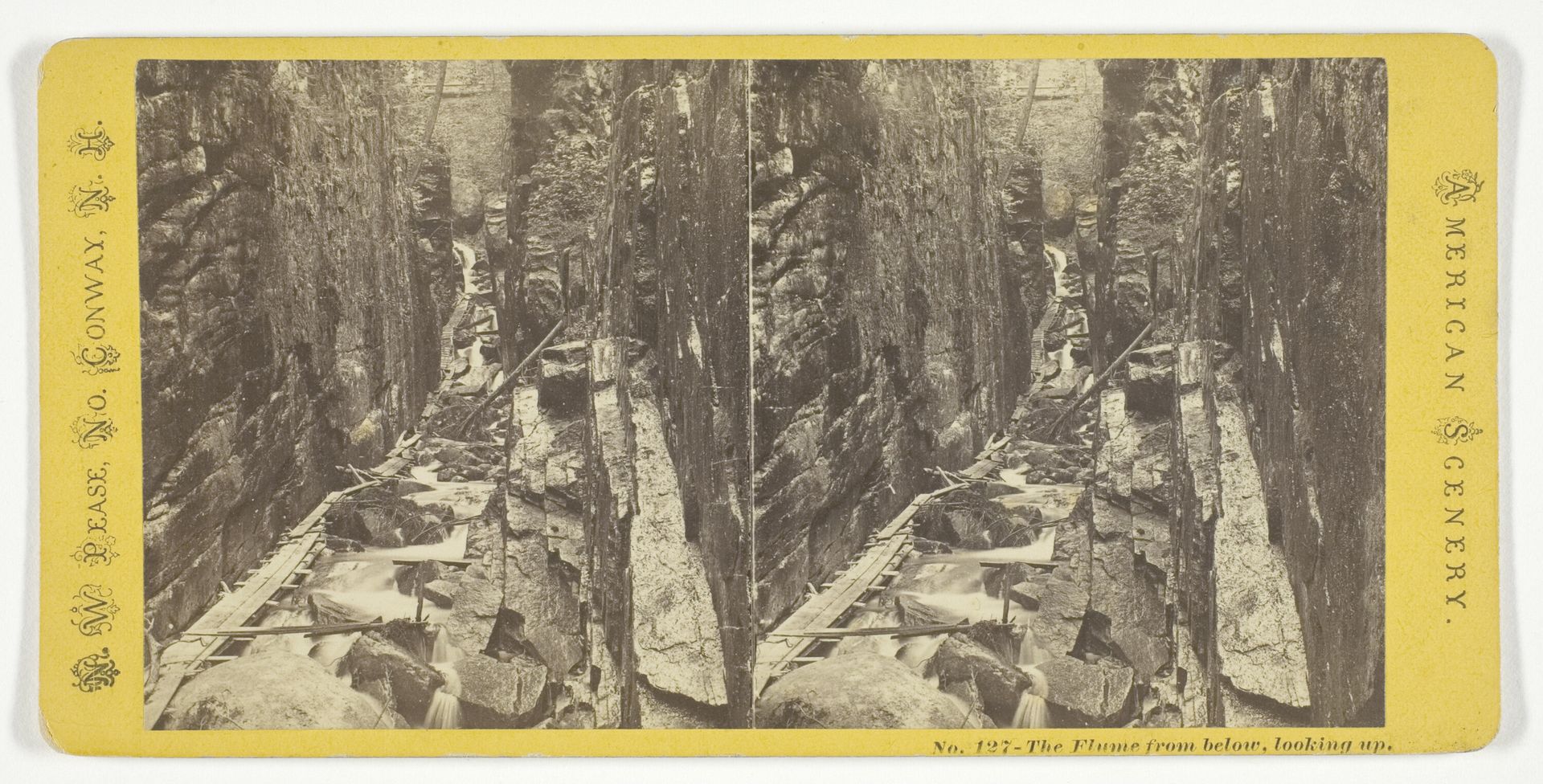
The Flume from below, looking up


Listen to curator's interpretation
Curatorial notes
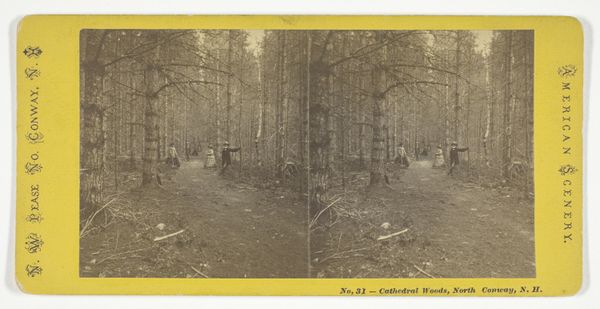
Editor: This is a landscape photograph entitled “The Flume from below, looking up” taken around the mid-19th century by N.W. Pease. I see what appears to be a deep gorge, captured from a low vantage point. The composition is dramatic; it’s almost overwhelming. What exactly strikes you when you look at this piece? Curator: You nailed it, that dramatic verticality! I think what’s so arresting here is the sense of being swallowed by the earth. Imagine yourself down there, craning your neck back… a bit claustrophobic, right? Pease isn't just documenting a place, he's putting us right into the experience of being at the bottom of that flume. There’s that hint of Romantic sublime... Do you pick up on that? Editor: The 'Romantic sublime?' Is that the feeling of awe mixed with a bit of fear, that feeling of insignificance? Curator: Exactly! Remember, photography was still fairly new. These stereo views allowed people to experience landscapes in an immersive way, almost like virtual reality for the 1860s. What I find clever, even humourous, is the human intervention amidst all this imposing nature – a delicate wooden flume, almost like a tightrope strung through this magnificent ravine. Do you get a sense of what might have compelled Pease to frame his shot this way, considering photography’s infancy at the time? Editor: Hmm, I am not sure. I mean, he was pointing his camera toward new technologies... capturing sublime nature as something accessible. This wasn't just untouched wilderness anymore, it was 'scenery.' Curator: Indeed, which makes you consider our modern perspective on landscapes – always balancing appreciation and alteration. Food for thought! Editor: Definitely, this picture has shifted my view! It’s exciting to think of the photographer consciously shaping this narrative.