About this artwork
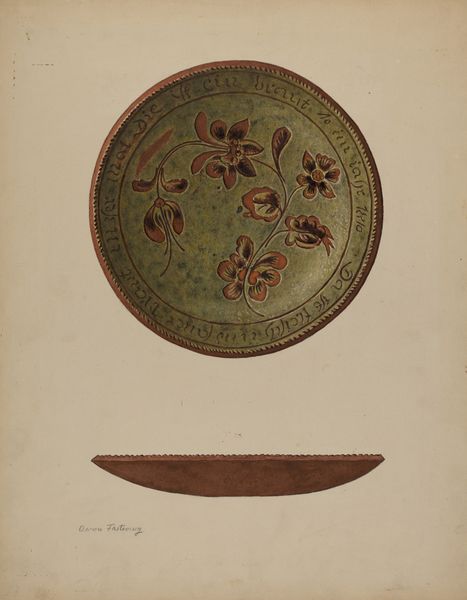
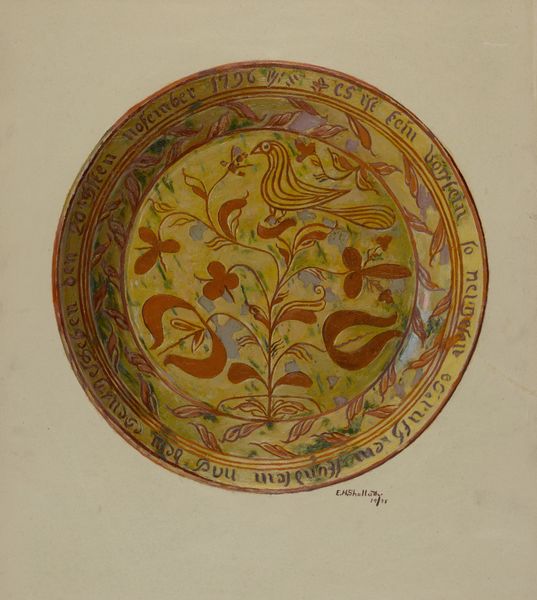
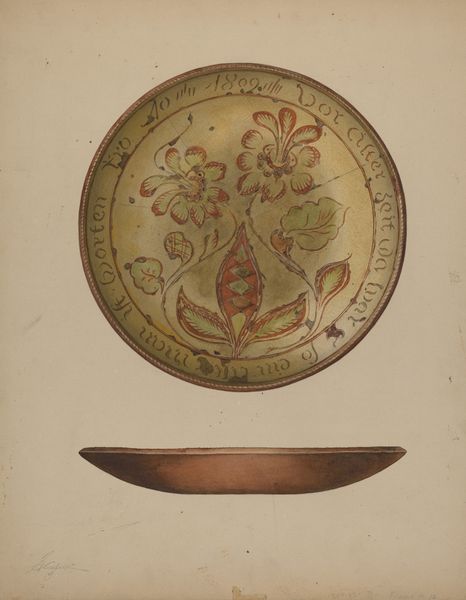
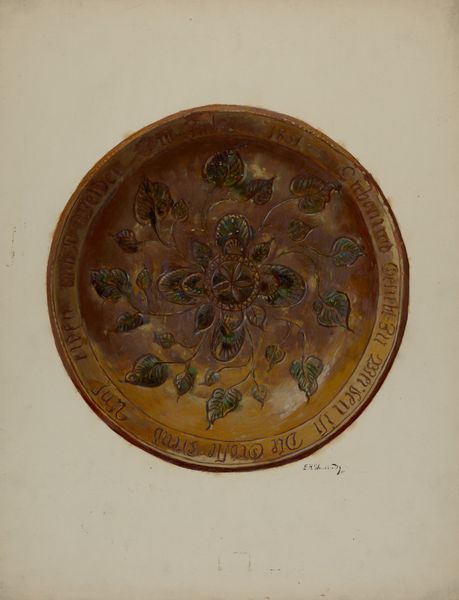
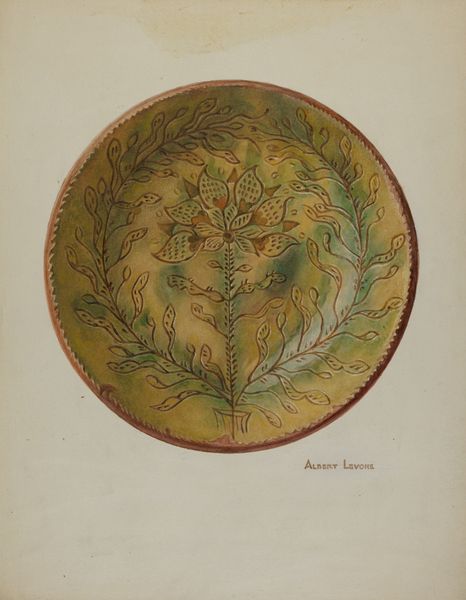
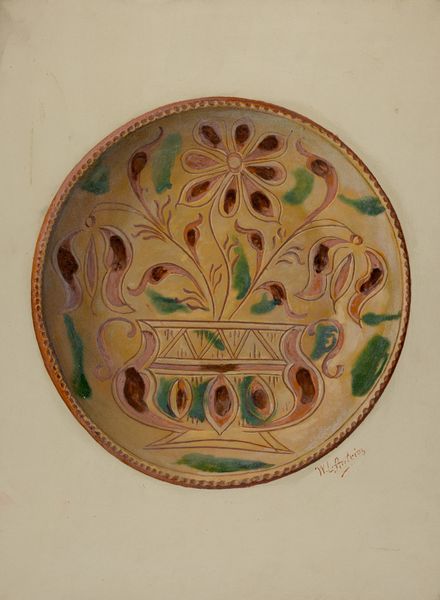
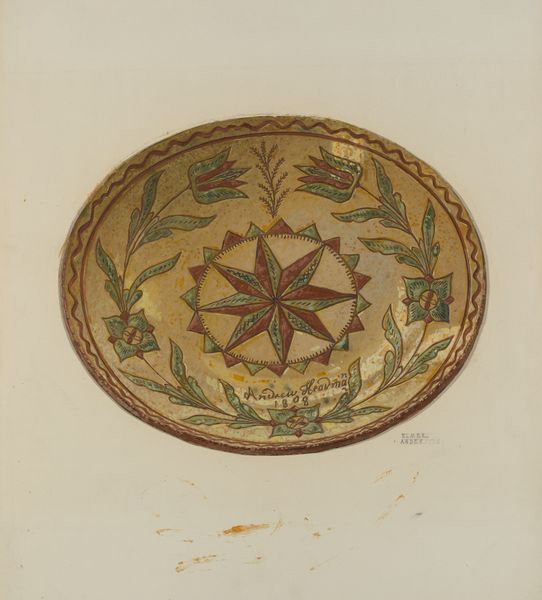
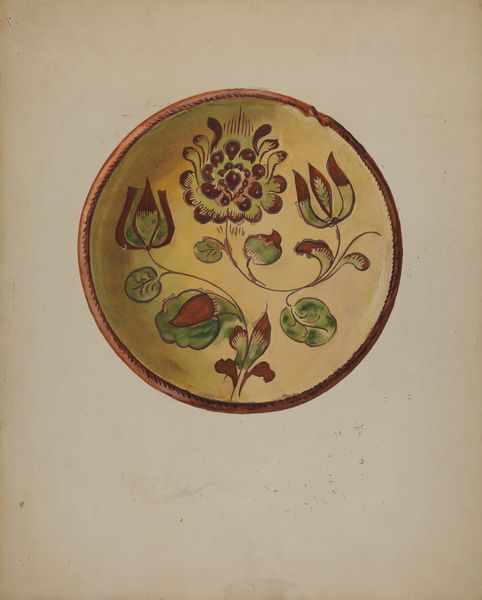
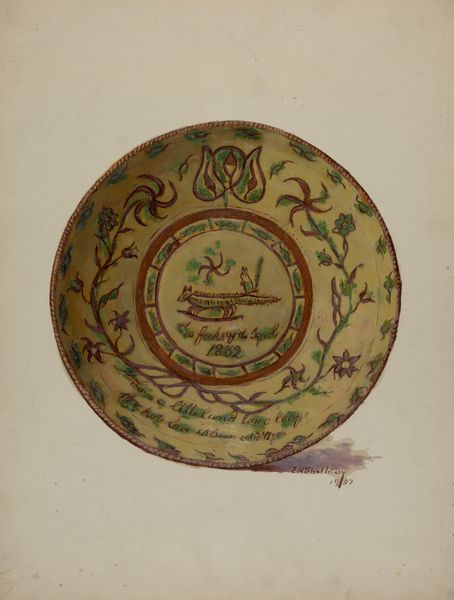
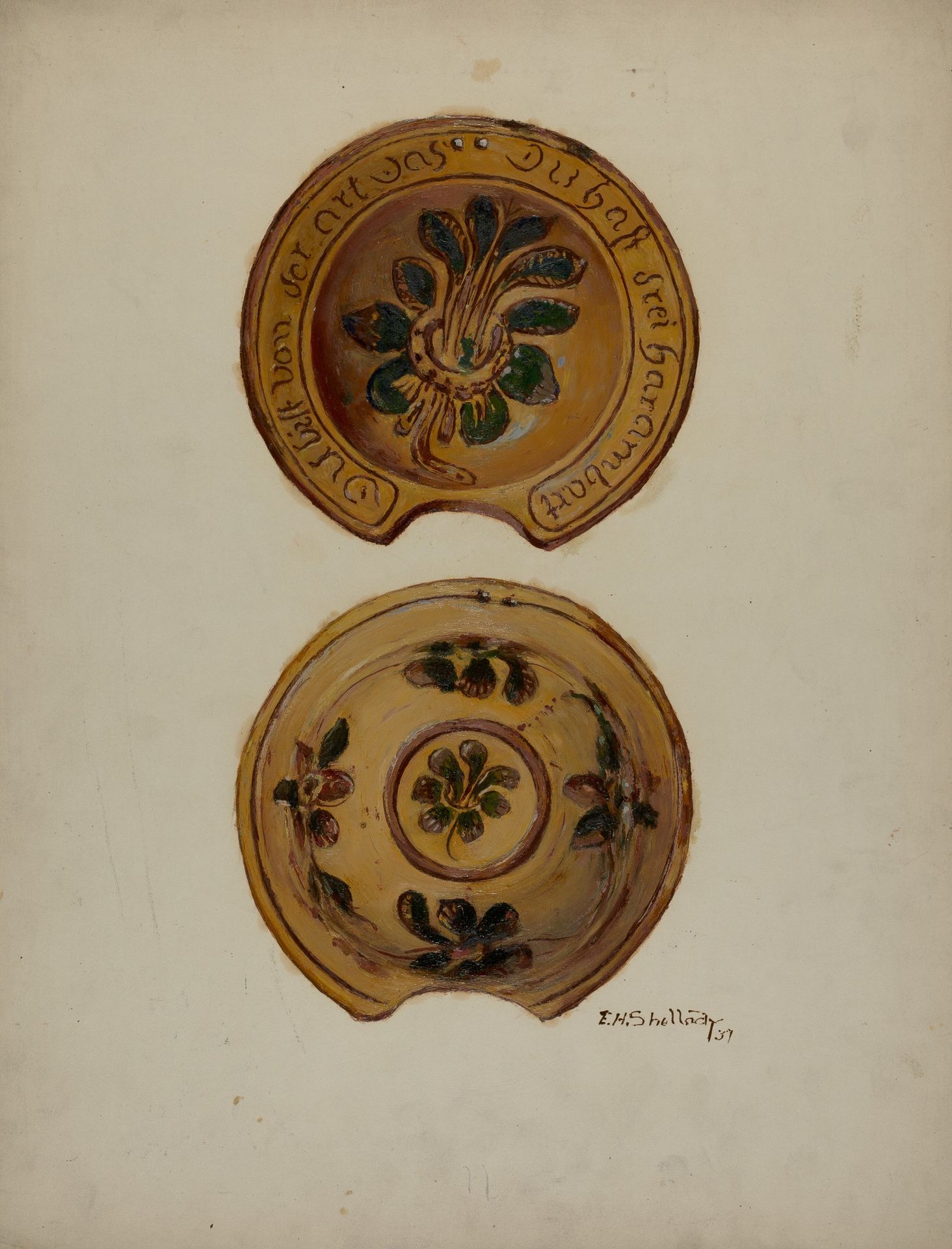
Eugene Shellady made this painting of Pa. German Shaving Basins with what looks like watercolor or gouache, in 1937. What strikes me is the playful looseness of the lines. The color palette is earthy, ochres and browns, punctuated with dabs of green. You can almost feel Shellady circling the shapes with a brush, not too concerned with perfect replication. Look at the bottom basin; see how the paint is applied in thin washes, allowing the paper to breathe. The little floral motif in the center is rendered with such simplicity, a few strokes and blobs, yet it captures the essence of folk art. The top basin has these expressive, almost clumsy letters that frame the central decoration, which for me, inject a sense of humor into the work. The honesty of this piece reminds me of other self-taught artists like Bill Traylor. There’s a raw, unpretentious quality that invites you to appreciate the beauty in imperfection, a kind of art that whispers rather than shouts.
Pa. German Shaving Basin
1937


Artwork details
- Medium
- drawing, watercolor
- Dimensions
- overall: 50.6 x 38.7 cm (19 15/16 x 15 1/4 in.)
- Copyright
- National Gallery of Art: CC0 1.0
Tags
drawing
oil painting
watercolor
stoneware
coloured pencil
watercolor
Comments
Be the first to share your thoughts about this work.
About this artwork
Eugene Shellady made this painting of Pa. German Shaving Basins with what looks like watercolor or gouache, in 1937. What strikes me is the playful looseness of the lines. The color palette is earthy, ochres and browns, punctuated with dabs of green. You can almost feel Shellady circling the shapes with a brush, not too concerned with perfect replication. Look at the bottom basin; see how the paint is applied in thin washes, allowing the paper to breathe. The little floral motif in the center is rendered with such simplicity, a few strokes and blobs, yet it captures the essence of folk art. The top basin has these expressive, almost clumsy letters that frame the central decoration, which for me, inject a sense of humor into the work. The honesty of this piece reminds me of other self-taught artists like Bill Traylor. There’s a raw, unpretentious quality that invites you to appreciate the beauty in imperfection, a kind of art that whispers rather than shouts.
Comments
Be the first to share your thoughts about this work.