About this artwork
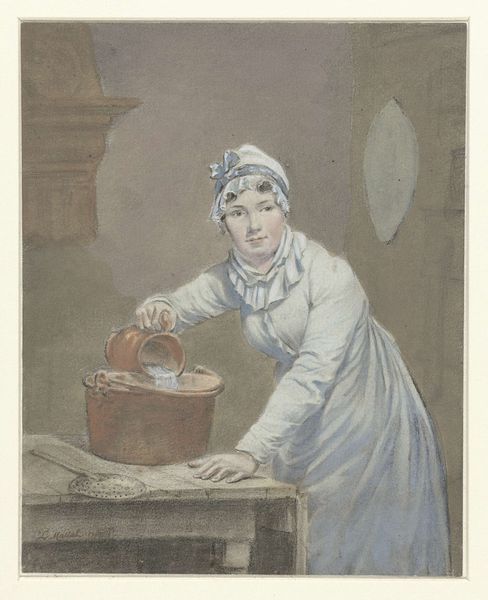
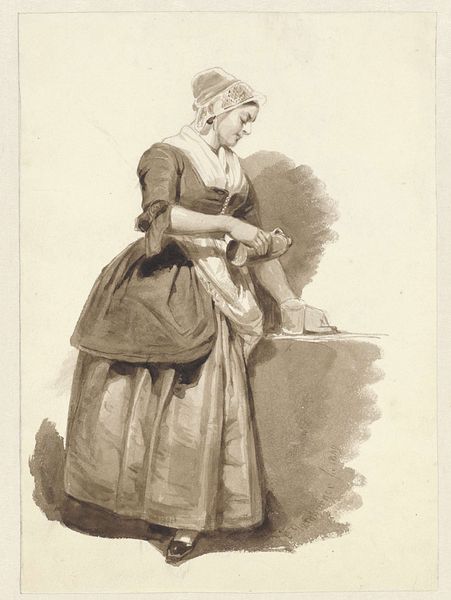
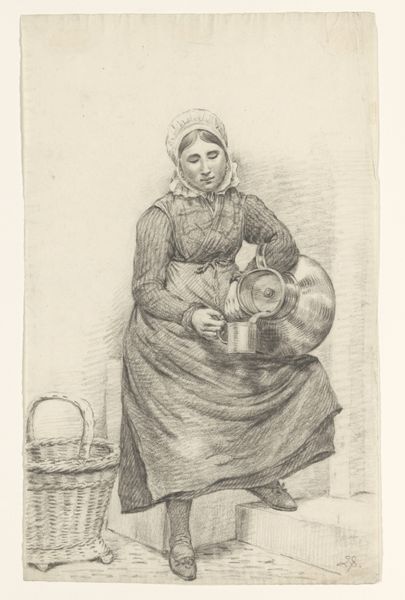
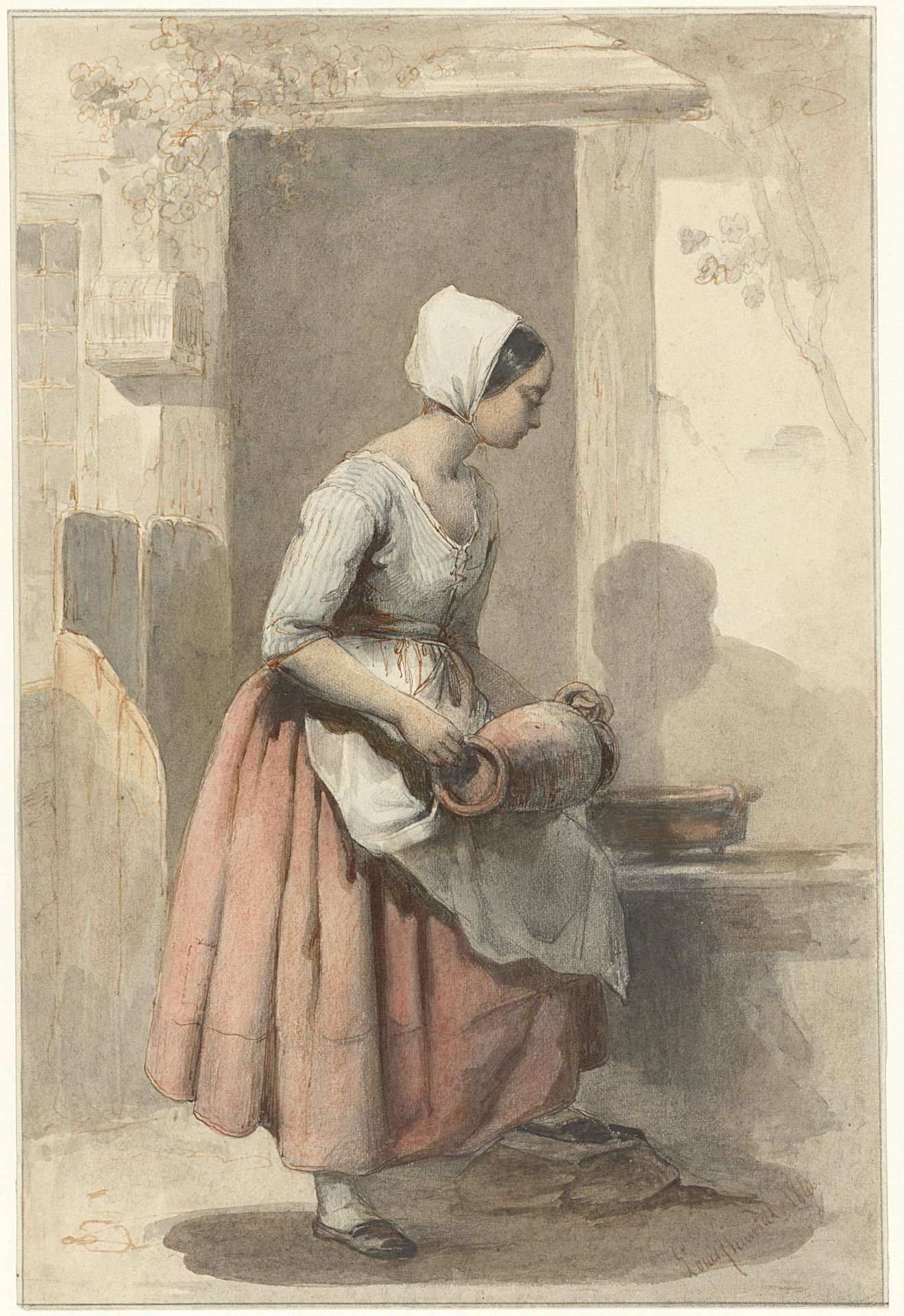
Louis Chantal made this watercolour of a girl with a jug at the entrance to a house, sometime in the mid-19th century. The image presents us with a scene of everyday life, elevated to art. While appearing natural, it’s carefully constructed. Consider how the girl's downcast gaze and the muted tones contribute to a sense of quiet dignity. Made in the Netherlands, at a time of increasing industrialisation, works like this idealised rural life. But is it just a neutral observation? Or does it participate in larger social narratives about gender, class, and labour? By studying the visual codes, cultural references, and historical associations, we can understand how images create meaning. To dig deeper, we might research the representation of women in Dutch art or look into the economic conditions of rural communities at the time. Art history is more than just appreciating aesthetics, it is also about understanding the complex interplay between art, society, and institutions.
Meisje met een kruik bij de ingang van een woning
1846

Louis Chantal
1822 - 1899Location
RijksmuseumArtwork details
- Medium
- plein-air, watercolor
- Dimensions
- height 236 mm, width 159 mm
- Location
- Rijksmuseum
- Copyright
- Rijks Museum: Open Domain
Tags
Comments
Share your thoughts
About this artwork
Louis Chantal made this watercolour of a girl with a jug at the entrance to a house, sometime in the mid-19th century. The image presents us with a scene of everyday life, elevated to art. While appearing natural, it’s carefully constructed. Consider how the girl's downcast gaze and the muted tones contribute to a sense of quiet dignity. Made in the Netherlands, at a time of increasing industrialisation, works like this idealised rural life. But is it just a neutral observation? Or does it participate in larger social narratives about gender, class, and labour? By studying the visual codes, cultural references, and historical associations, we can understand how images create meaning. To dig deeper, we might research the representation of women in Dutch art or look into the economic conditions of rural communities at the time. Art history is more than just appreciating aesthetics, it is also about understanding the complex interplay between art, society, and institutions.
Comments
Share your thoughts