About this artwork
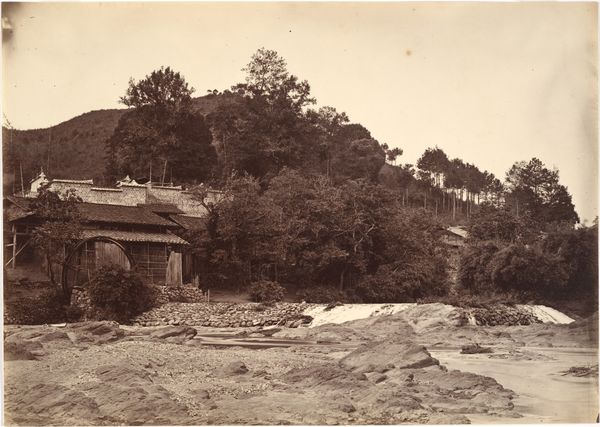
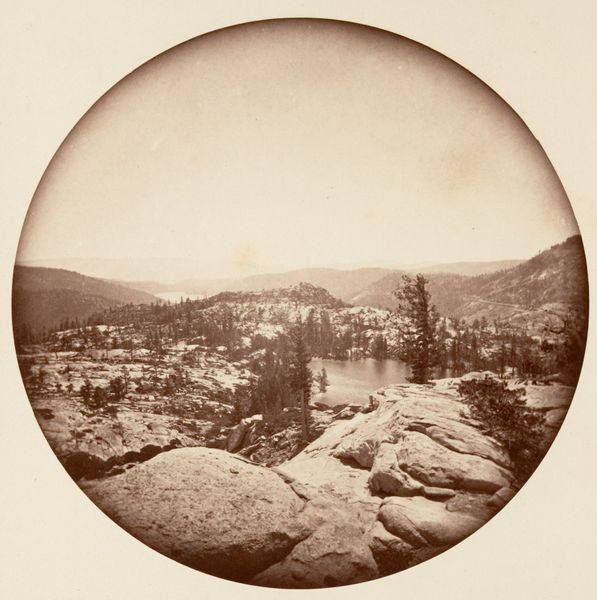
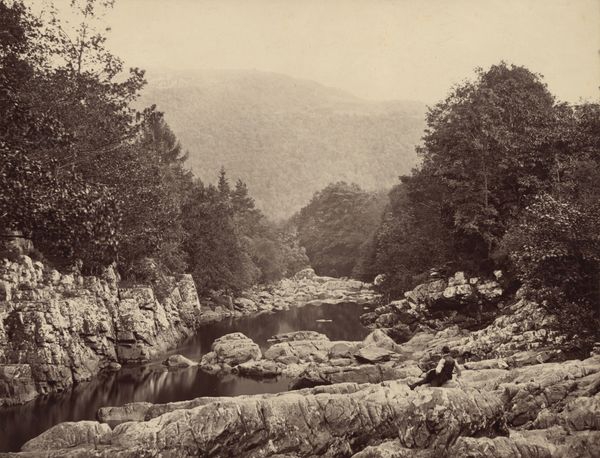
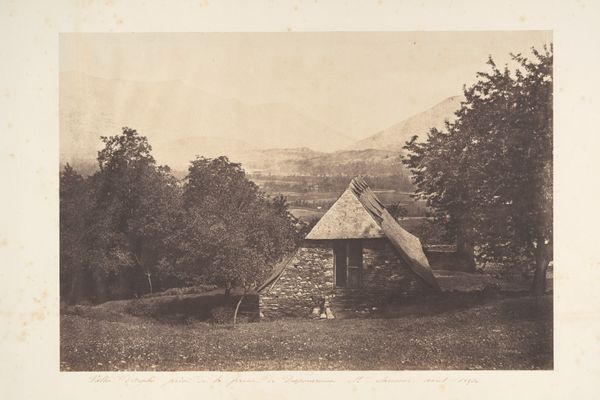
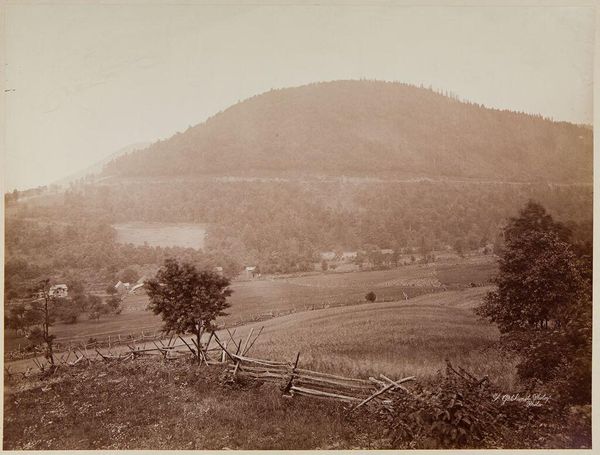
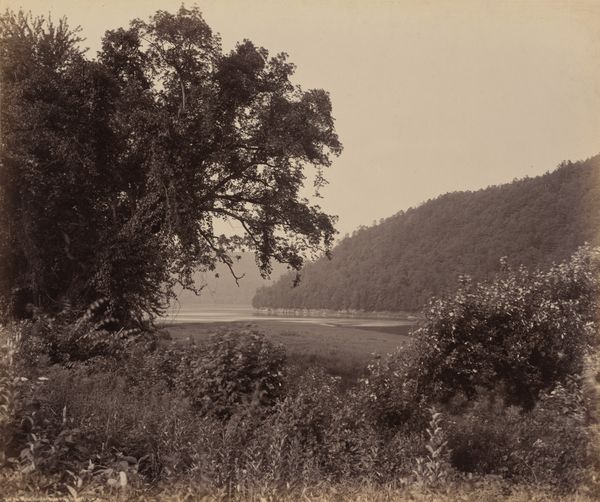
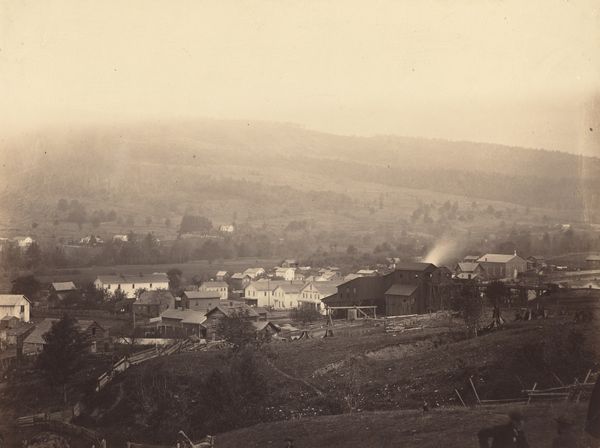
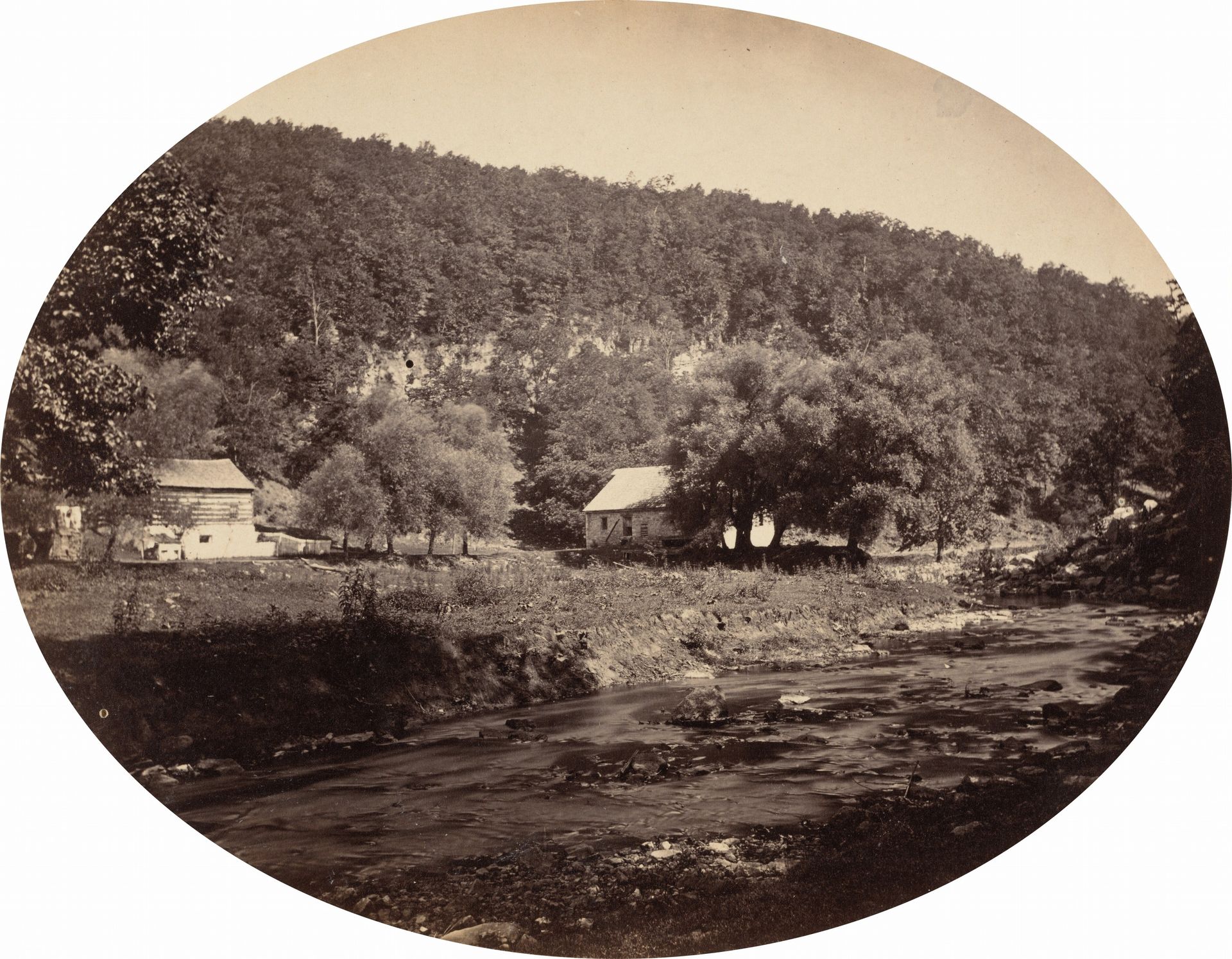
Editor: This is John Moran’s “At Bedford Springs,” created around 1866. The photograph has this gorgeous sepia tone. It feels like such a peaceful, undisturbed scene. I'm immediately drawn to how the buildings nestle amongst the dense forest. What captures your attention? Curator: The tonal gradations are quite masterful for the period. Note how the artist exploits the limitations of early photographic technology to create a composition focused on texture. The rippling water, the dense foliage—each element becomes a study in subtle variations of light and shadow. Editor: You're right, the textures really stand out. How would you say the composition affects our experience of the landscape? Curator: The almost perfectly round border is itself a very intriguing artistic decision; it crops the wildness into a contained vista, directing our vision while flattening depth, emphasizing the relationship between planes. It's like nature viewed through a specific, deliberately controlled lens. Notice how this contrasts to traditional landscape paintings of the time. Editor: I see what you mean about the controlled view, especially when landscape paintings often aimed to feel vast. Are the buildings important formal elements or more contextual additions? Curator: They're both. Structurally, their horizontal lines offer a counterpoint to the verticality of the trees, creating a balanced but still dynamic image. Contextually, they remind us of the relationship between humans and nature; architecture becomes one element of the tonal landscape. Editor: This really shifts how I understand the photo! I was so focused on the calming aspects. I can appreciate how those seemingly subtle relationships really enrich the artwork. Curator: Indeed. And how the seemingly simple presentation elicits endless fascination upon further review of intrinsic features, composition, and material.


Artwork details
- Dimensions
- image: 18.8 × 24.3 cm (7 3/8 × 9 9/16 in.) mount: 30.5 × 40.9 cm (12 × 16 1/8 in.)
- Copyright
- National Gallery of Art: CC0 1.0
Tags
Comments
Share your thoughts
About this artwork
Editor: This is John Moran’s “At Bedford Springs,” created around 1866. The photograph has this gorgeous sepia tone. It feels like such a peaceful, undisturbed scene. I'm immediately drawn to how the buildings nestle amongst the dense forest. What captures your attention? Curator: The tonal gradations are quite masterful for the period. Note how the artist exploits the limitations of early photographic technology to create a composition focused on texture. The rippling water, the dense foliage—each element becomes a study in subtle variations of light and shadow. Editor: You're right, the textures really stand out. How would you say the composition affects our experience of the landscape? Curator: The almost perfectly round border is itself a very intriguing artistic decision; it crops the wildness into a contained vista, directing our vision while flattening depth, emphasizing the relationship between planes. It's like nature viewed through a specific, deliberately controlled lens. Notice how this contrasts to traditional landscape paintings of the time. Editor: I see what you mean about the controlled view, especially when landscape paintings often aimed to feel vast. Are the buildings important formal elements or more contextual additions? Curator: They're both. Structurally, their horizontal lines offer a counterpoint to the verticality of the trees, creating a balanced but still dynamic image. Contextually, they remind us of the relationship between humans and nature; architecture becomes one element of the tonal landscape. Editor: This really shifts how I understand the photo! I was so focused on the calming aspects. I can appreciate how those seemingly subtle relationships really enrich the artwork. Curator: Indeed. And how the seemingly simple presentation elicits endless fascination upon further review of intrinsic features, composition, and material.
Comments
Share your thoughts