About this artwork
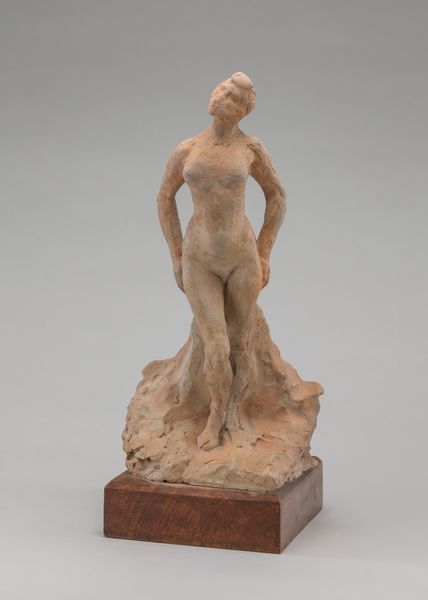
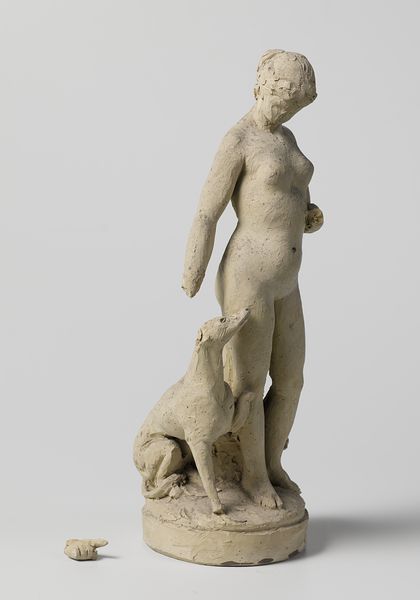
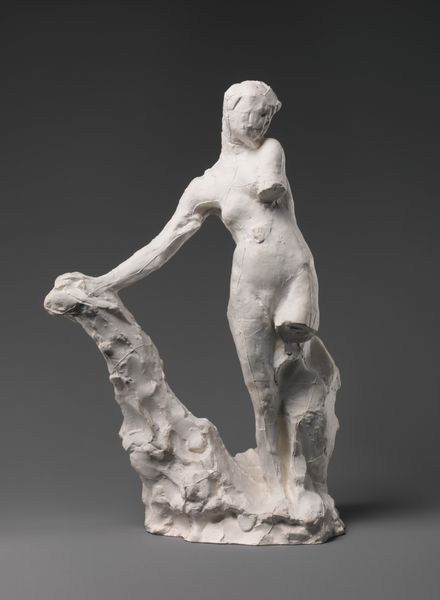
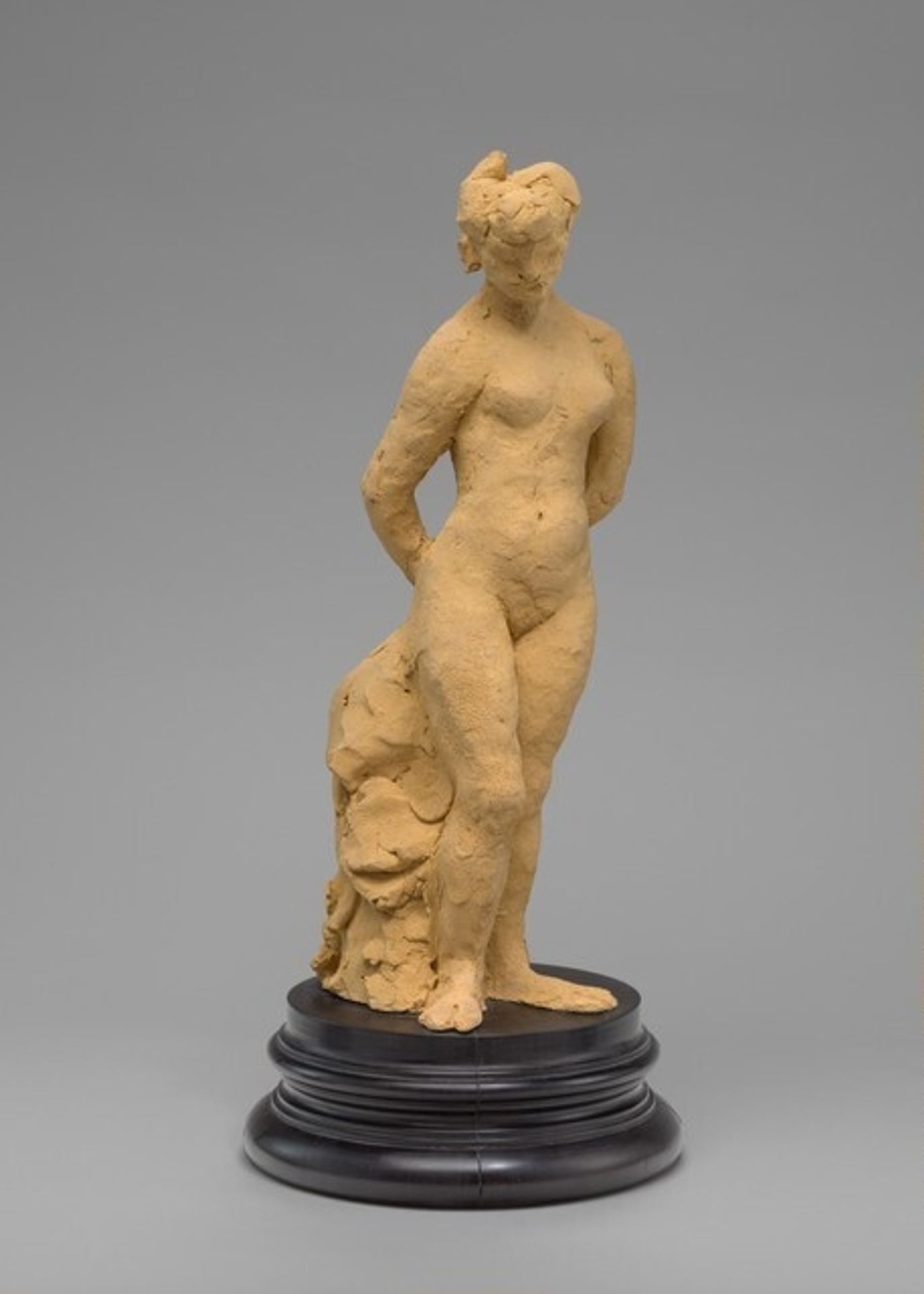
This statuette of a woman was made by Auguste Rodin, and it's hard to miss the maker's hand. The way the clay's been worked feels so immediate, so present. You can see the texture of Rodin's fingerprints all over this piece. Look at the torso; it's built up with these small, almost frantic daubs of clay. It's not about smoothness or perfection; it's about the energy of creation. There's a kind of vulnerability in the rough surface, a sense of the artist grappling with form. The face is barely there, just a suggestion, and that makes it all the more powerful. It invites you to project your own feelings onto her. Think about Medardo Rosso, who was doing wax sculptures at a similar time. Like Rodin, he captured fleeting moments, but in such different ways. For both artists, it’s less about the subject and more about the possibilities of the material. There's always a conversation happening across artworks, across time, and in how we respond to them.
Statuette of a Woman
c. early 20th century


Artwork details
- Medium
- impasto, sculpture, ivory
- Dimensions
- overall: 32.4 x 10.2 x 11.6 cm (12 3/4 x 4 x 4 9/16 in.)
- Copyright
- National Gallery of Art: CC0 1.0
Tags
statue
sculptural image
figuration
impasto
sculpture
nude
ivory
modernism
Comments
Be the first to share your thoughts about this work.
About this artwork
This statuette of a woman was made by Auguste Rodin, and it's hard to miss the maker's hand. The way the clay's been worked feels so immediate, so present. You can see the texture of Rodin's fingerprints all over this piece. Look at the torso; it's built up with these small, almost frantic daubs of clay. It's not about smoothness or perfection; it's about the energy of creation. There's a kind of vulnerability in the rough surface, a sense of the artist grappling with form. The face is barely there, just a suggestion, and that makes it all the more powerful. It invites you to project your own feelings onto her. Think about Medardo Rosso, who was doing wax sculptures at a similar time. Like Rodin, he captured fleeting moments, but in such different ways. For both artists, it’s less about the subject and more about the possibilities of the material. There's always a conversation happening across artworks, across time, and in how we respond to them.
Comments
Be the first to share your thoughts about this work.