About this artwork
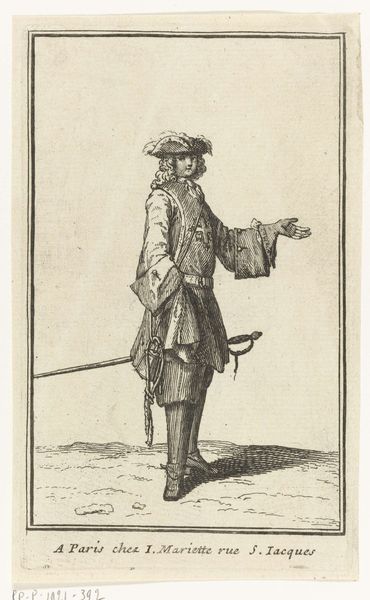
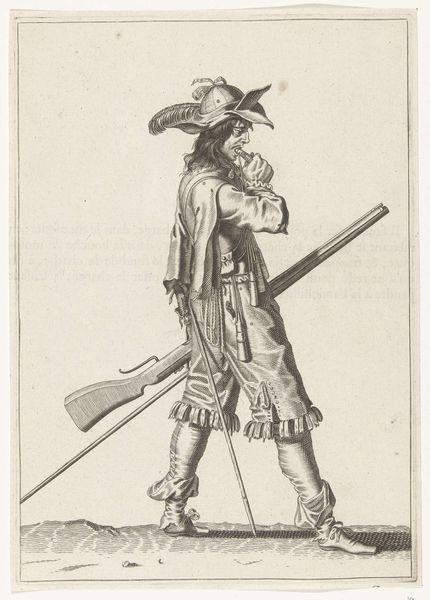
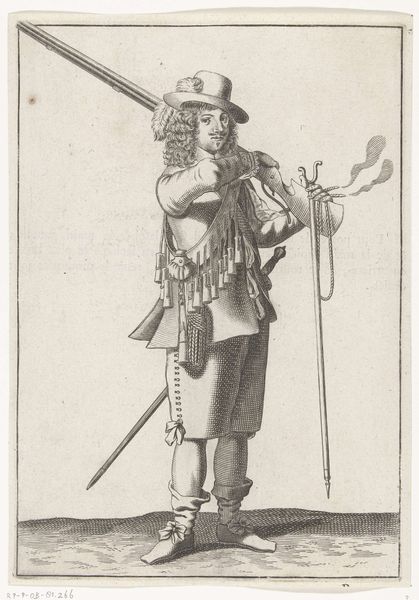
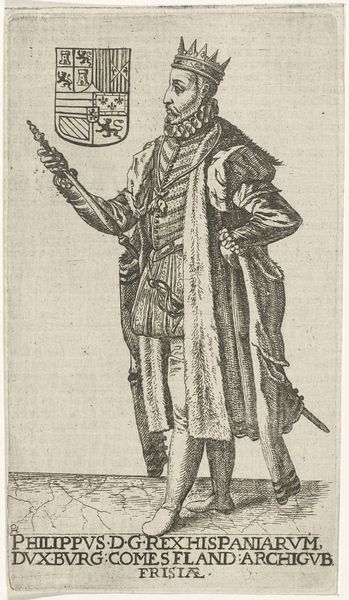
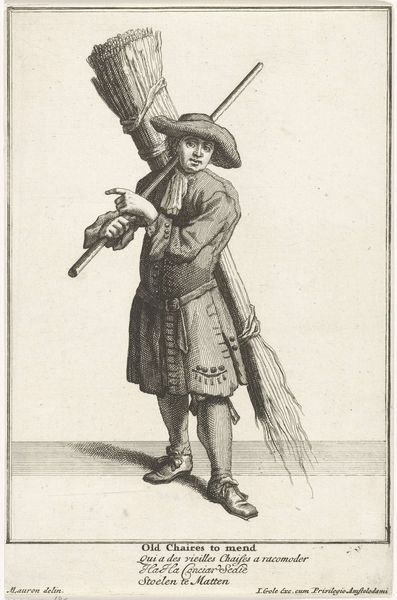
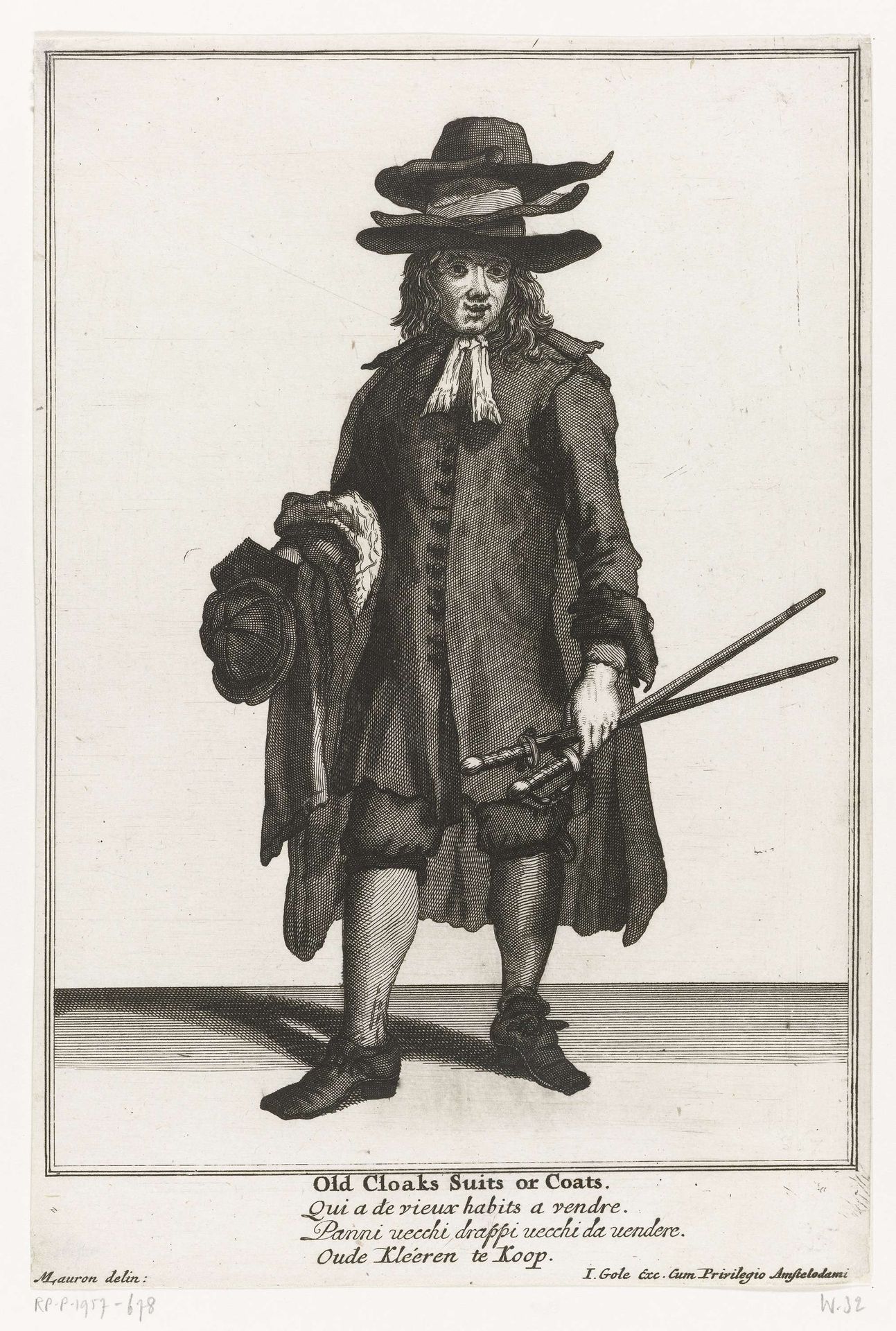
Curator: The cross-hatching technique used to define the textures in this print is just spectacular. Editor: I agree, the technique is remarkable. What you're observing is an engraving created sometime between 1688 and 1724 by Jacob Gole, titled "Verkoper van tweedehandskleding"—or, "Seller of Secondhand Clothing." However, to see this piece and not think of current issues of labor and access would be unfortunate. What do you notice about this man's posture? Curator: Well, he stands rigidly; almost unnaturally straight-backed, which given what appears to be the burden of his trade… three hats on his head! It creates a peculiar, flattened effect in the composition, doesn't it? Everything feels pressed forward, towards the viewer. Editor: Precisely! He’s overburdened, right? Carrying not just his wares but, metaphorically, the weight of societal expectations and economic constraints. We see here an early intersection of fashion, class, and the struggle for survival in the 17th century Dutch Republic. The layering of clothing suggests an economic disparity that reflects the very capitalist systems that benefit some, while exploiting many. What appears on the surface to be simple genre painting is a poignant snapshot of daily toil. Curator: Your reading adds a complex layer. But look closer at how the artist captures light! See the luminosity on his face, compared to the shaded folds of the coats? The contrast draws attention to the man's expression. The technical mastery highlights texture; for instance, you can see where each separate piece begins and ends, just by using tone. Editor: Absolutely, but note also the implications. "Secondhand" speaks to sustainability in opposition to modern consumption. These pieces have already lived one life and are being made viable once again; which is a model we can examine to understand current discussions of fast-fashion and ecological well-being. Curator: So, in the end, it becomes not just about aesthetic qualities, but its continued significance. Editor: It encourages critical thought about equity and responsibility as we move through our modern world, and Jacob Gole unknowingly encourages critical thought with a 300-year-old engraving.

Artwork details
- Medium
- print, engraving
- Dimensions
- height 246 mm, width 166 mm
- Location
- Rijksmuseum
- Copyright
- Rijks Museum: Open Domain
Tags
portrait
dutch-golden-age
old engraving style
historical photography
genre-painting
engraving
Comments
Be the first to share your thoughts about this work.
About this artwork
Curator: The cross-hatching technique used to define the textures in this print is just spectacular. Editor: I agree, the technique is remarkable. What you're observing is an engraving created sometime between 1688 and 1724 by Jacob Gole, titled "Verkoper van tweedehandskleding"—or, "Seller of Secondhand Clothing." However, to see this piece and not think of current issues of labor and access would be unfortunate. What do you notice about this man's posture? Curator: Well, he stands rigidly; almost unnaturally straight-backed, which given what appears to be the burden of his trade… three hats on his head! It creates a peculiar, flattened effect in the composition, doesn't it? Everything feels pressed forward, towards the viewer. Editor: Precisely! He’s overburdened, right? Carrying not just his wares but, metaphorically, the weight of societal expectations and economic constraints. We see here an early intersection of fashion, class, and the struggle for survival in the 17th century Dutch Republic. The layering of clothing suggests an economic disparity that reflects the very capitalist systems that benefit some, while exploiting many. What appears on the surface to be simple genre painting is a poignant snapshot of daily toil. Curator: Your reading adds a complex layer. But look closer at how the artist captures light! See the luminosity on his face, compared to the shaded folds of the coats? The contrast draws attention to the man's expression. The technical mastery highlights texture; for instance, you can see where each separate piece begins and ends, just by using tone. Editor: Absolutely, but note also the implications. "Secondhand" speaks to sustainability in opposition to modern consumption. These pieces have already lived one life and are being made viable once again; which is a model we can examine to understand current discussions of fast-fashion and ecological well-being. Curator: So, in the end, it becomes not just about aesthetic qualities, but its continued significance. Editor: It encourages critical thought about equity and responsibility as we move through our modern world, and Jacob Gole unknowingly encourages critical thought with a 300-year-old engraving.
Comments
Be the first to share your thoughts about this work.