c. 1892
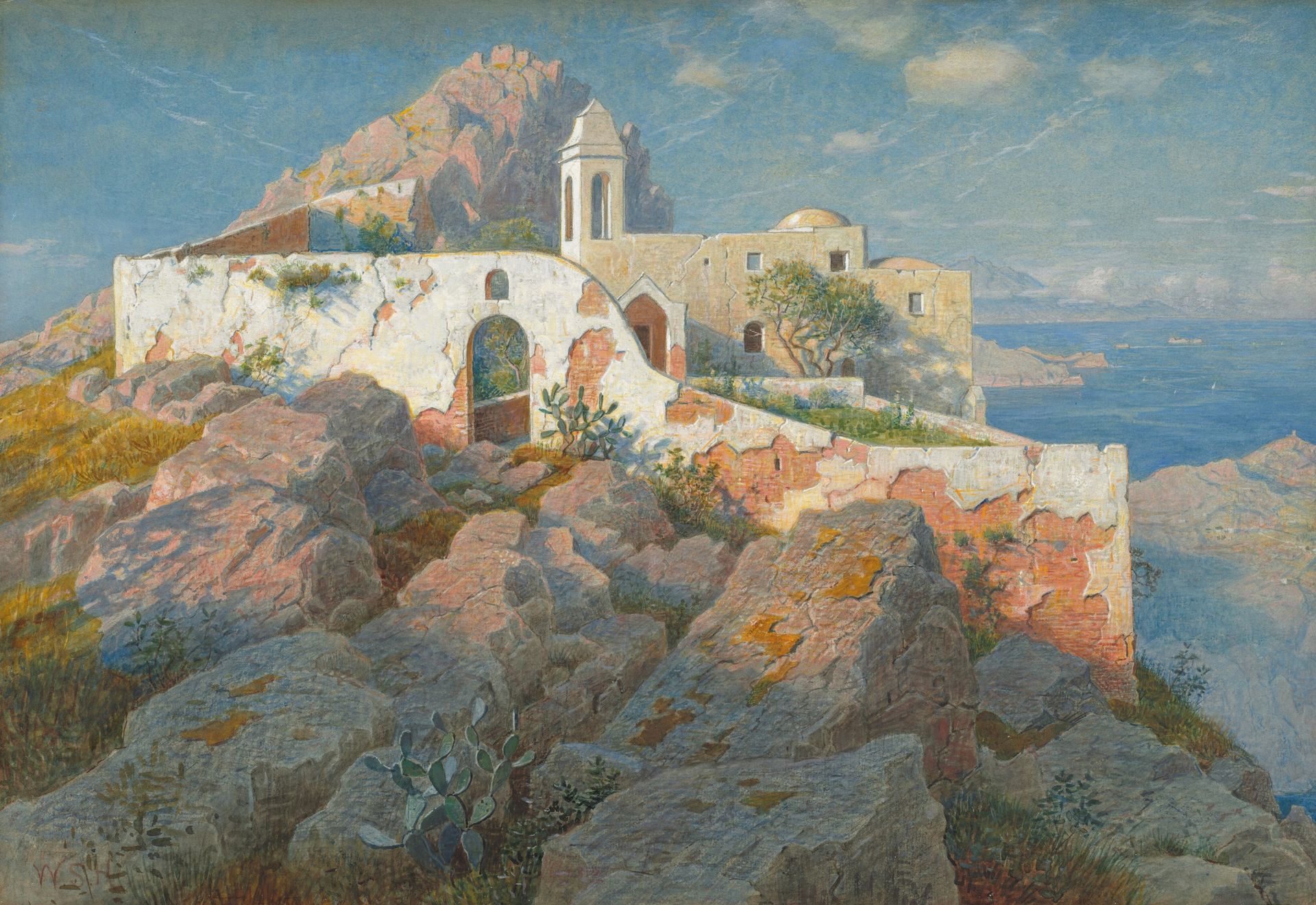
Santa Maria a Cetrella, Anacapri


Listen to curator's interpretation
Curatorial notes
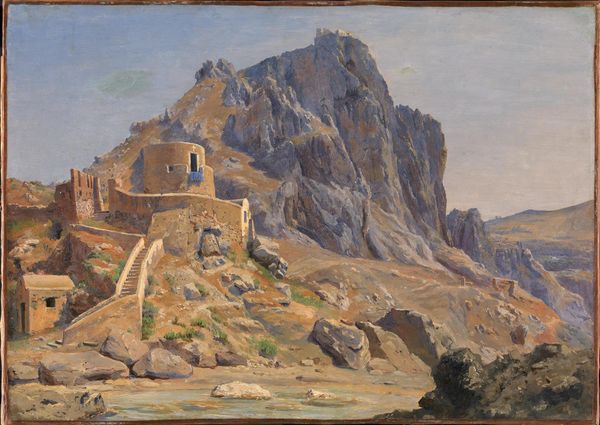
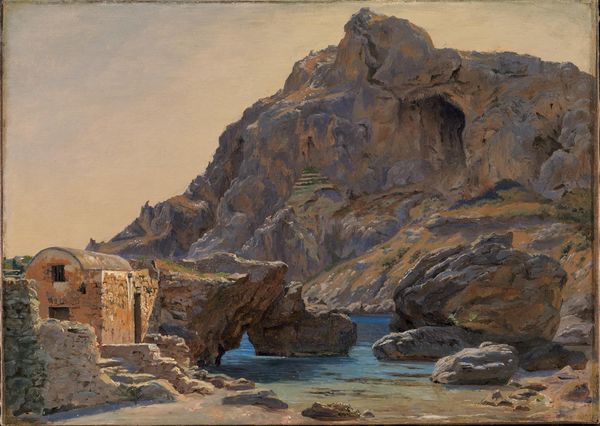
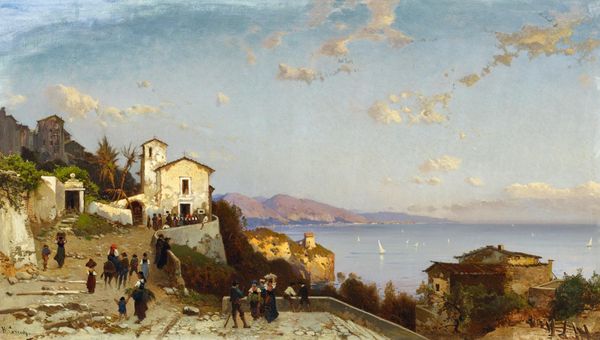
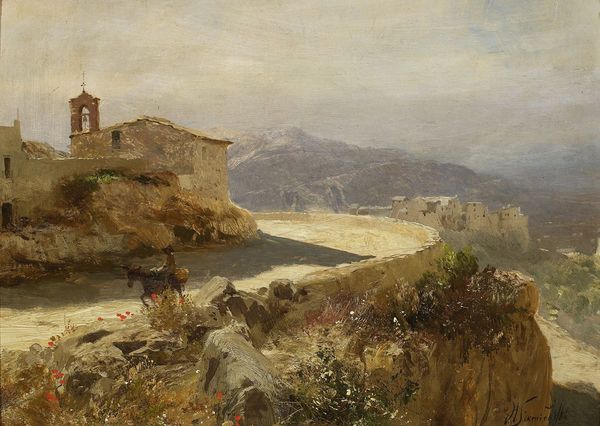
William Stanley Haseltine’s, *Santa Maria a Cetrella, Anacapri,* is a landscape that arrests the eye with its sublime treatment of light and form. The composition is structured around a rugged, ascending terrain that leads to the stark, geometric forms of the Santa Maria. Notice how Haseltine uses a palette of muted blues, pinks, and whites to capture the weathered texture of the stone and stucco. These choices are not merely representational. They serve as a visual metaphor for the passage of time and the enduring presence of cultural artifacts within the landscape. The light dapples across the rocks and buildings, creating a sense of depth and volume, while the contrasting textures—rough stone against smooth plaster—add a tactile dimension to the scene. The painting invites us to consider how cultural and natural forms interact. It emphasizes the formal qualities of shape, texture, and light, reflecting the complex interplay between human construction and the forces of nature.